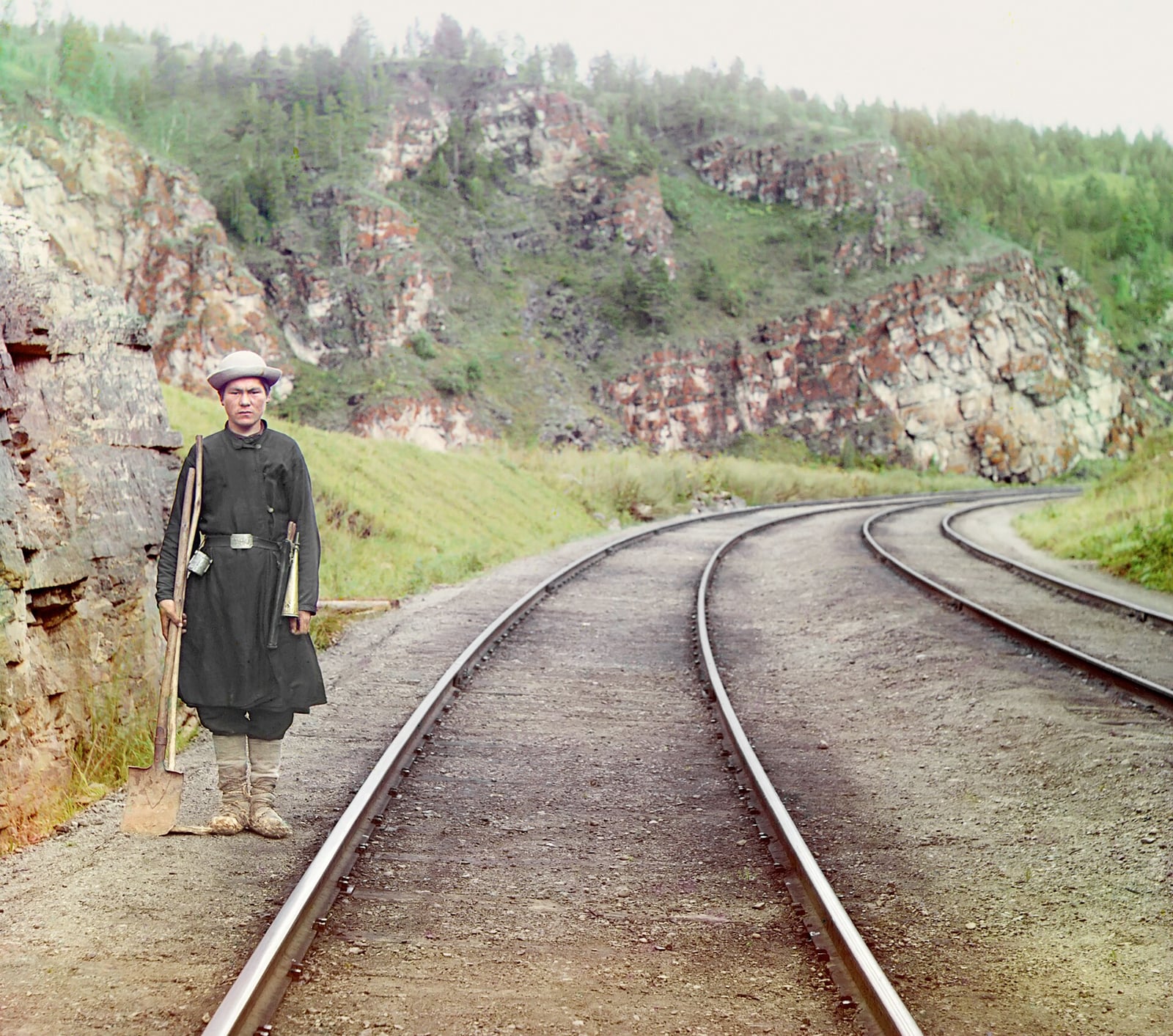
Work Begins on the Trans-Siberian Railway
The longest railway line tied Moscow to the Pacific across Siberia.
On 19 May 1891, Tsarevich Nicholas officially inaugurated the construction of the Trans-Siberian line in Vladivostok, after support for the project finally coalesced in the government earlier that year. Prior to this initiative, travel across Siberia was severely restricted by difficult geography and seasonal extremes. Roads suitable for wheeled vehicles remained scarce, leaving trade heavily reliant on rivers that froze for much of the year, and Siberia's great rivers run broadly from south to north, offering little assistance for east-to-west transit.
An iron road across Siberia had been discussed for decades but was repeatedly put off because of the immensity of the task, heavy state debts and contentious debate over its merits. In 1891 Sergei Witte, then working in the finance ministry, persuaded Alexander III to begin construction, and the promise of Far Eastern colonies, Siberian riches, international prestige and commercial opportunity carried the government. After Witte became finance minister in 1892 he took the project as his own, financing it largely through foreign loans, chiefly from France.

Keep reading in Yester
Coming soon to the App Store
Keep following the story
Sources
Image: Sergei Prokudin-Gorskii