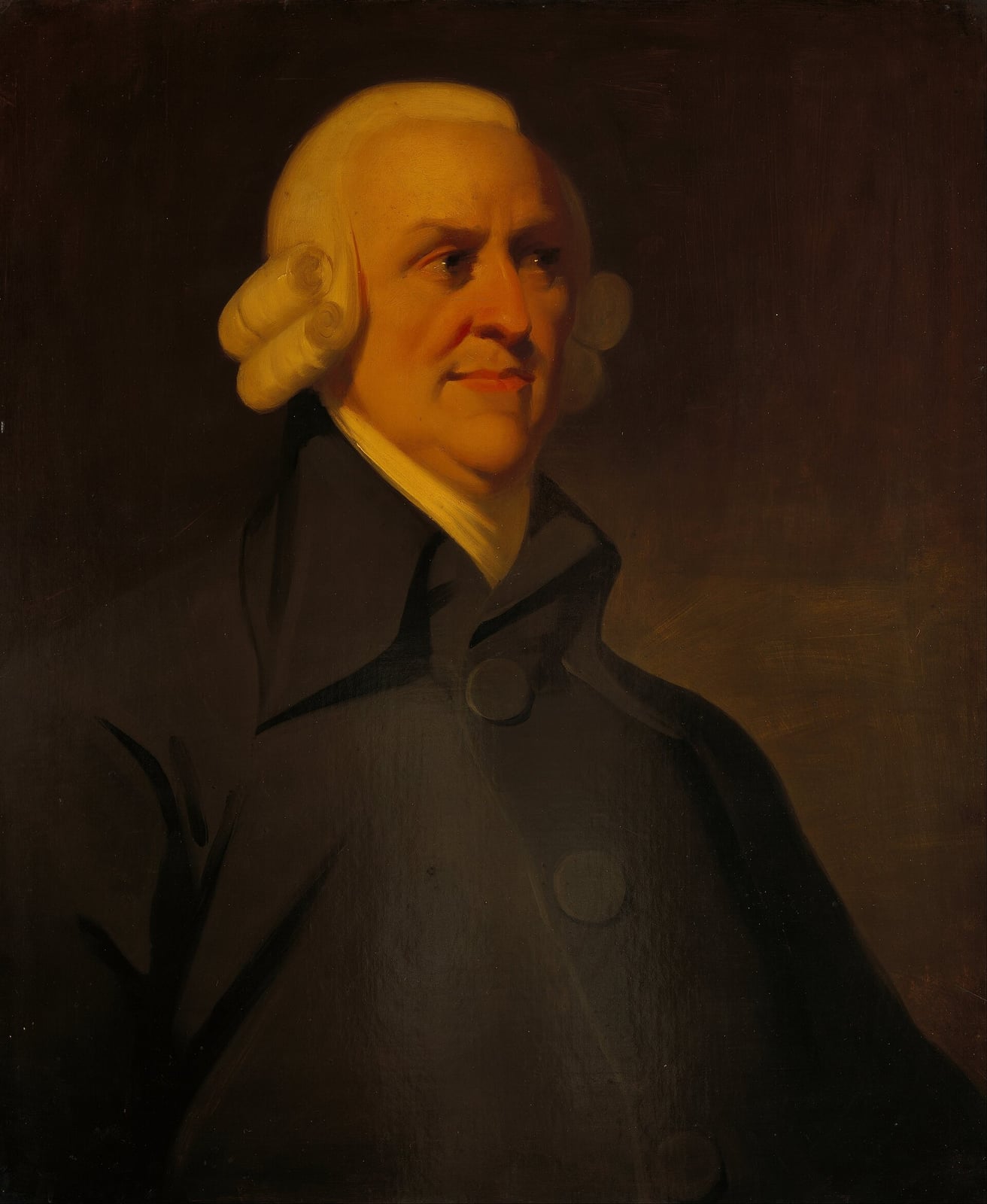
Adam Smith Publishes The Wealth of Nations
A long inquiry into trade and labor became a founding book of economics.
On 9 March 1776, Scottish moral philosopher Adam Smith published An Inquiry into the Nature and Causes of the Wealth of Nations in London. Issued in two volumes during the intellectual ferment of the Scottish Enlightenment, the treatise represented the culmination of roughly a decade of writing. Smith set out to analyze the mechanics of emerging commercial and industrial societies, seeking to replace prevailing mercantilist doctrines and feudal remnants with a coherent system of political economy.
Central to Smith's analysis was the contention that national prosperity stems from the division of labour rather than the accumulation of gold or the preservation of trade monopolies. He observed that dividing complex tasks into specialized operations substantially amplified worker productivity and aggregate output. This mechanism, he explained, was naturally prompted by a universal human inclination to barter and trade, while remaining fundamentally bounded by the geographic and logistical scope of the market. Navigable water transport, for example, had historically broadened commerce by allowing wider networks of exchange.

Keep reading in Yester
Coming soon to the App Store
Keep following the story

Sources
Image: Unknown (Scottish)