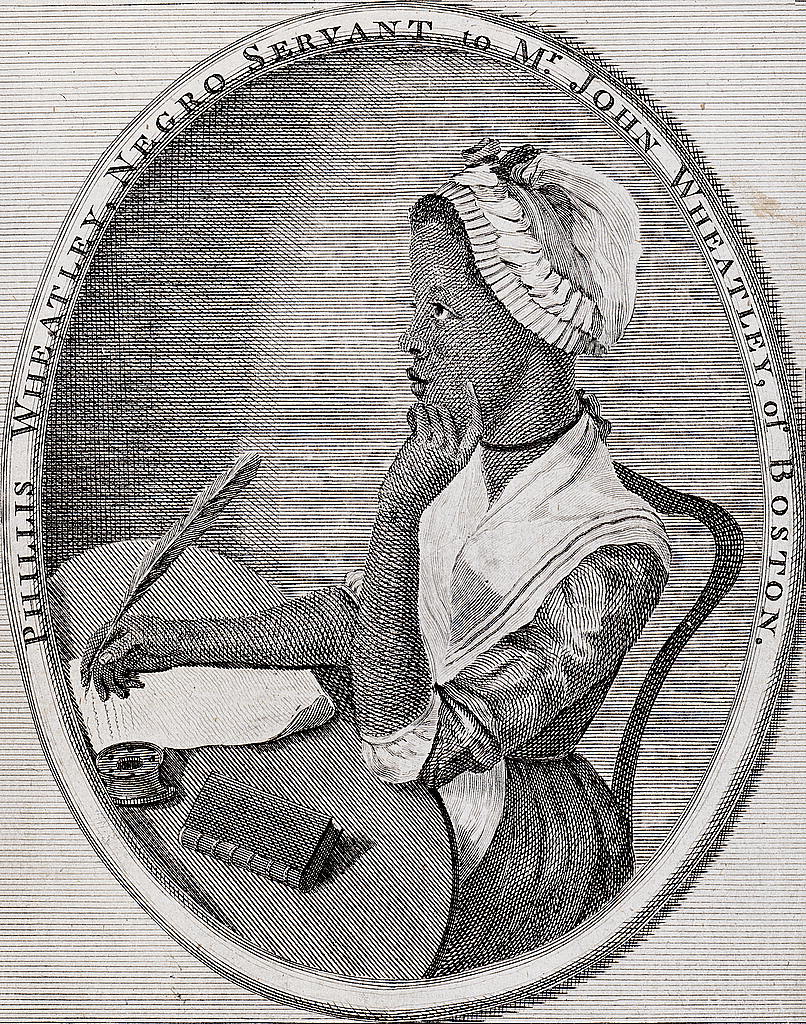
Phillis Wheatley Publishes Her Poems
An enslaved young woman in Boston became a published poet in London.
On July 11, 1761, a slave vessel called the Phillis anchored in Boston after crossing the Atlantic from West Africa. Among the captives was a girl of seven or eight, who was purchased by the prosperous Boston merchant and tailor John Wheatley as a servant for his wife, Susanna. Named Phillis after the ship that carried her into bondage, she was given the Wheatley family surname. Rather than restricting her solely to domestic labor, the Wheatleys provided her with an exceptional education. Tutored by their children, Mary and Nathaniel, Phillis quickly attained fluency in English and studied biblical texts alongside classical authors such as Alexander Pope, John Milton, Homer, Horace, and Virgil.
Within about sixteen months of beginning her lessons she could read the Bible, and she went on to study Greek and Latin classics. Her first published poem, "On Messrs. Hussey and Coffin," appeared in a Newport, Rhode Island, newspaper in 1767, when she was about thirteen. When Boston publishers later proved unwilling to print a volume written by an enslaved African woman, Wheatley faced an extraordinary formal examination in 1772. A panel of prominent Boston figures, including Governor Thomas Hutchinson and merchant John Hancock, interrogated her to determine the authenticity of her authorship. The group concluded that she had indeed composed the poems and signed an attestation that appeared in the preface of her eventual collection.

Keep reading in Yester
Coming soon to the App Store
Keep following the story
Sources
Image: Scipio Moorhead