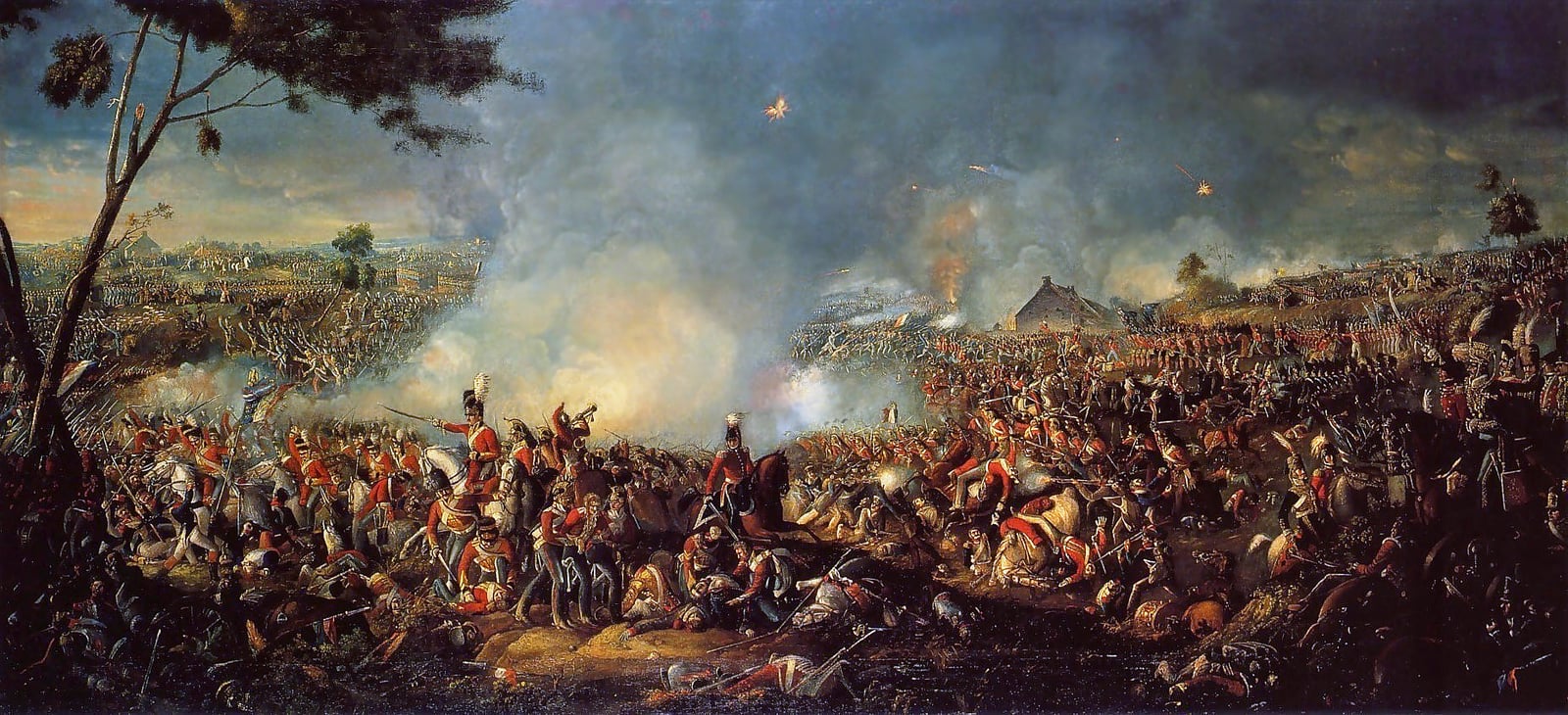
Napoleon Is Defeated at Waterloo
A single day of battle ended the Hundred Days and Napoleon’s rule.
In March 1815, Napoleon Bonaparte returned from exile to reclaim power in France, inaugurating the period known as the Hundred Days. His resurgence prompted European rivals to assemble the Seventh Coalition, determined to end his reign definitively. Before the French Emperor reached Paris, major powers negotiating at the Congress of Vienna took the drastic step of outlawing him. Facing the certainty of a coordinated allied invasion, Napoleon resolved to take the tactical initiative by striking the coalition armies gathered near France's northeastern border before they could combine with the other allied forces.
The campaign brought Napoleon into modern Belgium to confront two separate armies: a multinational British-led force under Arthur Wellesley, Duke of Wellington, and a Prussian army commanded by Field Marshal Gebhard Leberecht von Blücher. Napoleon aimed to defeat them in isolation. On 16 June, he engaged and defeated Blücher at Ligny, while French forces under Marshal Ney engaged Wellington's army at Quatre Bras and kept it from reinforcing the Prussians. Rather than retreating eastward along their supply routes, the defeated Prussians fell back north toward Wavre, maintaining communication with Wellington as he withdrew to the ridge of Mont-Saint-Jean near Waterloo.

Keep reading in Yester
Coming soon to the App Store
Keep following the story

Sources
Image: William Sadler