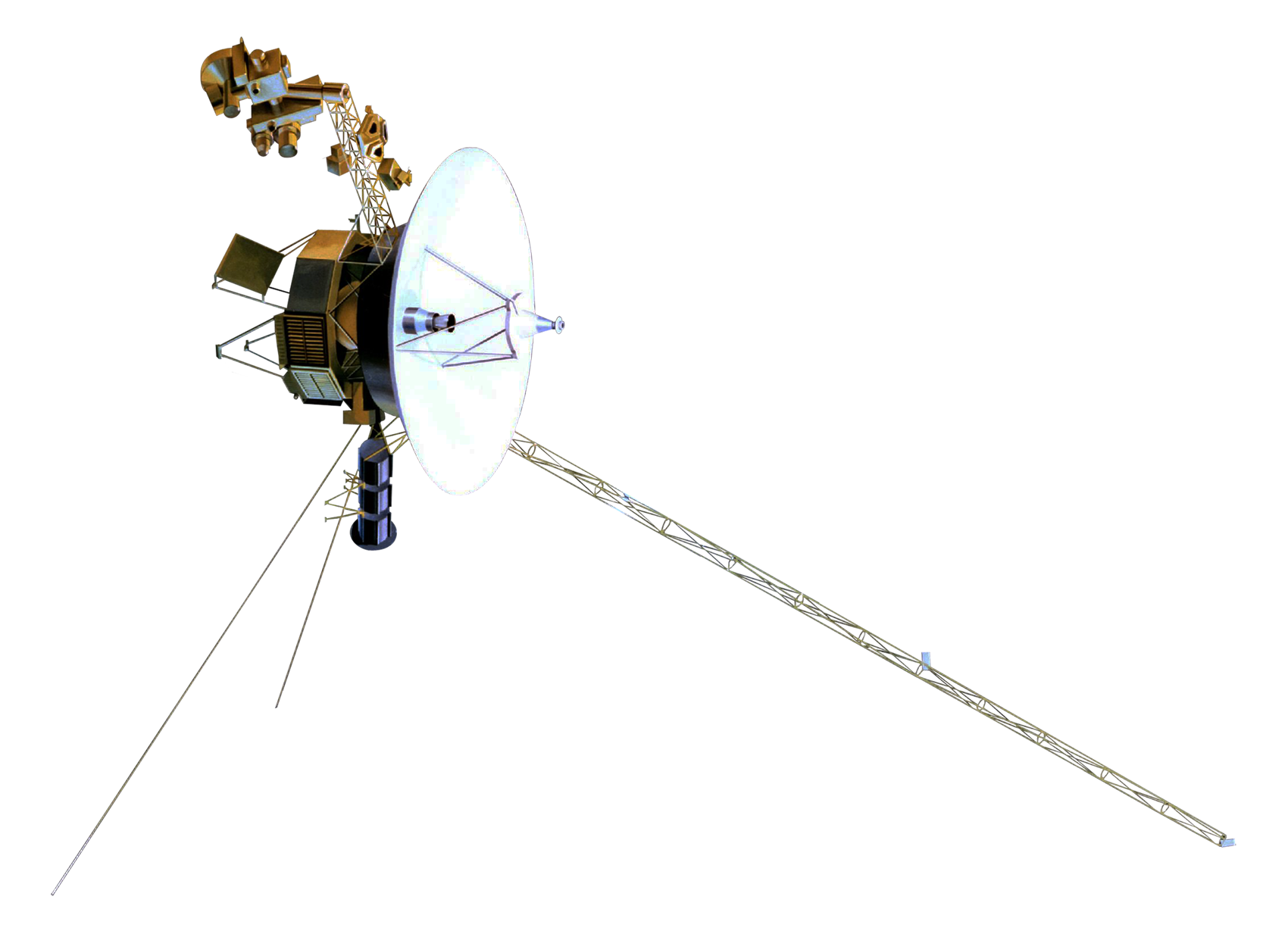
Voyager 1 Crosses into Interstellar Space
A probe launched in 1977 left the bubble of the solar wind.
On August 25, 2012, NASA's Voyager 1 spacecraft crossed the heliopause, the outer edge of the bubble of solar wind that surrounds the Sun. It became the first human-made object to leave this bubble, known as the heliosphere, and enter interstellar space. The probe had traveled for thirty-five years to reach this threshold, following a trajectory shaped decades earlier by close gravitational encounters with giant planets. Instruments detected abrupt and lasting changes in the density of energetic particles around the craft, and the mission team came to accept that date as the moment of interstellar arrival.
Confirmation of the crossing took more than a year of debate among mission scientists. The team needed time to analyze the unexpected observations and pin down the probe's location. Definitive evidence came from a coronal mass ejection that erupted from the Sun in March 2012 and reached Voyager 1 in April 2013, causing the surrounding plasma to vibrate. The pitch of those oscillations allowed a team led by Don Gurnett of the University of Iowa to calculate the plasma's density, which was more than 40 times higher than in the outer heliosphere, as expected for interstellar space. NASA formally announced the achievement on September 12, 2013.

Keep reading in Yester
Coming soon to the App Store
Keep following the story
Sources
- NASA Spacecraft Embarks on Historic Journey Into Interstellar Space (NASA JPL)
- Voyager 1 mission overview (NASA Science)
- Voyager Frequently Asked Questions (NASA Science)
- NASA Turns Off 2 Voyager Science Instruments to Extend Mission (NASA JPL)
- NASA's Voyager 1 spacecraft down to just two working science instruments (Scientific American)
- Voyager 1
Image: National Aeronautics and Space Administration (NASA)