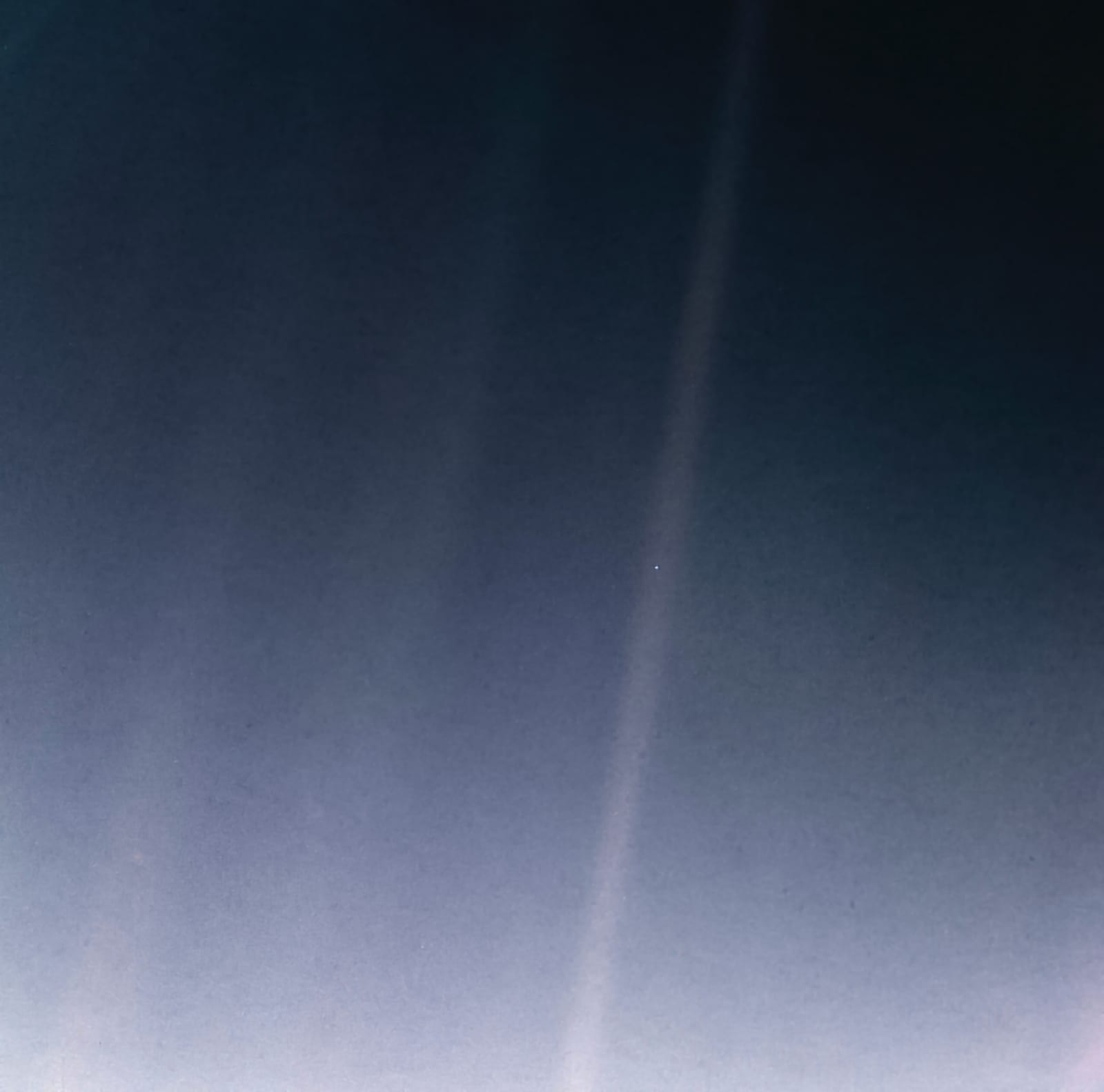
Earth Becomes a Pale Blue Dot
From billions of kilometres away, Voyager 1 turned its camera toward Earth. The resulting point of light became a powerful image of how small our home appears from space.
On February 14, 1990, Voyager 1 looked back toward the Solar System it was leaving behind. The spacecraft had already photographed giant planets, and its cameras were approaching the end of their work. This final sequence reversed the usual view of exploration: instead of seeking an unfamiliar destination, the camera searched for home.
Earth appeared as a tiny, unresolved point rather than a globe with recognizable oceans and continents. A streak of scattered sunlight crossed the view. The planet seemed to sit within that beam, although the streak was an effect inside the camera, not a physical path through space.

Keep reading in Yester
Coming soon to the App Store
Keep following the story
Sources
Image: NASA/JPL-Caltech