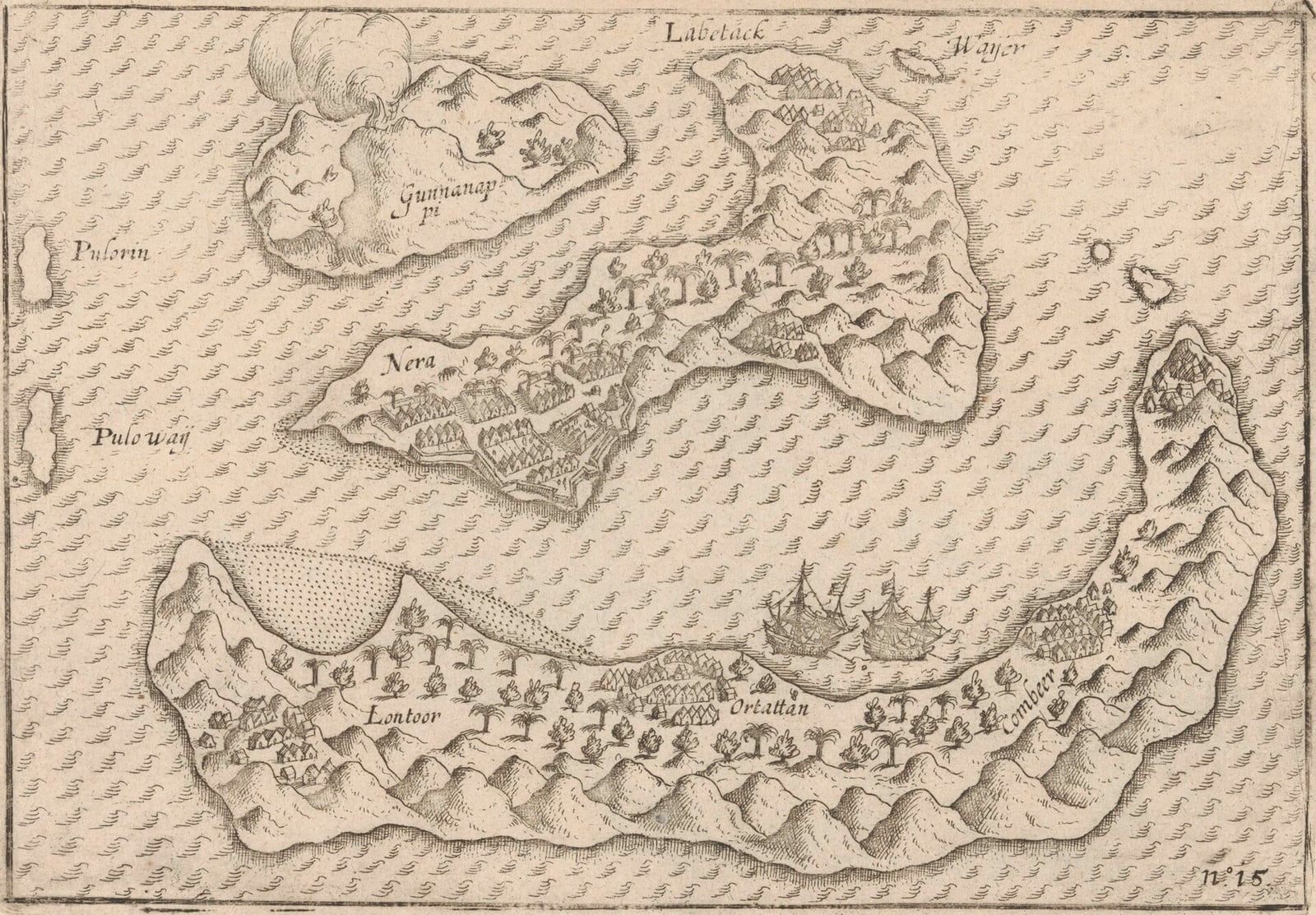
The Dutch Seize the Nutmeg Islands of Banda
A trading company conquered the only source of nutmeg by force.
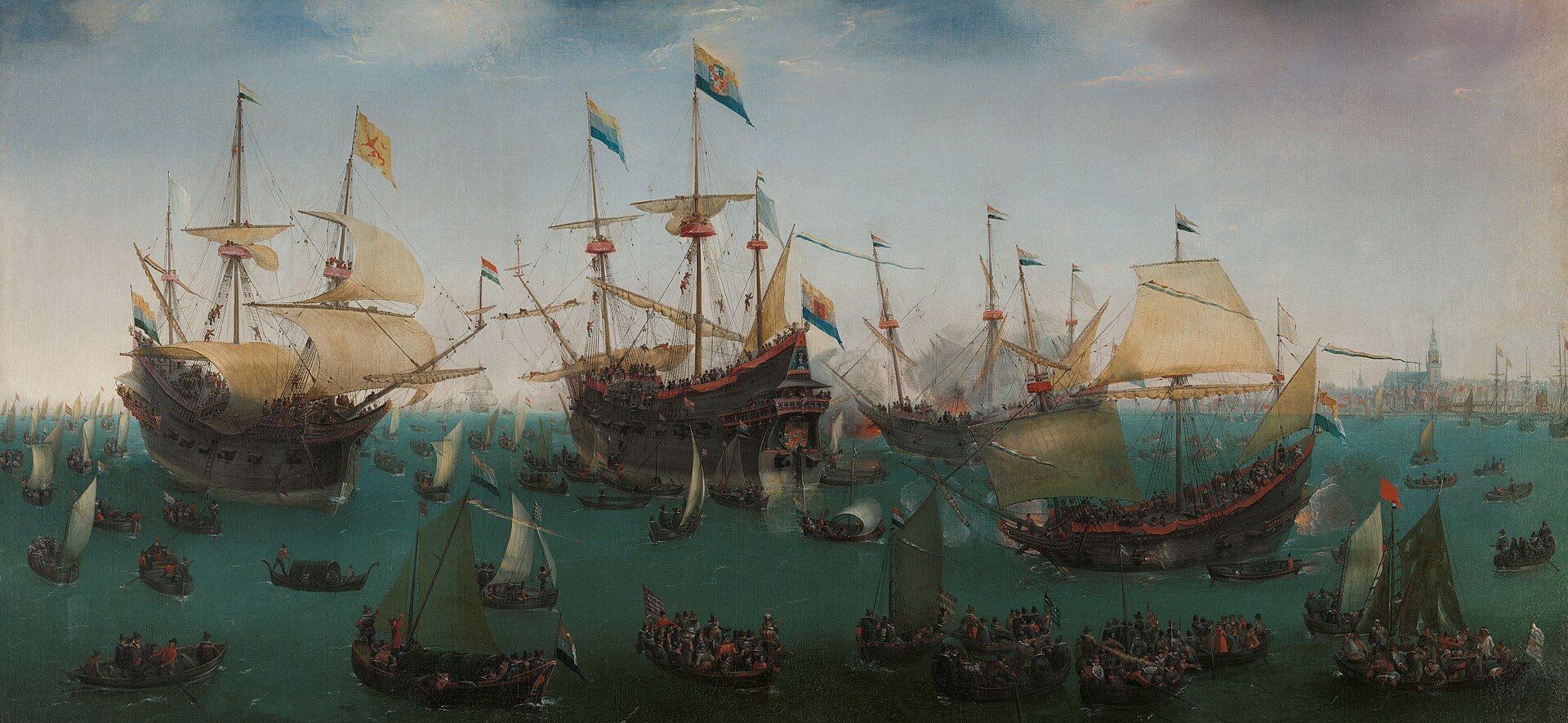
At the beginning of the seventeenth century, the small volcanic Banda Islands held immense strategic and commercial significance in maritime Southeast Asia. The archipelago was the sole producer of nutmeg and mace, two spices that commanded extraordinary prices across European markets. Dutch expeditions first made contact with the Bandanese in 1599, establishing an outpost and signing trade agreements with local leaders. The consolidation of several trading ventures in 1602 produced the united Dutch company, commonly known as the VOC, which held sovereign powers to conclude treaties, erect fortifications, and wage war across the East Indies.
Dutch officials immediately sought an exclusive monopoly over the spice harvest, insisting that the Bandanese trade solely with them. The islanders resisted these terms, preferring open commerce that allowed them to sell to the highest bidder, including English, Javanese, and Portuguese merchants. Friction escalated rapidly in May 1609 when negotiations collapsed on the island of Banda Neira. Local leaders ambushed and killed the Dutch commander Pieter Willemsz Verhoeff along with dozens of his men. Dutch forces retaliated by plundering settlements and constructing Fort Nassau to enforce their commercial claims.

Keep reading in Yester
Coming soon to the App Store
Keep following the story
Sources
- Genocide in the Spice Islands (The Cambridge World History of Genocide, Cambridge University Press)
- Banda Lontor (Atlas of Mutual Heritage, Dutch Cultural Heritage Agency)
- Recruiting Mercenaries in Japan (Amboyna, Monash University project)
- The VOC Genocide (Historia, via Histori Bersama)
- Conquest of the Banda Islands by the VOC (1609-1621) (Journal of Indonesian History)
- Dutch conquest of the Banda Islands
Image: Rijksmuseum