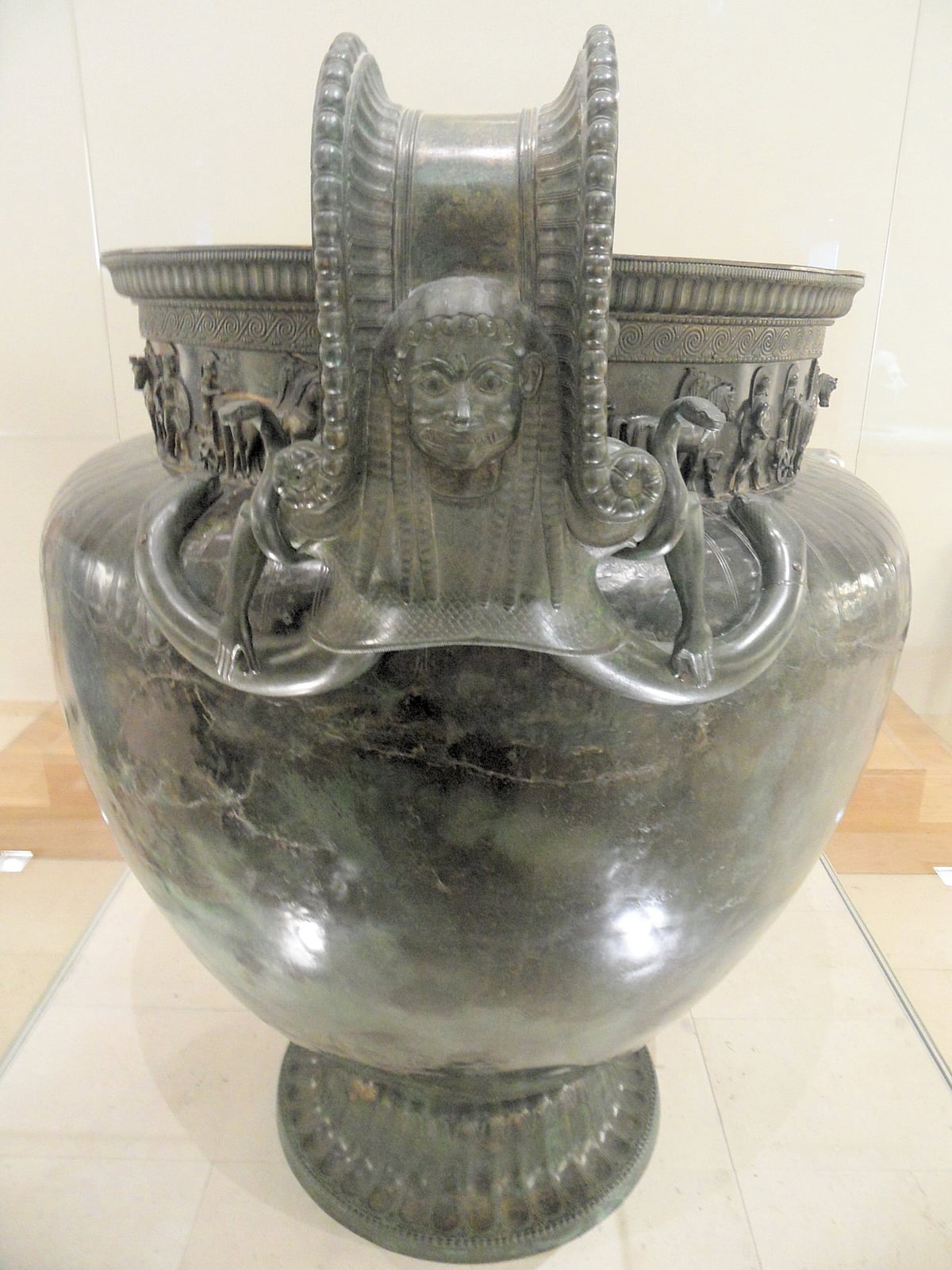
A Celtic Woman Is Buried with the Giant Vix Krater
Her grave held a 1.6-metre Greek bronze vessel, the largest known from antiquity.
In northern Burgundy near the village of Vix, a steep, flat-topped hill known as Mont Lassois overlooks the surrounding agricultural plain and the upper course of the Seine. In early 1953, Maurice Moisson and René Joffroy excavated an undisturbed burial mound at the foot of this prehistoric settlement. Beneath an earth and stone tumulus roughly forty metres across, they uncovered a wooden funerary chamber measuring three metres on each side. The tomb had preserved an intact Iron Age burial dating to around 470 BC, containing an assemblage of luxury grave goods that altered archaeological perspectives on trade between Mediterranean societies and temperate western Europe.
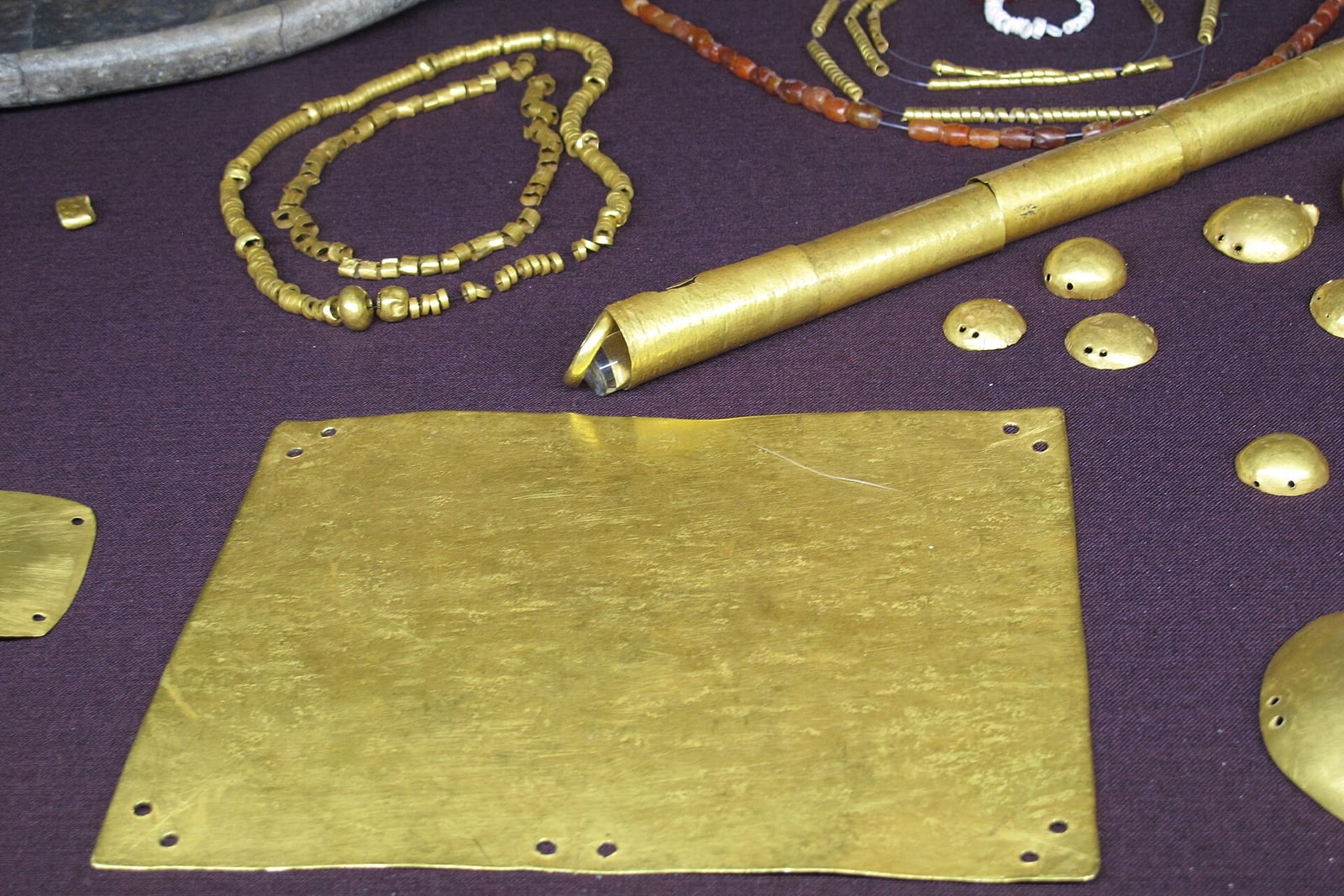
The central occupant lay in the detached box of a four-wheeled cart, whose metal components outlasted the decaying timber. Estimated to have died between the ages of thirty-five and forty, the individual was accompanied by extensive personal jewellery, including six fibulae, bracelets of slate and amber beads, and a 480-gram torc made of 24-carat gold. Early excavators identified the deceased as a woman of elite rank, popularising titles such as the Lady or Princess of Vix. Although Bettina Arnold reexamined the burial in 1991 and highlighted uncertainties surrounding traditional assumptions, osteological work by Christopher Knüsel in 2002 reaffirmed the skeleton as likely female with some androgynous characteristics.

Keep reading in Yester
Coming soon to the App Store
Keep following the story
Sources
Image: Ivory