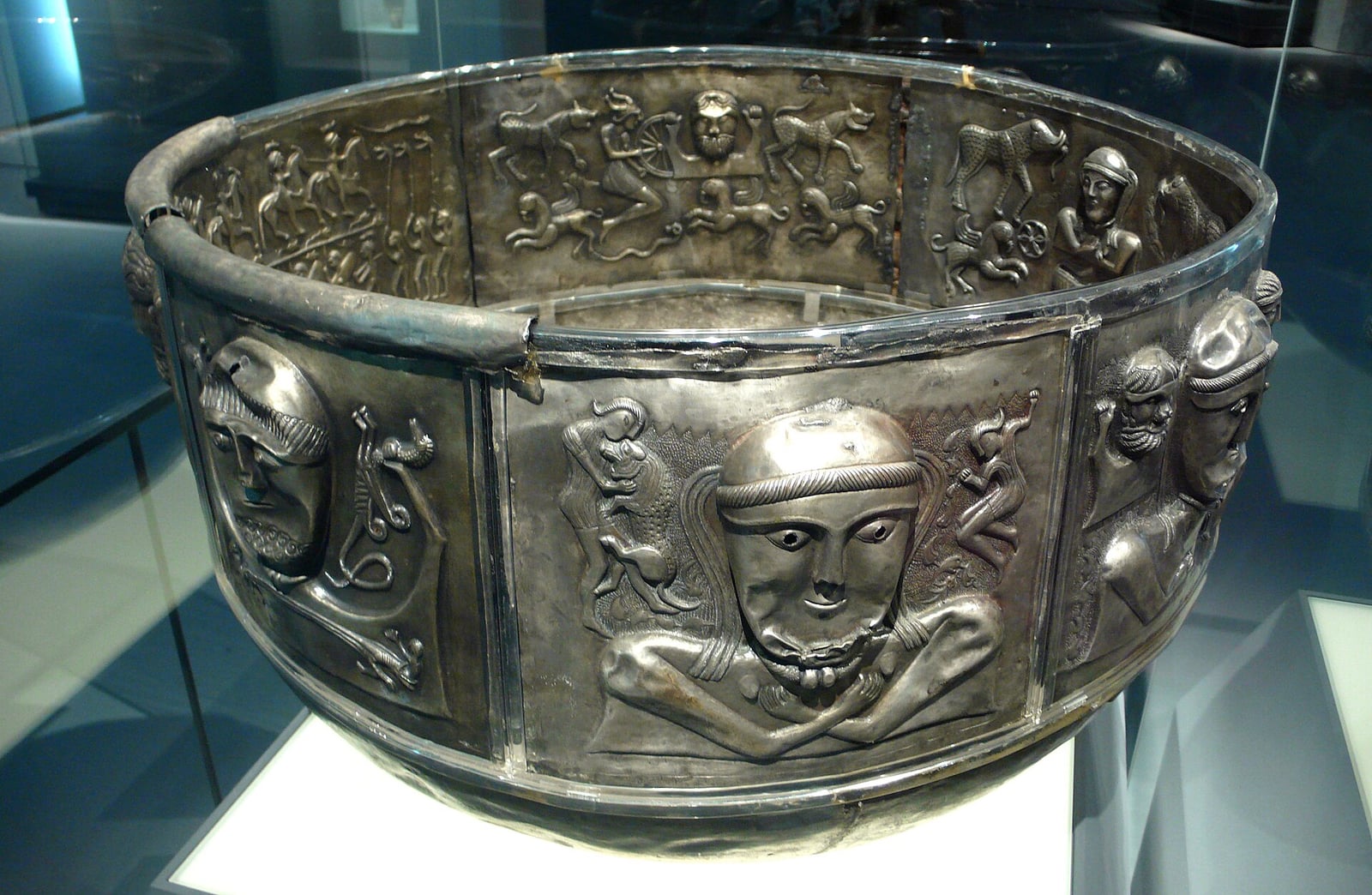
The Gundestrup Cauldron Shows Gods in Silver
Its panels show deities, an antlered figure and warriors, perhaps made far away in Thrace.
On 28 May 1891, peat cutters working in the small Rævemose bog near Gundestrup in northern Denmark uncovered a disassembled hoard of worked silver. The pieces lay stacked within a rounded base plate, suggesting that someone had deliberately concealed them. When assembled, the components formed a monumental vessel measuring 69 centimetres in diameter, 42 centimetres in height, and weighing just under 9 kilograms. Consisting of curved silver plates and rim tubing, the vessel stood out immediately as the largest known piece of European Iron Age silver work.
The cauldron was not discovered whole. Its surviving elements comprise the rounded base plate, five long rectangular interior plates, seven shorter exterior plates, and fragments of tubular rim fittings containing traces of an iron hoop. To encircle the rim properly, an eighth exterior plate would have been required, which remains missing. While early botanical analysis indicated the container was left on dry ground before peat formed over it, an investigation conducted in 2002 proposed that a bog might already have existed when the hoard was buried.

Keep reading in Yester
Coming soon to the App Store
Keep following the story
Sources
Image: Rosemania