
Ninety Days Become Fourteen Years on Mars
Opportunity was built for a short expedition. It kept driving, uncovering evidence of water and showing how much a small robot could learn from rocks.
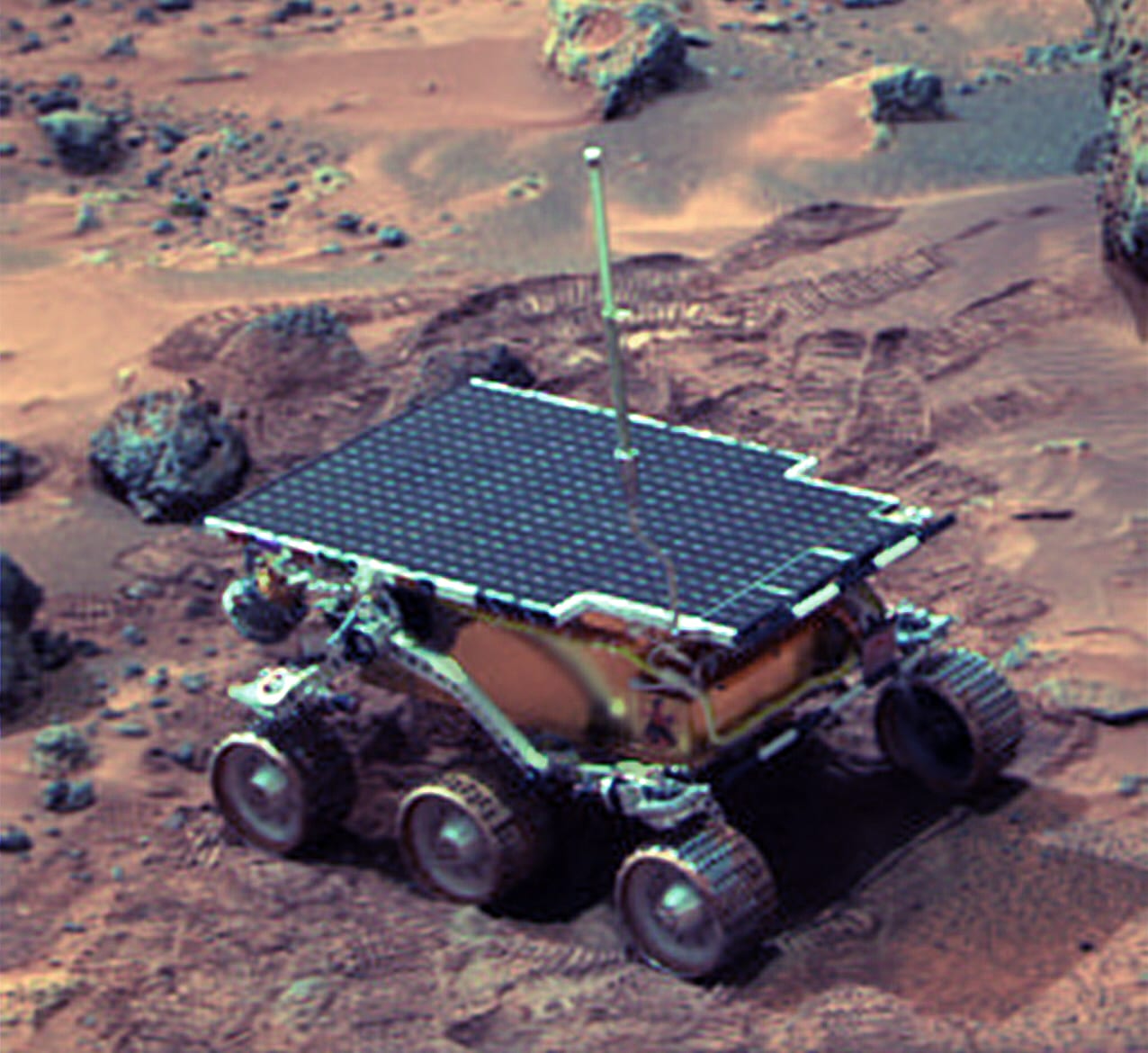
Opportunity arrived on Mars in January 2004 with a mission planned for ninety Martian days. It landed inside a small crater, close to an exposed outcrop that immediately gave its science team something valuable to inspect. The rover had not crossed a desert to find its first geological target. It had effectively landed beside one. Over the following fourteen years, that fortunate beginning became a much larger investigation.
The mission’s central question concerned water. Liquid water leaves traces in the minerals, textures and arrangement of rocks, even after the water itself has disappeared. Opportunity carried cameras and instruments that could examine those traces. Its job was not to photograph a present-day river or find an organism. It was to work out what kinds of conditions had existed in a place that now looked dry and hostile.

Keep reading in Yester
Coming soon to the App Store
Keep following the story
Sources
- NASA's Opportunity Rover Mission on Mars Comes to End (NASA Science)
- Mars Exploration Rovers: Spirit and Opportunity (NASA Science)
- Six Things to Know About NASA's Opportunity Rover (NASA Science)
- Looking Back at 'Purgatory Dune' (NASA Photojournal)
- Tests to Help Plan Opportunity Moves (NASA Photojournal)
Image: NASA/JPL/Cornell