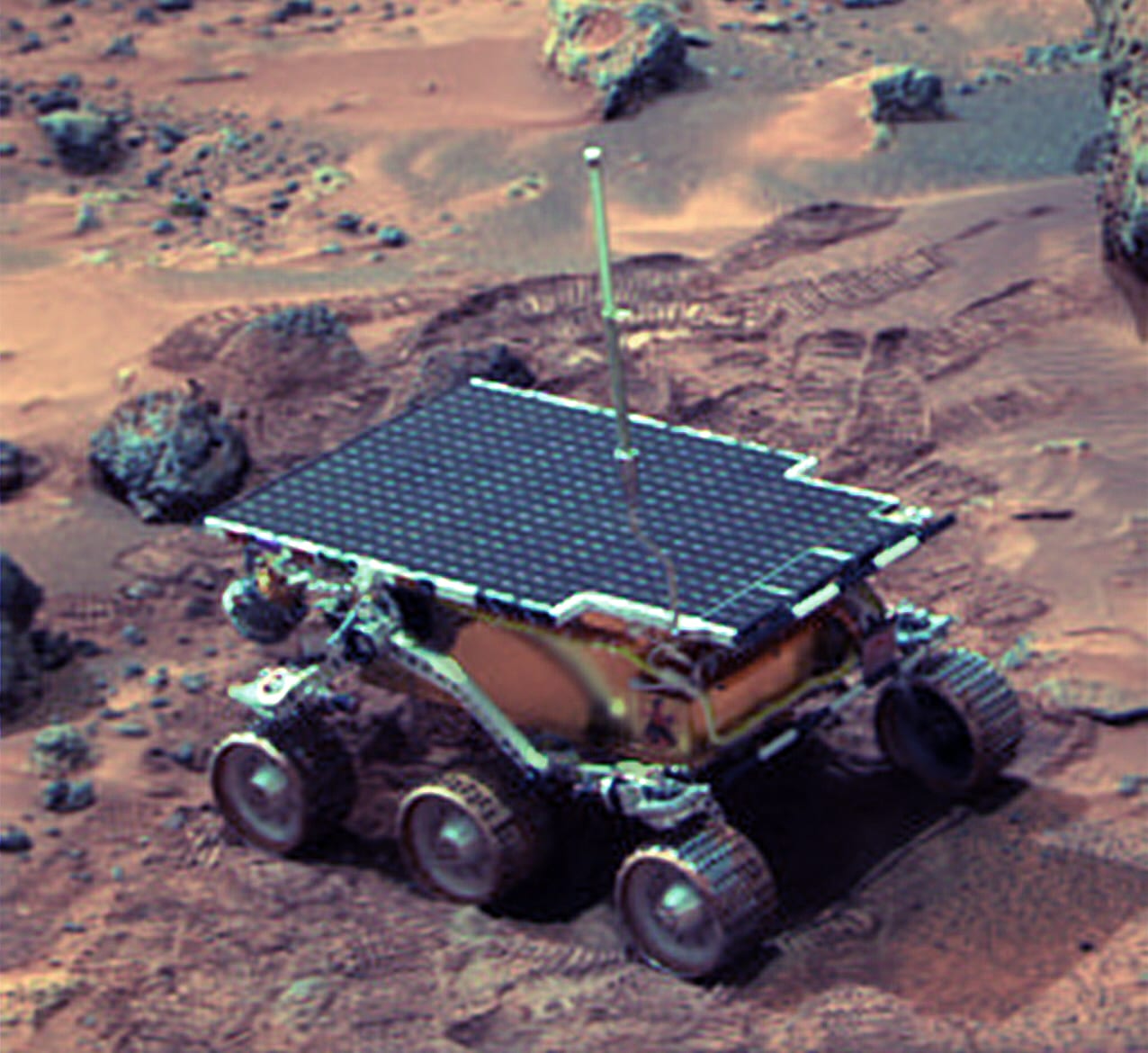
A Small Rover Opens a New Mars Era
NASA's Pathfinder mission demonstrated that a compact, automated lander and rover could safely touch down on Mars and analyze the landscape. By proving that mobile robotic exploration was viable across interplanetary distances, the effort fundamentally changed how scientists investigate other worlds.
On December 4, 1996, Mars Pathfinder launched toward Mars carrying a lander and a small six-wheeled rover. Rather than sending people, the flight was designed to test a comparatively compact method for reaching the Martian surface and navigating it. After an interplanetary journey of about seven months, the spacecraft slowed through the atmosphere and deployed airbags to cushion its arrival on July 4, 1997. Once the bouncing ceased, the lander unfolded its petals, leaving the rover to face the crucial test of reaching the ground safely.
In July 1997, the rover rolled down its ramp to begin examining the nearby terrain. Named after the abolitionist Sojourner Truth, the vehicle carried onboard cameras along with an instrument tailored for studying rock and soil chemistry. Because of its diminutive size, individual rocks on the Martian surface became substantial physical obstacles rather than harmless background scenery.

Keep reading in Yester
Coming soon to the App Store
Keep following the story


Sources
Image: NASA