Utamaro Brings Faces into Close View
Portrait prints transformed the presentation of women within a commercial world of publishers, fashion and restricted lives.
During the 1790s, the commercial print industry of Edo witnessed a distinct stylistic transformation in depictions of the pleasure quarters. For decades, multi-block colour prints known as nishiki-e had presented women in full-length arrangements, emphasizing elaborate kimono patterns and conventionalized postures. The artist Kitagawa Utamaro broke from these shared formulas in the early 1790s by concentrating on single-sheet, half-length portraits. This compositional focus brought feminine faces into close view, highlighting individual expressions, hairstyles, and varied social stations across the capital.
Utamaro's path through the commercial book trade had developed gradually over two decades. Born around 1753 and trained by Toriyama Sekien, a Kanō-schooled artist who created popular prints, he initially worked under the name Kitagawa Toyoaki. His early output consisted of theater playbook covers, popular literature illustrations, and occasional actor prints. By the autumn of 1782, Utamaro introduced his new art name at a gathering of leading poets and print designers. He later lived in the household of the entrepreneurial publisher Tsutaya Jūzaburō, illustrating comic verse volumes and picture books.

Keep reading in Yester
Coming soon to the App Store
Keep following the story
Sources
- Half-length portrait of Ohisa of Takashima teashop, museum number 1927,0613,0.6 (British Museum)
- Hideyoshi and his wives and concubines viewing cherry blossoms at Daigo, museum number 1909,0406,0.472.1-3 (British Museum)
- The Flirtatious Type, from Ten Types in the Physiognomy of Women (Cleveland Museum of Art)
- Midorigi of the Wakamatsuya, Kitagawa Utamaro (Davis Museum, Wellesley College)
- Kitagawa Utamaro: 200 years later (Tikotin Museum of Japanese Art, Haifa)
- Utamaro
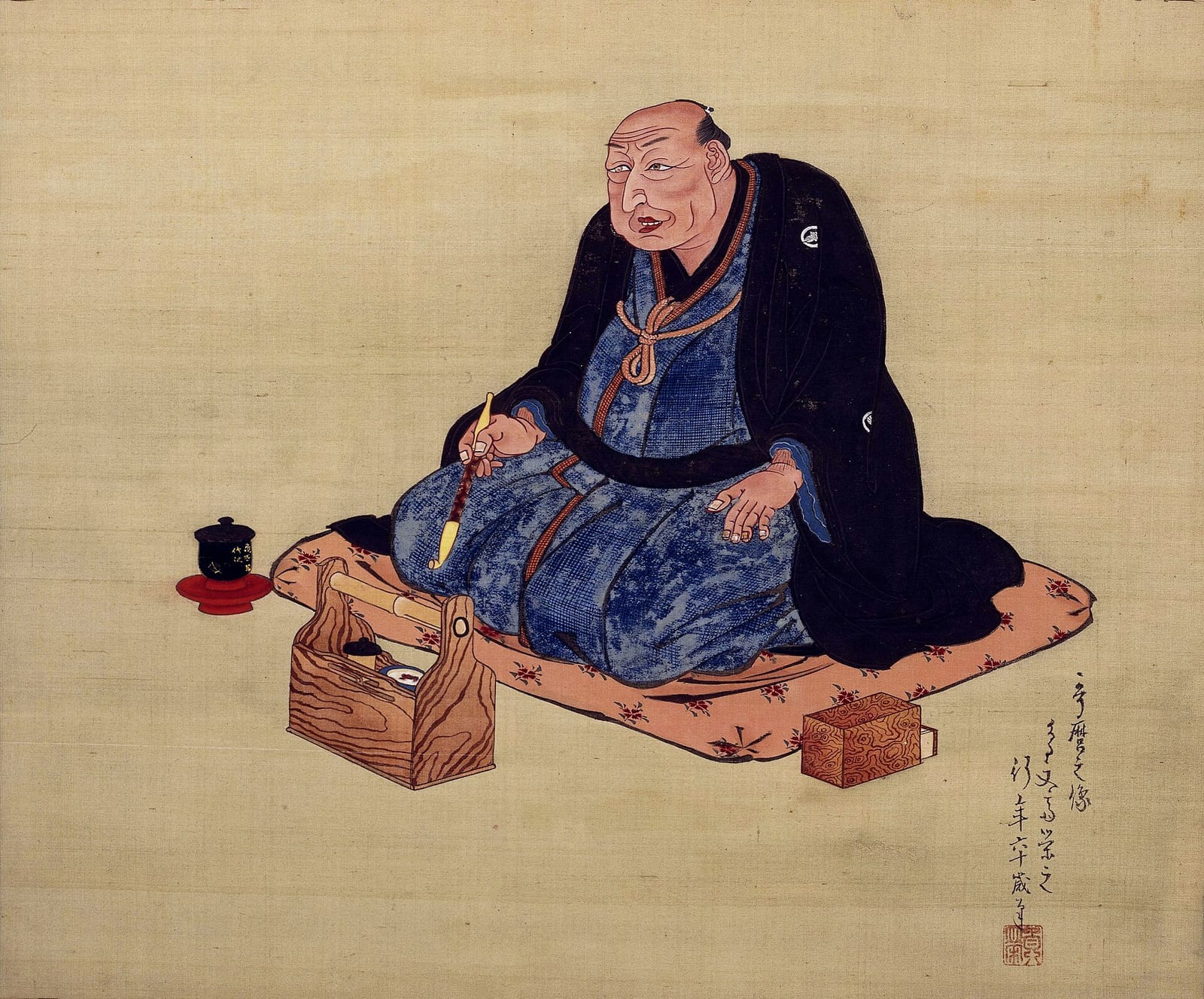
Image: attributed to Chōbunsai Eishi (1756 - 1829)