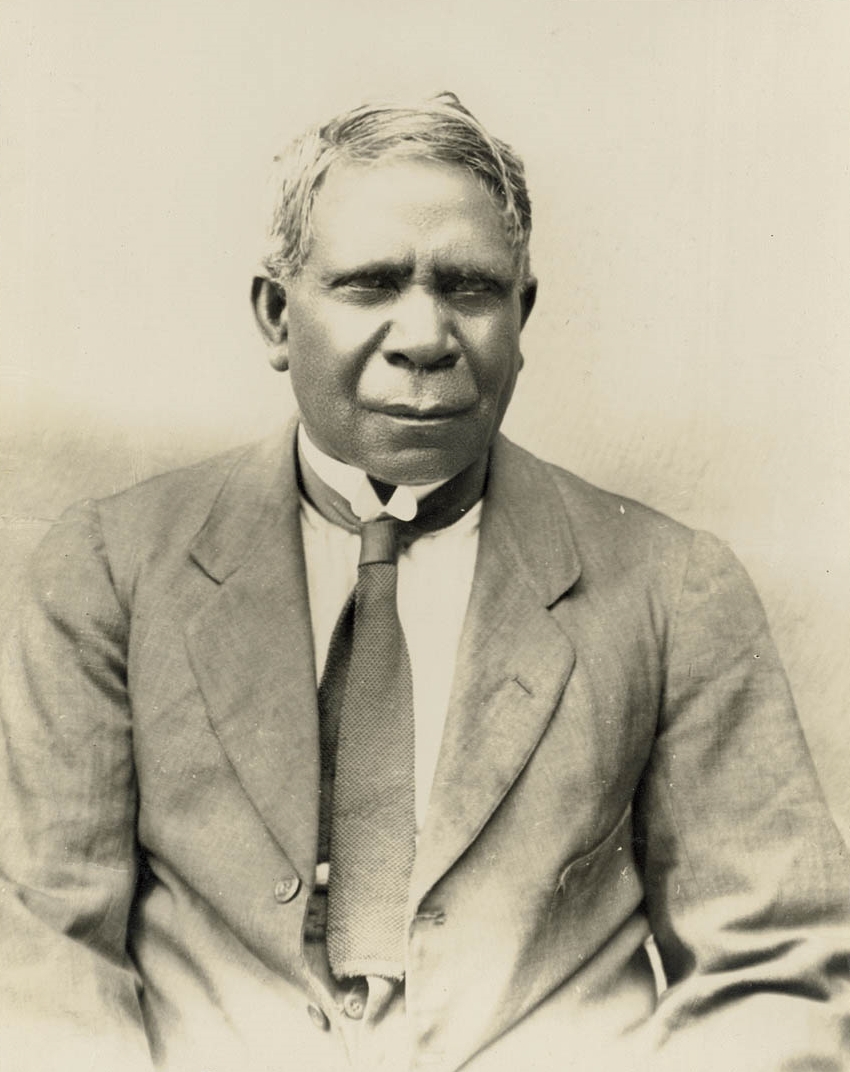
David Unaipon Claims a Place in Print
An Aboriginal writer brought stories and intellectual work into a publishing world that often denied Indigenous authorship. His career exposes the difference between being recorded and being credited.
David Unaipon was born in 1872 at the Point McLeay Mission in South Australia, a community established to convert surviving members of the displaced Ngarrindjeri nation. His father had been the mission's first Aboriginal convert to Christianity, and Unaipon was educated in the mission school before working as a domestic servant in Adelaide. There he received encouragement to pursue science, music, and literature. Returning to the mission, he worked varied jobs, studied classical languages, and developed a keen interest in mechanical invention and the physics of movement.
During the 1910s and 1920s, employment as a subscription collector for the Aborigines' Friends Association granted Unaipon an unusual degree of mobility across southern Australia. He delivered public lectures in churches and schools, addressing audiences on science, Ngarrindjeri customs, and wider Aboriginal traditions. Alongside public speaking, he developed technical devices, patenting a modified sheep-shearing handpiece in 1909 and predicting aircraft designs inspired by the aerodynamics of the boomerang. Though newspapers often praised him as an inventive mind, he lacked the capital to commercialise his patents, which eventually lapsed.

Keep reading in Yester
Coming soon to the App Store
Keep following the story

Sources
Image: Unknown Unknown