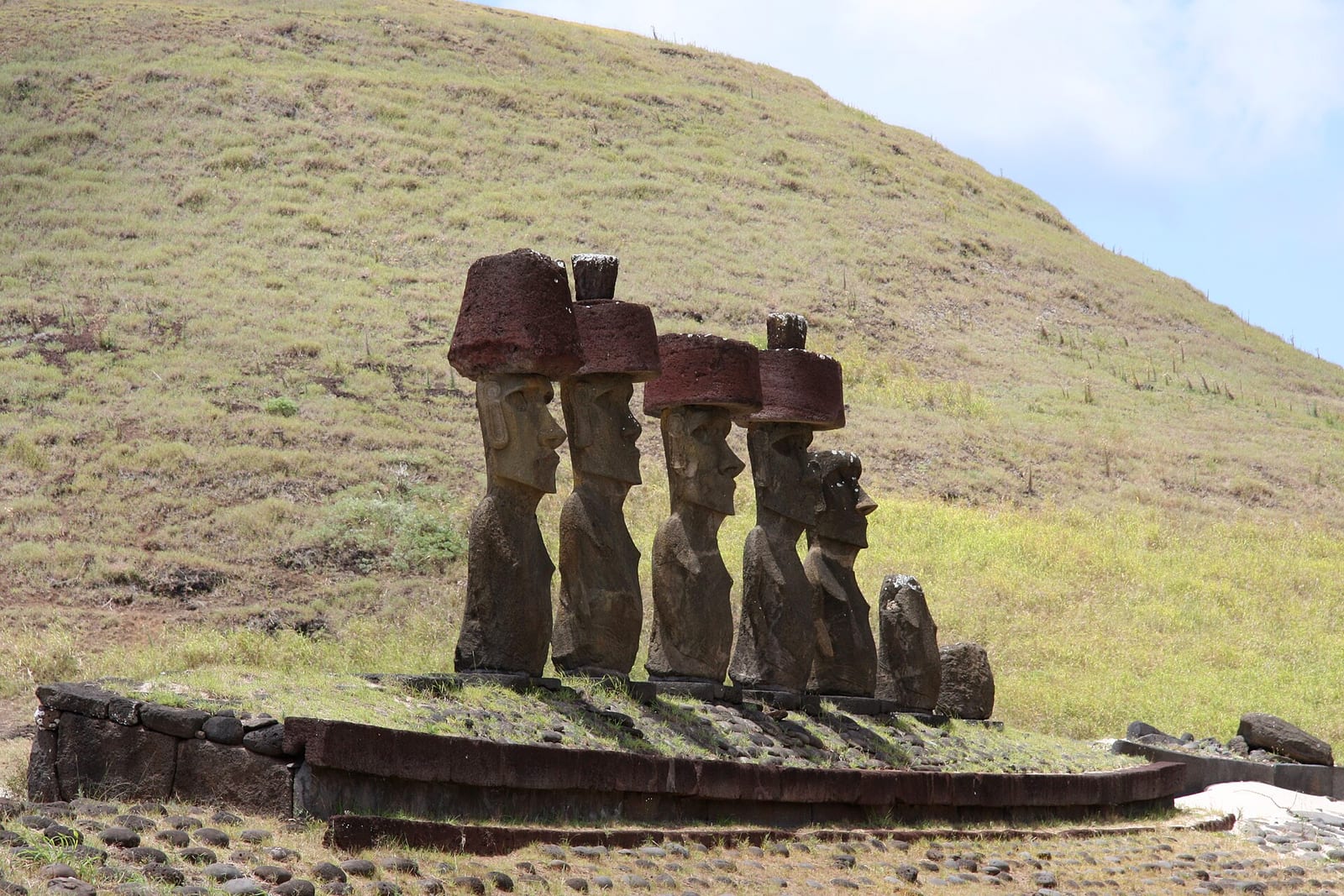
Rapa Nui’s Moai Belong to a Living People
The island’s monumental figures were part of a Polynesian society, not an unexplained mystery. Reading them well means looking beyond familiar stories of collapse.
The moai of Rapa Nui are often introduced as a mystery, as though impressive stone figures could not belong to an intelligible human society. That framing begins in the wrong place. Polynesian settlers built a culture on the island, and ancestral monuments formed part of its religious and social life. The statues were made by people with skills, relationships and purposes. Asking how they worked is worthwhile. Treating their achievement as evidence that ordinary human explanations are impossible is not.
Many moai were carved from volcanic tuff at Rano Raraku and moved to ceremonial platforms called ahu. Quarry remains, unfinished figures and the monuments themselves provide different kinds of evidence about production. Researchers have investigated several possible transport methods, including experiments involving ropes and controlled rocking. Experimental success does not prove that every statue traveled in exactly the same way. It does show why careful attention to materials and coordinated labor can replace an atmosphere of inexplicable wonder with more interesting, testable questions.

Keep reading in Yester
Coming soon to the App Store
Keep following the story
Sources
Image: Docrgd