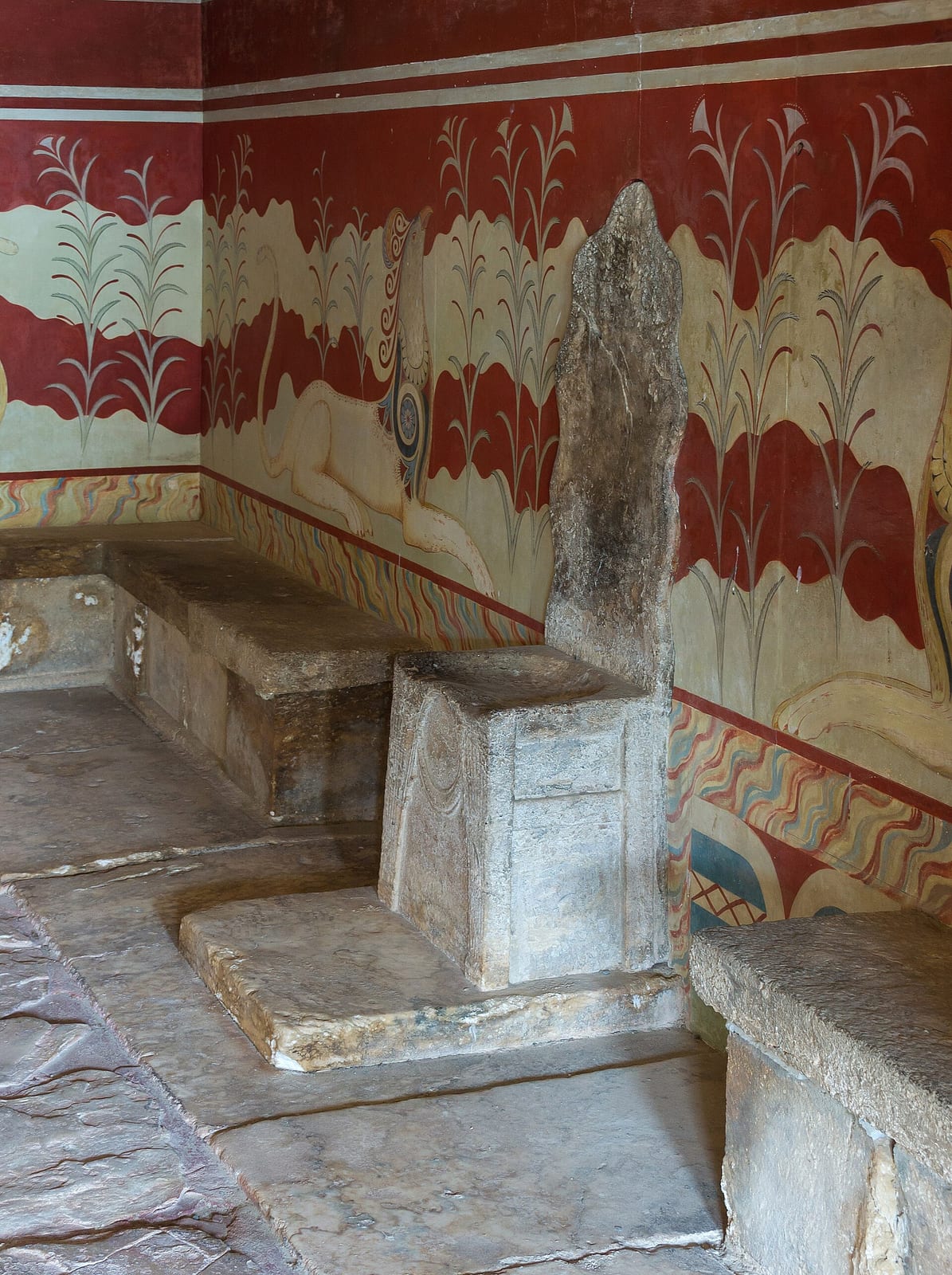
Knossos Connects Palace Life with a Mediterranean World
An ancient Cretan complex and its controversial modern reconstruction shape how we imagine the Bronze Age.
Rising on Kephala hill south of Heraklion, Knossos preserves the long material history of an urban community overlooking the Kairatos river valley. Farming families first established a settlement there around 7000 BC, depositing layers of domestic craft materials and tools across successive Neolithic phases. By the early second millennium BC, the growing town had altered the hilltop landscape to erect an expansive architectural complex. The first palace, built around 1900 BC, operated as a hub for regional redistribution and administration until destruction around 1700 BC, often associated with an earthquake.
Following that catastrophe, builders embarked on an ambitious reconstruction that defined the Second Palace period. The expanded monumental complex covered approximately 20,000 square meters, arranged around a large rectangular central court that directed internal movement and accommodated assemblies. Its multi-storey wings incorporated light wells, air shafts, drainage channels, and downward-tapering wooden columns set on stone plinths. Surrounding the ceremonial core were deep storage magazines lined with large ceramic jars, where officials recorded commodities and agricultural yields, cementing the site as an economic and ritual powerhouse linked to Aegean and eastern Mediterranean exchange.

Keep reading in Yester
Coming soon to the App Store
Keep following the story
Sources
Image: Jebulon