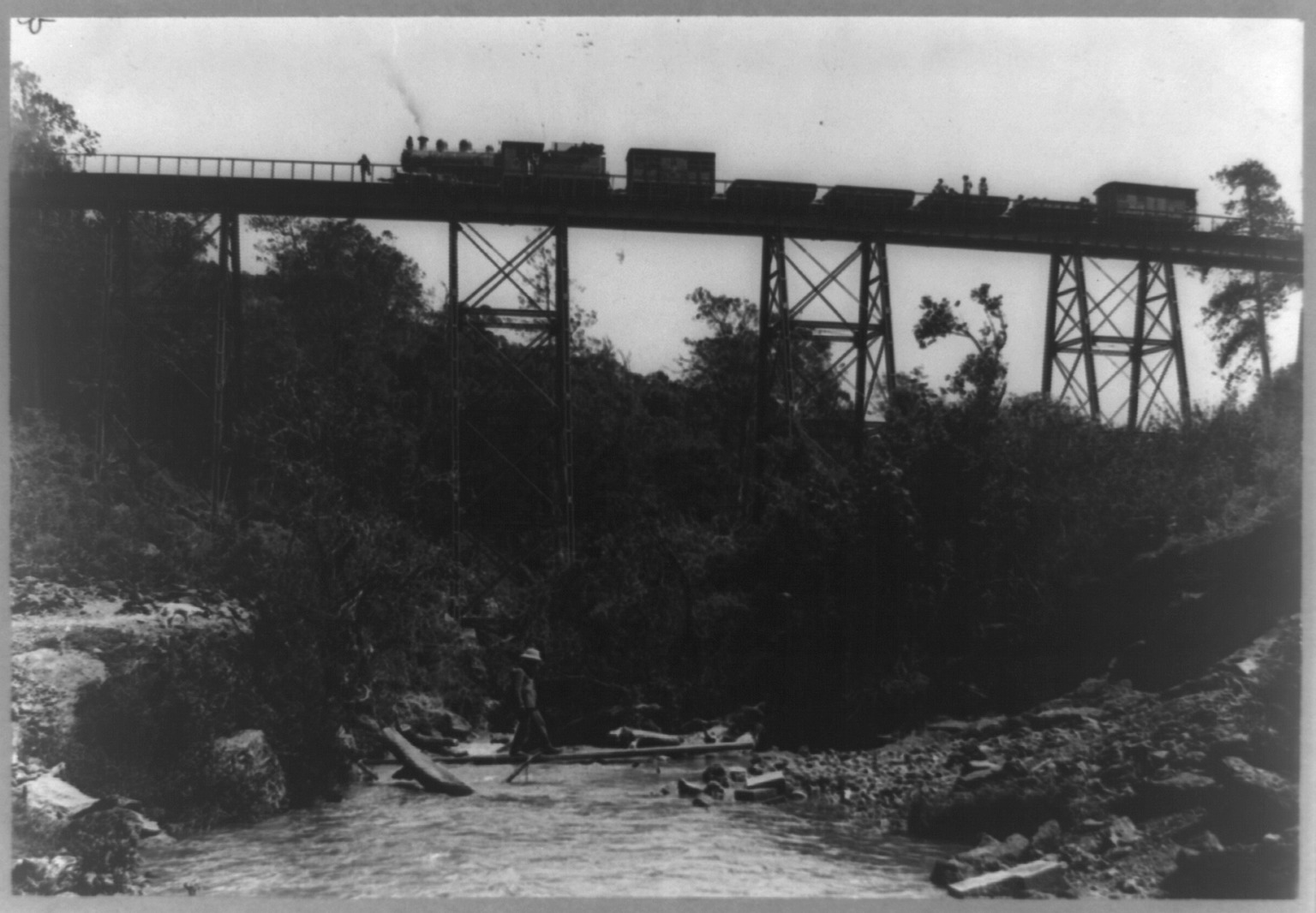
The Uganda Railway Reaches Lake Victoria
A line from Mombasa to Kisumu was built largely by workers brought from India.
In 1896, British imperial administrators launched the construction of a metre-gauge railway originating from the Indian Ocean port of Mombasa. Formally authorised by Parliament through the Uganda Railway Act, the enterprise aimed to connect the East African coastline with Lake Victoria. While Britain had framed the endeavour partly around agreements from the Brussels Conference Act of 1890 to curtail the interior slave trade, the route was also designed to secure political control over the African Great Lakes and speed the deployment of personnel and military forces inland. Despite its official name, the entire initial 1,060-kilometre corridor ran across territories that later formed Kenya, reaching its western terminus at Kisumu in 1901.
The engineering effort required vast logistics managed under chief engineer George Whitehouse. Because the territory lacked manufacturing infrastructure, the railway depended on imported materials, demanding the development of a modern deep-water facility at Kilindini Harbour in Mombasa. Over the five-year project, transport ships delivered roughly 200,000 nine-metre rail sections, 1.2 million sleepers, and millions of steel keys and fasteners, primarily sourced from India. Constructing a single-track line through varied landscapes also called for heavy steel girders to erect causeways and bridge deep chasms.

Keep reading in Yester
Coming soon to the App Store
Keep following the story
Sources
Image: Frank and Frances Carpenter Collection