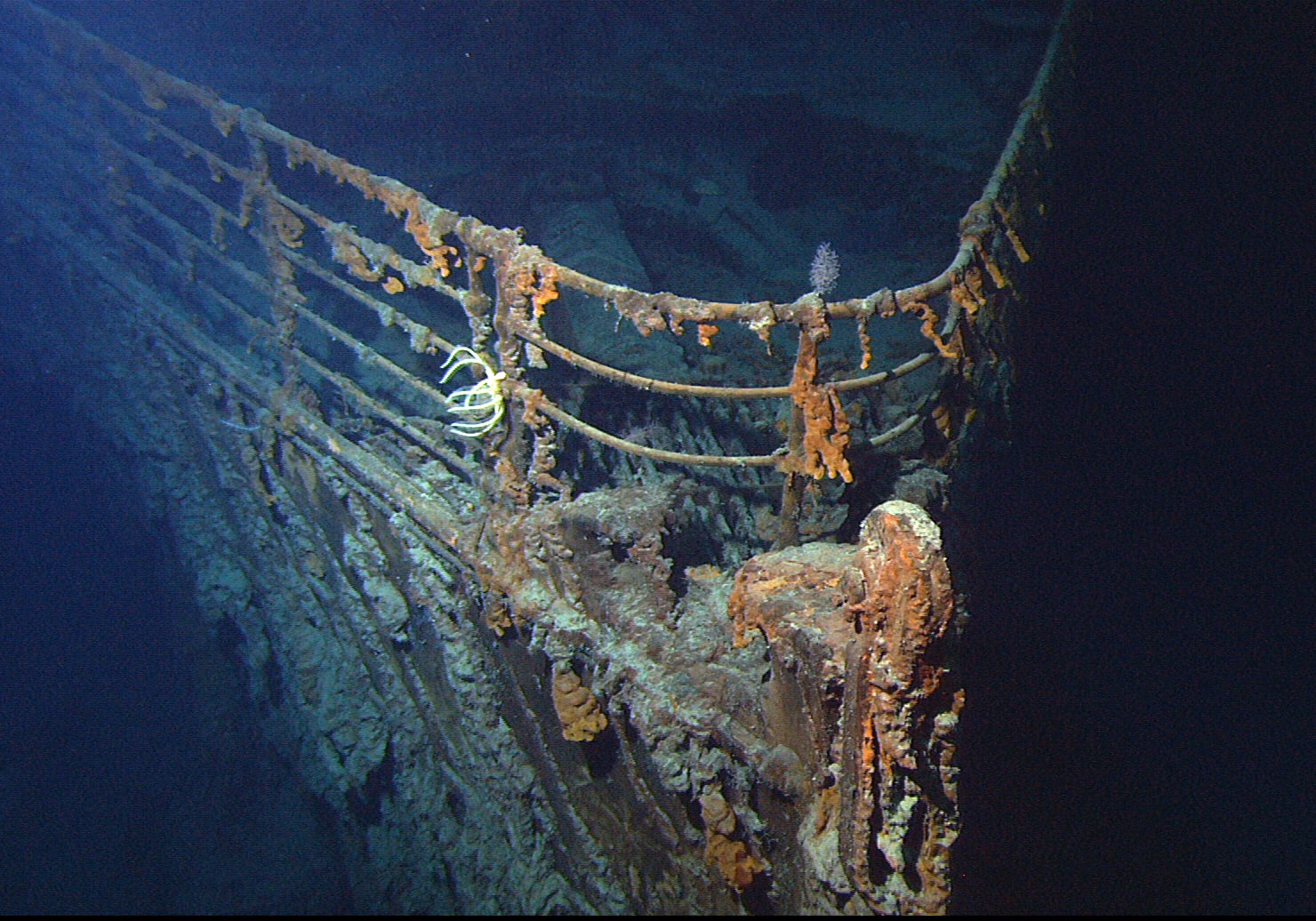
The Wreck of the Titanic Is Found
A French and American expedition located the ship on the ocean floor.
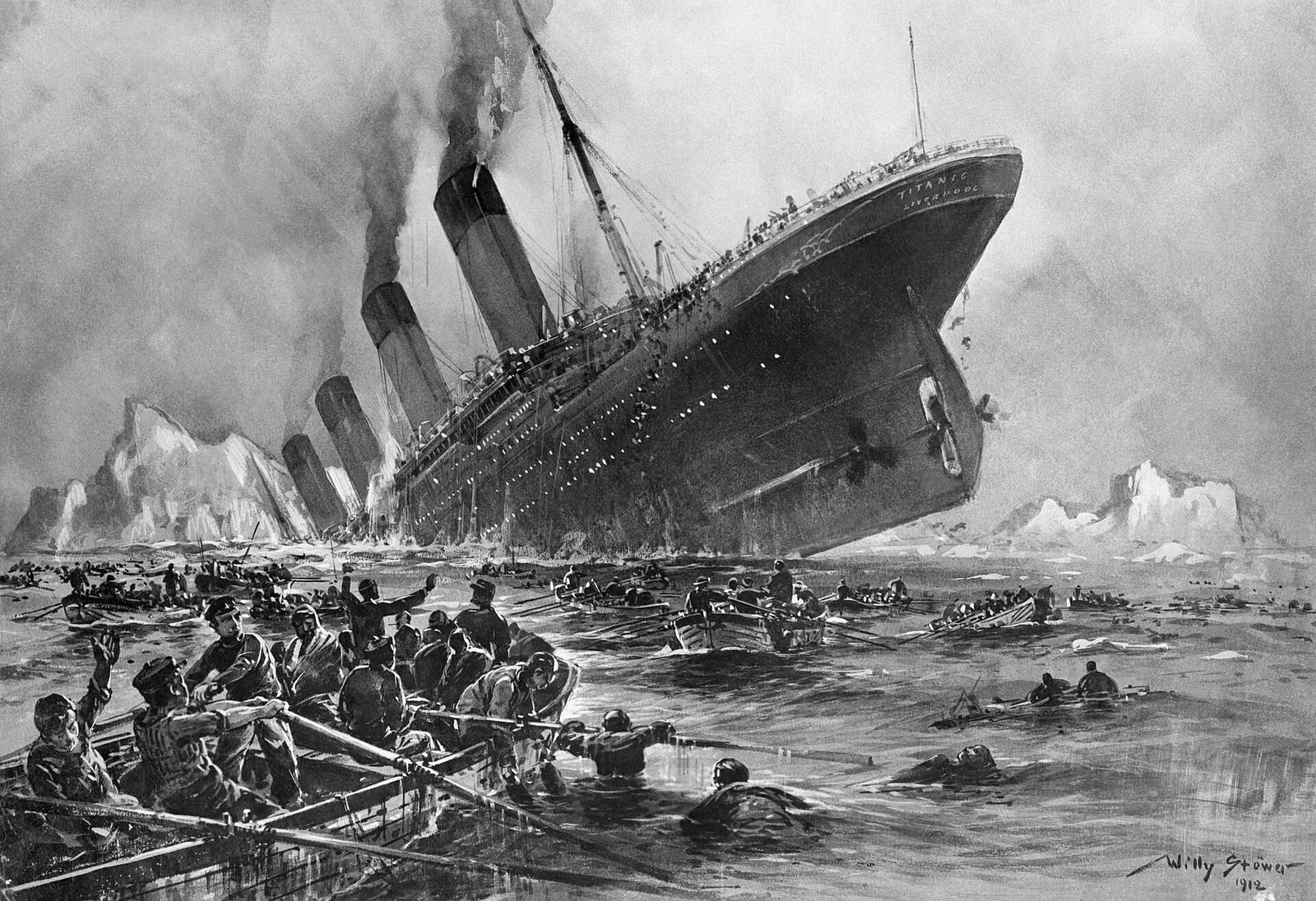
In the early morning hours of 1 September 1985, cameras towed thousands of feet below the surface of the North Atlantic Ocean revealed the rusted remains of a marine boiler. The discovery brought an end to more than seven decades of speculation and unsuccessful attempts to locate the wreckage of the British liner RMS Titanic, which had foundered on 15 April 1912 after colliding with an iceberg on its maiden crossing. The ship lay in two principal sections hundreds of meters apart, surrounded by an expansive scatter of debris at a depth of approximately 12,500 feet.
Proposals to locate and salvage the sunken liner had emerged almost immediately after the disaster, though early twentieth-century divers could not cope with the crushing water pressure at such depths. Over the decades, diverse and impractical schemes were considered. Inventors and adventurers devised notions ranging from lifting the hull with nylon balloons or millions of glass spheres to filling the interior with ping-pong balls, injecting 180,000 tons of molten wax or Vaseline, and freezing the surrounding seawater into an enormous, buoyant jacket of ice with 500,000 tons of liquid nitrogen.

Keep reading in Yester
Coming soon to the App Store
Keep following the story
Sources
- Forty years after the Titanic discovery, WHOI continues to advance ocean research and exploration (Woods Hole Oceanographic Institution)
- Forty years ago (Woods Hole Oceanographic Institution)
- The Titanic's watery grave is located (History.com, A&E Networks)
- RMS Titanic: History and Significance (NOAA Office of General Counsel)
- Halomonas titanicae sp. nov., a halophilic bacterium isolated from the RMS Titanic (International Journal of Systematic and Evolutionary Microbiology, via PubMed)
- Wreck of the Titanic
Image: Courtesy of NOAA/Institute for Exploration/University of Rhode Island (NOAA/IFE/URI).