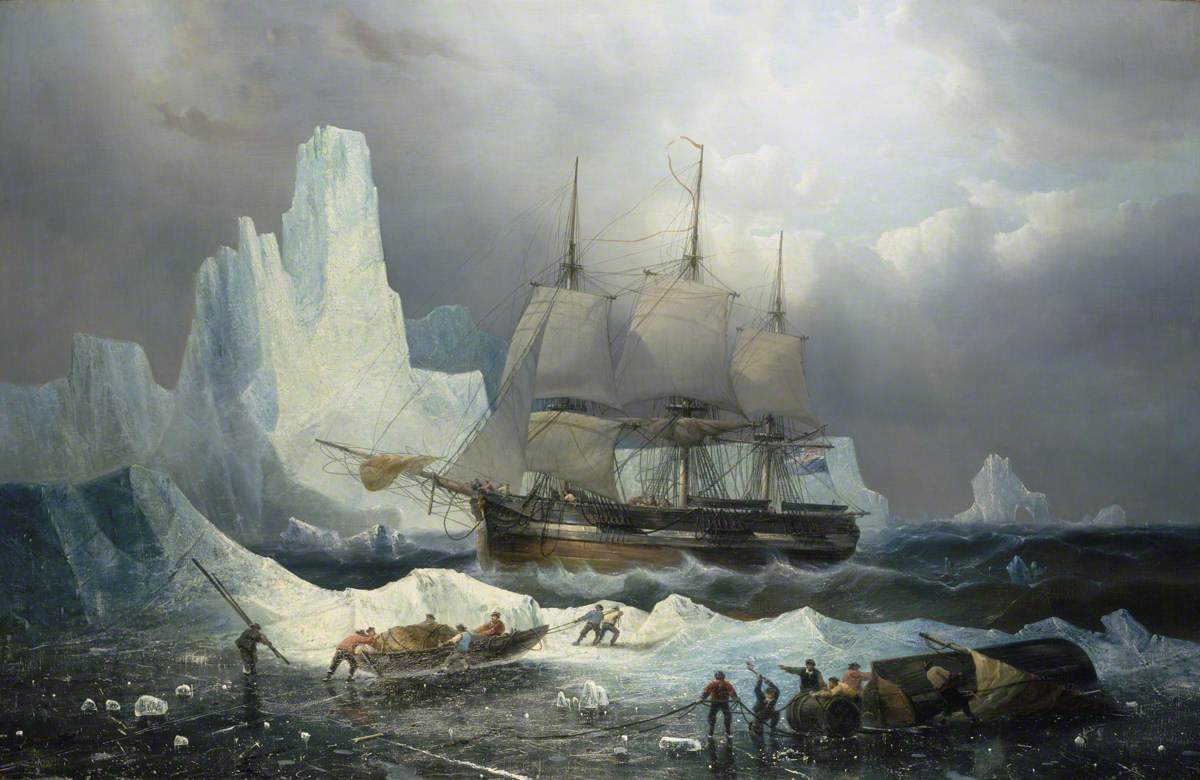
Searchers Find the Wreck of Franklin’s HMS Erebus
Inuit oral history helped guide a Canadian search to a ship lost in the Arctic since the 1840s.
Constructed at Pembroke Dockyard in Wales in 1826, HMS Erebus was originally built as a Hecla-class bomb vessel for the British Royal Navy. The 372-ton warship carried heavy mortars and guns before entering service in the Mediterranean Sea. After two years in southern Europe, naval authorities chose the sturdy hull for polar exploration, outfitting it alongside HMS Terror for a major scientific journey to the southern hemisphere. Between 1839 and 1843, Captain James Clark Ross directed the vessel across multiple Antarctic voyages, mapping coastal features, gathering extensive botanical and magnetic data, and giving the ship's name to Mount Erebus on Ross Island.
Following its return to Britain, the Admiralty selected Erebus for an ambitious expedition to complete the Northwest Passage through the Canadian Arctic. Workers reinforced the ship with iron hull plating and installed an auxiliary steam locomotive engine rated at 25 horsepower, which was connected to a propeller capable of driving the vessel at four knots. Under the overall command of Sir John Franklin, with Francis Crozier commanding Terror, Erebus set sail from Greenhithe in May 1845. Carrying twelve days of coal and large stocks of provisions, the two vessels entered Baffin Bay in the summer of 1845, where European whalers sighted them for the last time.

Keep reading in Yester
Coming soon to the App Store
Keep following the story
Sources
Image: François Musin