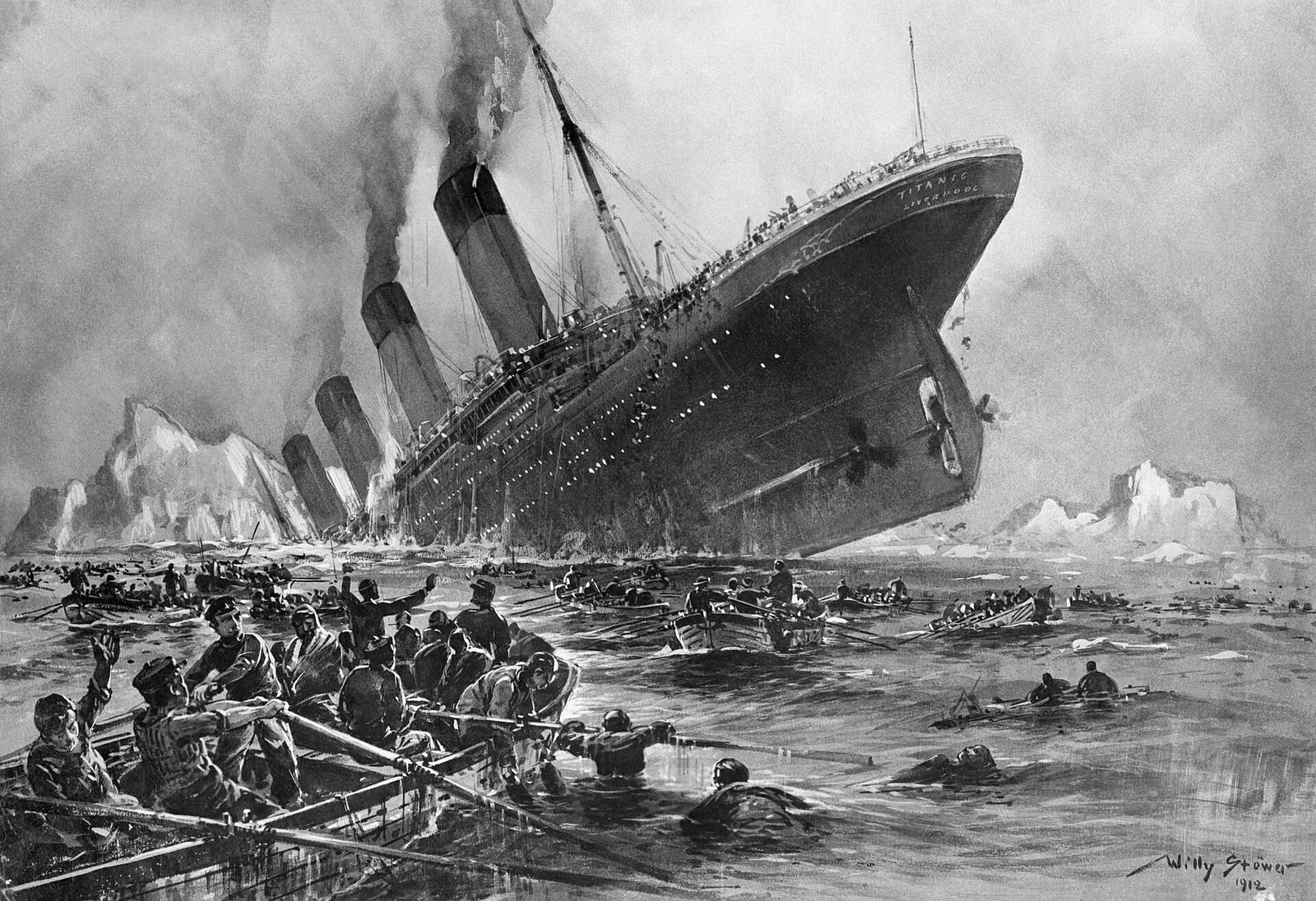
The Titanic Sinks on Its Maiden Voyage
A collision with an iceberg changed rules for safety at sea.
On 10 April 1912, the White Star Line ocean liner RMS Titanic departed Southampton on its maiden voyage bound for New York City. As the second of three Olympic-class vessels, it was one of the largest ships in the world, carrying about 2,200 passengers and crew after stops at Cherbourg and Queenstown. Through much of the voyage its wireless operators received iceberg warnings, but the ship maintained a speed of some 22 knots, and at approximately 11:40 pm on 14 April, about 400 nautical miles south of Newfoundland, an iceberg was sighted directly ahead.
First Officer William Murdoch attempted an evasive turn, but the liner suffered an underwater glancing collision along its starboard side. Although early popular accounts presumed a continuous tear along the hull exceeding three hundred feet, examination of the wreck revealed a series of thin gashes and brittle fracturing and separation of seams in the hull plates, rupturing at least five forward compartments. Titanic's builders had claimed it could stay afloat with four compartments flooded. With at least five breached and its bulkheads not capped at the top, incoming seawater gradually dragged the bow downward, spilling into adjacent sections across the cargo holds and boiler rooms.

Keep reading in Yester
Coming soon to the App Store
Keep following the story

Sources
Image: Willy Stöwer