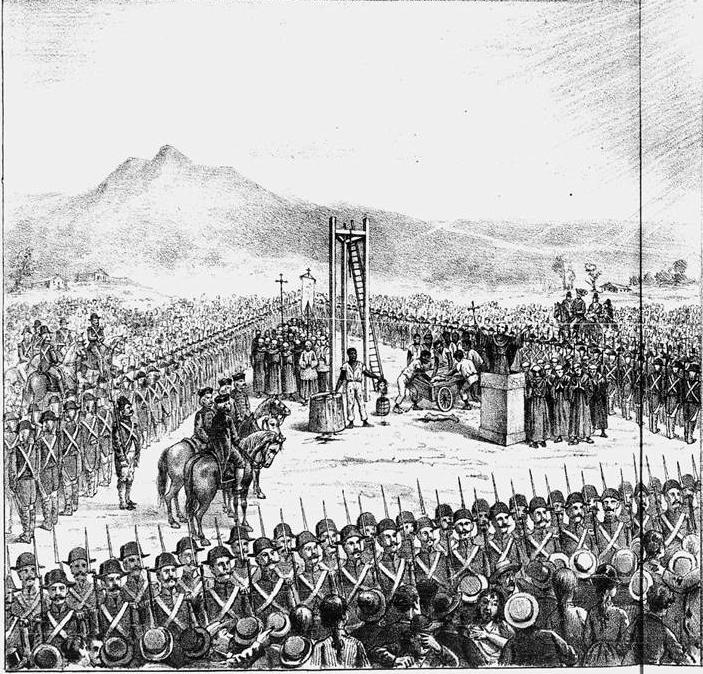
Tiradentes Is Executed for a Plot Against Portuguese Rule
A failed conspiracy in Minas Gerais made its leader a national hero.
On 21 April 1792, colonial authorities in Rio de Janeiro executed Joaquim Jose da Silva Xavier, an army officer popularly known as Tiradentes. His hanging brought an end to the judicial fallout from the Inconfidencia Mineira, an aborted separatist conspiracy uncovered three years earlier in the captaincy of Minas Gerais. Following his death, authorities quartered his body, displayed his head in Vila Rica and set the other parts on posts along the road between Rio de Janeiro and Minas Gerais, where he had previously spread his anti-colonial message.
The plot emerged from economic distress and colonial fiscal pressures. Decades after gold is found in Minas Gerais, the region experienced a marked decline in precious metal extraction. Miners struggled to meet the royal fifth, the traditional tax owed to the Portuguese crown. When local revenue failed to satisfy the required quotas, colonial administrators prepared to enforce the derrama, an extraordinary assessment aimed at collecting back taxes. This pending levy threatened the fortunes of local landowners, debtors, and officials, sparking coordinated resistance.

Keep reading in Yester
Coming soon to the App Store
Keep following the story

Sources
- Xavier, Joaquim Jose da Silva (1746-1792), Glossario de Historia Luso-Brasileira (Arquivo Nacional)
- Tiradentes: muitas formas, um ideal de liberdade (Prefeitura de Belo Horizonte)
- Lei no 10.607, de 19 de dezembro de 2002 (Planalto, Presidencia da Republica)
- Lei no 2.793, de 08/01/1963 (Assembleia Legislativa de Minas Gerais)
- Nossos Simbolos (Governo de Minas Gerais)
- Inconfidência Mineira
Image: Unknown author Unknown author