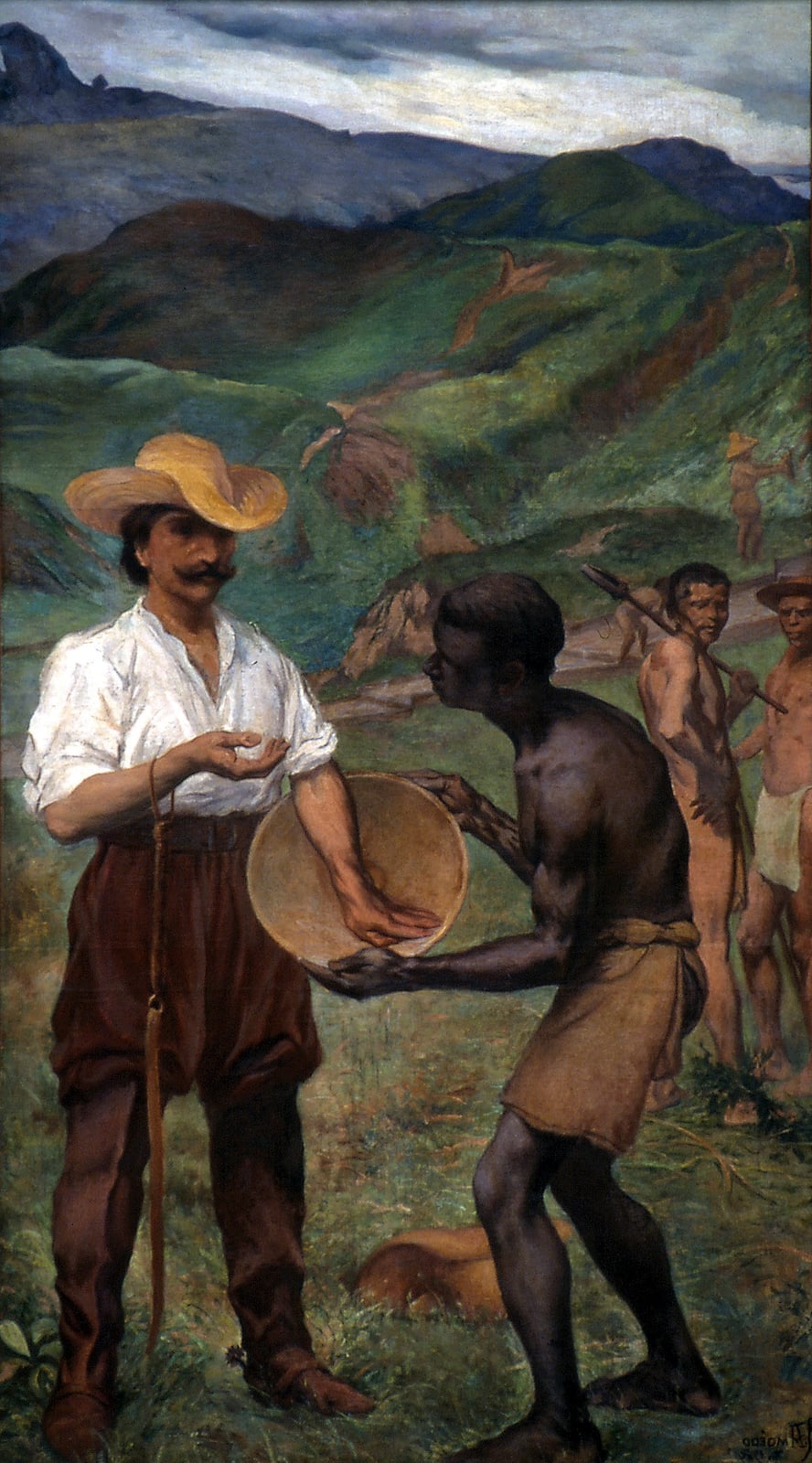
Gold Is Found in Minas Gerais
A gold rush transformed colonial Brazil and its slave economy.
During the 1690s, expeditions into the mountainous interior of colonial Brazil uncovered substantial gold deposits in the region that became known as Minas Gerais. These interior journeys were conducted by bandeirantes, armed parties of adventurers often of mixed European and Indigenous ancestry whose adoption of Indigenous survival techniques allowed them to penetrate deep into uncharted terrain. Strikes made between about 1693 and 1695 ignited widespread excitement and began a rush that kept gold production rising until the middle of the eighteenth century.
The Portuguese Crown viewed the sudden inland rush with significant unease. Imperial authorities worried that an unmanageable exodus of workers would disrupt the established agricultural base of the colony, particularly the lucrative sugar plantations of the northeastern coast, while also leaving the lucrative trade outside direct fiscal supervision. To secure royal oversight and facilitate transit between the mines and coastal ports, the Crown established the Estrada Real, a network of royal roads opened to carry gold to the coast that eventually linked coastal harbors with inland centers such as Vila Rica and Diamantina.

Keep reading in Yester
Coming soon to the App Store
Keep following the story
Sources
- Brazilian Gold Rush (EBSCO Research Starters)
- 2.1 Gold Discovered, Brazil: Five Centuries of Change (Brown University Library)
- Historic Town of Ouro Preto (UNESCO World Heritage Centre)
- Aos 300 anos, Ouro Preto esconde tesouros (Estado de Minas)
- Rota turística da Estrada Real recebe título de monumento nacional (CNN Brasil)
- A British Enterprise in Brazil: The St. John d'el Rey Mining Company and the Morro Velho Gold Mine, 1830-1960 (Duke University Press)
- Cuiabá completa 307 anos (Portal Amazônia)
- Brazilian gold rush
Image: Rodolfo Amoedo