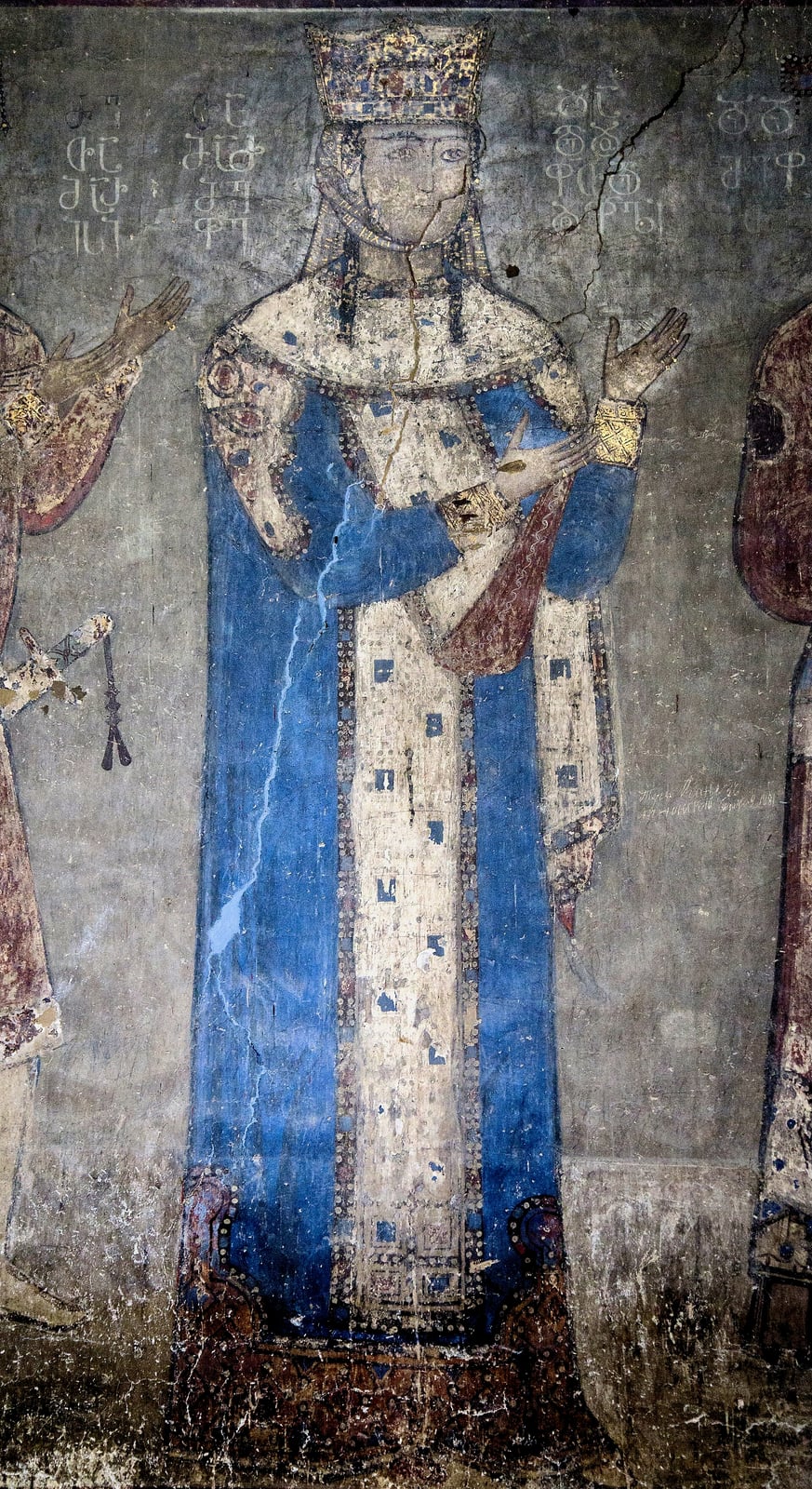
Tamar Becomes Georgia’s First Reigning Queen
Medieval Georgia reached the height of its power under a woman crowned “king.”
In 1184, Queen Tamar ascended the Georgian throne as sole ruler following the death of her father, King George III. She had already served as co-ruler since 1178, elevated by her father after he crushed a dangerous aristocratic uprising that favored his nephew, Prince Demna. George III intended this shared reign to secure his dynastic line and bypass potential succession challenges. Nevertheless, because Georgia had never before seen a woman govern in her own right, her accession as sole monarch stirred deep unease among great feudal families. The medieval Georgian language lacked grammatical gender, and Tamar was recognized with the sovereign title mepe, meaning king, to affirm her constitutional authority over the realm.
Tamar's coronation at the Gelati cathedral near Kutaisi was followed by immediate political challenges. Resentful of George III's authoritarian crackdowns, the nobility exploited the young monarch's gender to recover lost prerogatives. Tamar had to grant early concessions, including dismissing key officials of low birth appointed by her father. The noble council, the Darbazi, insisted upon approving royal decrees, and an attempt by the treasurer Qutlu Arslan to establish an aristocratic policy council further threatened royal dominance before she contained the movement. Her authority was temporarily shored up through church support, particularly from Catholicos-Patriarch Michael IV, who extracted the office of secular chancellor in exchange for his loyalty.

Keep reading in Yester
Coming soon to the App Store
Keep following the story

Sources
Image: 13th century painter