Streptomycin Becomes the First Antibiotic Against Tuberculosis
A soil microbe yielded an antibiotic that worked on tuberculosis.
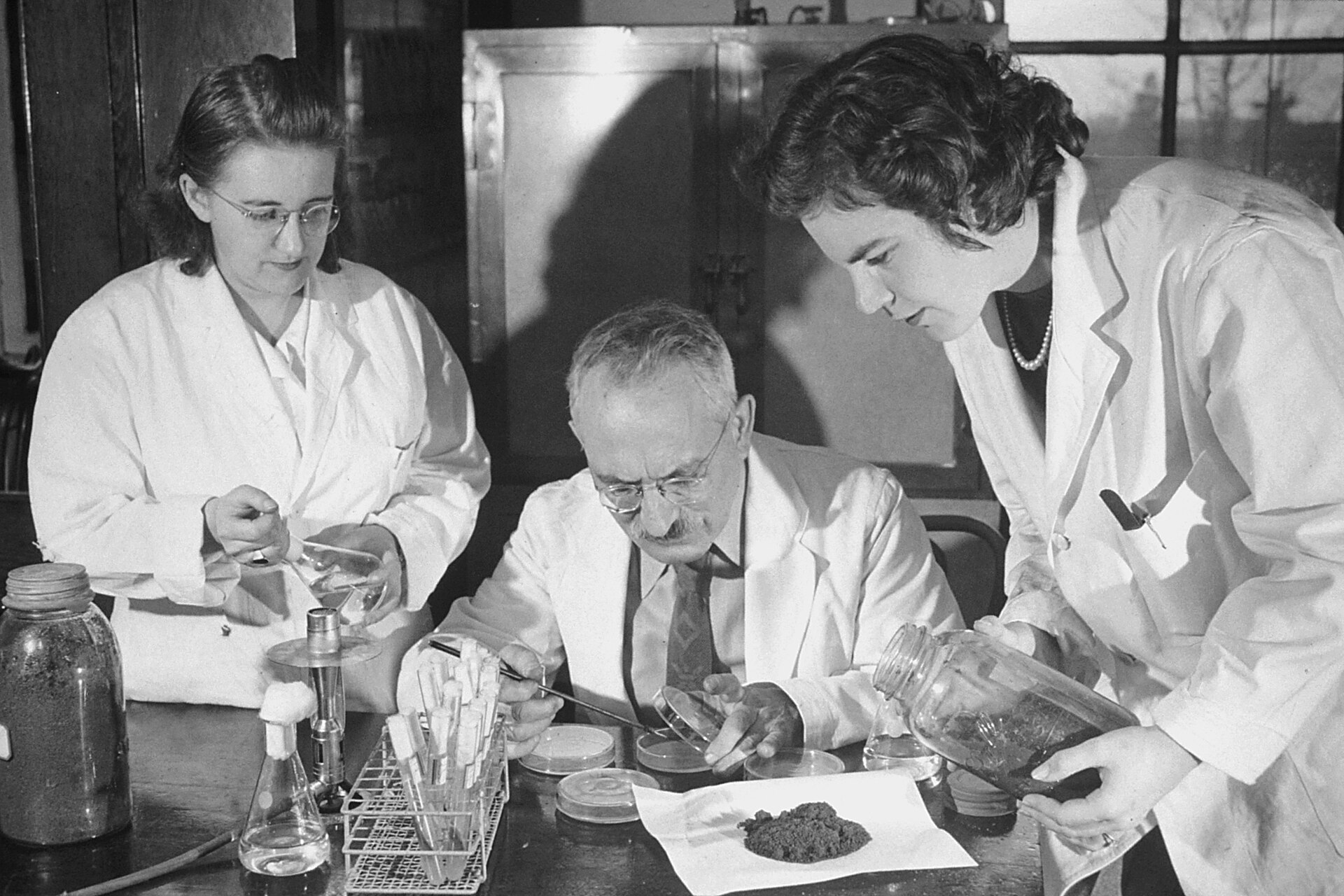
On October 19, 1943, graduate student Albert Schatz isolated an antimicrobial substance from the soil microbe Streptomyces griseus while working in the Rutgers University laboratory of Selman Abraham Waksman. Partly funded by the pharmaceutical company Merck and Co., Waksman's team studied soil organisms in search of agents capable of attacking pathogenic microbes. The resulting compound, named streptomycin, represented an entirely new weapon against bacterial illness, notably active against both Gram-negative and Gram-positive organisms, as well as the stubborn bacterium responsible for human tuberculosis.
The discovery arrived when existing antibacterial treatments offered limited help against chronic lung infections. Although the recent development of penicillin had transformed clinical care for certain bacterial diseases, it proved ineffective against the organism causing tuberculosis. Streptomycin operates differently as an aminoglycoside, binding directly to the 30S ribosomal subunits of bacterial cells to interfere with protein synthesis and disrupt cellular function. This mechanism allowed researchers to contemplate, for the first time, a targeted pharmaceutical cure for an infection that had defied therapeutic interventions for generations.

Keep reading in Yester
Coming soon to the App Store
Keep following the story
Sources
- The Nobel Prize in Physiology or Medicine 1952 (NobelPrize.org)
- Selman Waksman and Antibiotics, National Historic Chemical Landmark brochure (American Chemical Society)
- Streptomycin Treatment of Pulmonary Tuberculosis: A Medical Research Council Investigation (BMJ, 1948, via PubMed Central)
- Streptomycin (injection), WHO Electronic Essential Medicines List (World Health Organization)
- Congressional Record, Extensions of Remarks, vol. 158 (U.S. Government Publishing Office)
- News clipping on Dole's recovery at Percy Jones hospital (Robert J. Dole Archive, University of Kansas)
- Streptomycin
Image: Unknown photographer