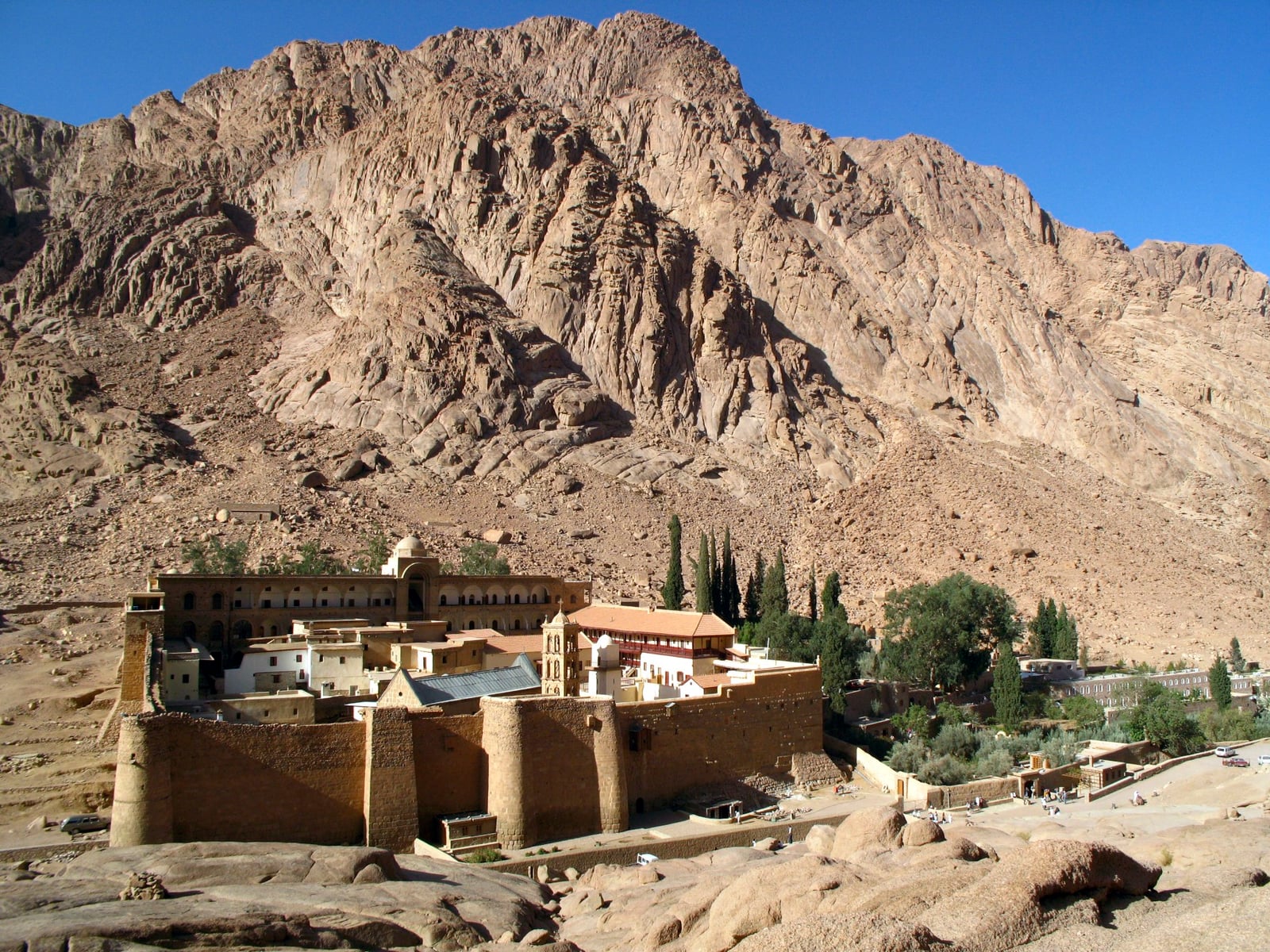
Justinian Builds a Monastery at the Foot of Mount Sinai
One of the oldest working Christian monasteries keeps a famous library.
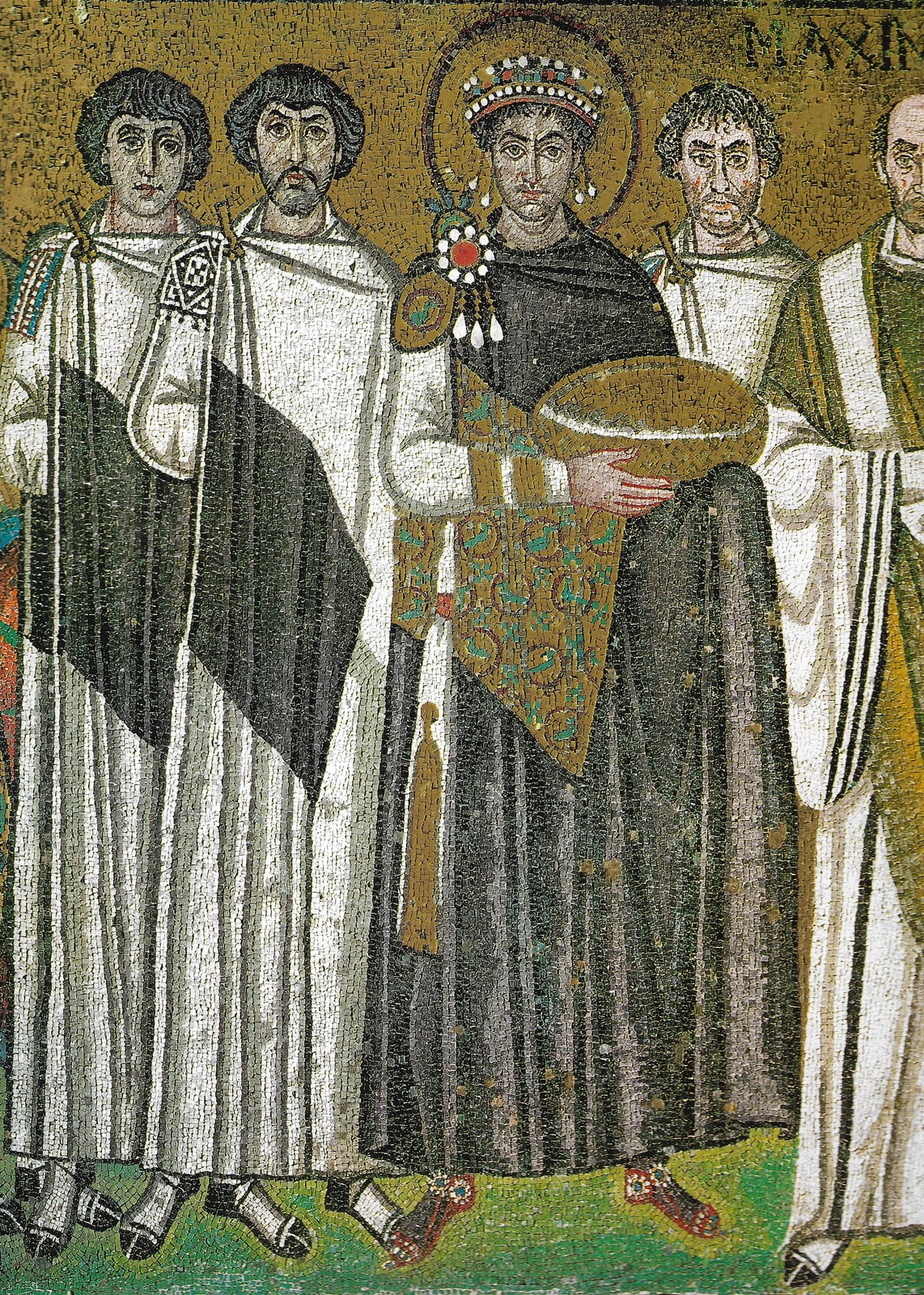
At the base of Mount Sinai in the southern Sinai Peninsula, Christian anchorites gathered for centuries near places linked by tradition to biblical events, including the well where Moses met Zipporah and the site associated with the burning bush. The Latin travel journal of the late fourth-century pilgrim Egeria provides the earliest surviving written account of monastic life in the area. Long before the fortress complex arose, according to tradition, Empress Helena, mother of Constantine I, had ordered the construction of a chapel at the traditional burning bush location. Between 548 and 565, the Byzantine emperor Justinian I transformed this remote religious outpost by commissioning a fortified monastery, which enclosed Helena's earlier shrine within massive defensive walls.
The engineering of the new imperial foundation reflected both defensive necessity and contemporary architectural skill. Justinian ordered towering stone fortifications to shelter the monks, creating a secure enclosure whose entrance was set high in the exterior walls until the twentieth century. Within the complex, builders erected a timber roof featuring a king post truss, which represents the oldest known surviving roof truss in the world. As the lone fortified sanctuary in the region, the complex endured while unfortified hermit settlements disappeared during the seventh century, enabling the site to maintain continuous monastic habitation across subsequent empires.

Keep reading in Yester
Coming soon to the App Store
Keep following the story

Sources
- Saint Catherine Area (UNESCO World Heritage Centre)
- St Catherine's monastery: A short history, from Moses to the Arab-Israeli wars (The Art Newspaper)
- St. Catherine Monastery, Mount Sinai, Egypt (University of Michigan, Forsyth expedition collection)
- What is Codex Sinaiticus? (Codex Sinaiticus Project: British Library, Leipzig University Library, National Library of Russia, St Catherine's Monastery)
- History of Codex Sinaiticus (Codex Sinaiticus Project)
- Lost Languages Discovered in One of the World's Oldest Continuously Run Libraries (Smithsonian Magazine)
- Sinai Palimpsests Research Site (St Catherine's Monastery, UCLA Library and EMEL)
- Saint Catherine's Monastery
Image: Joonas Plaan