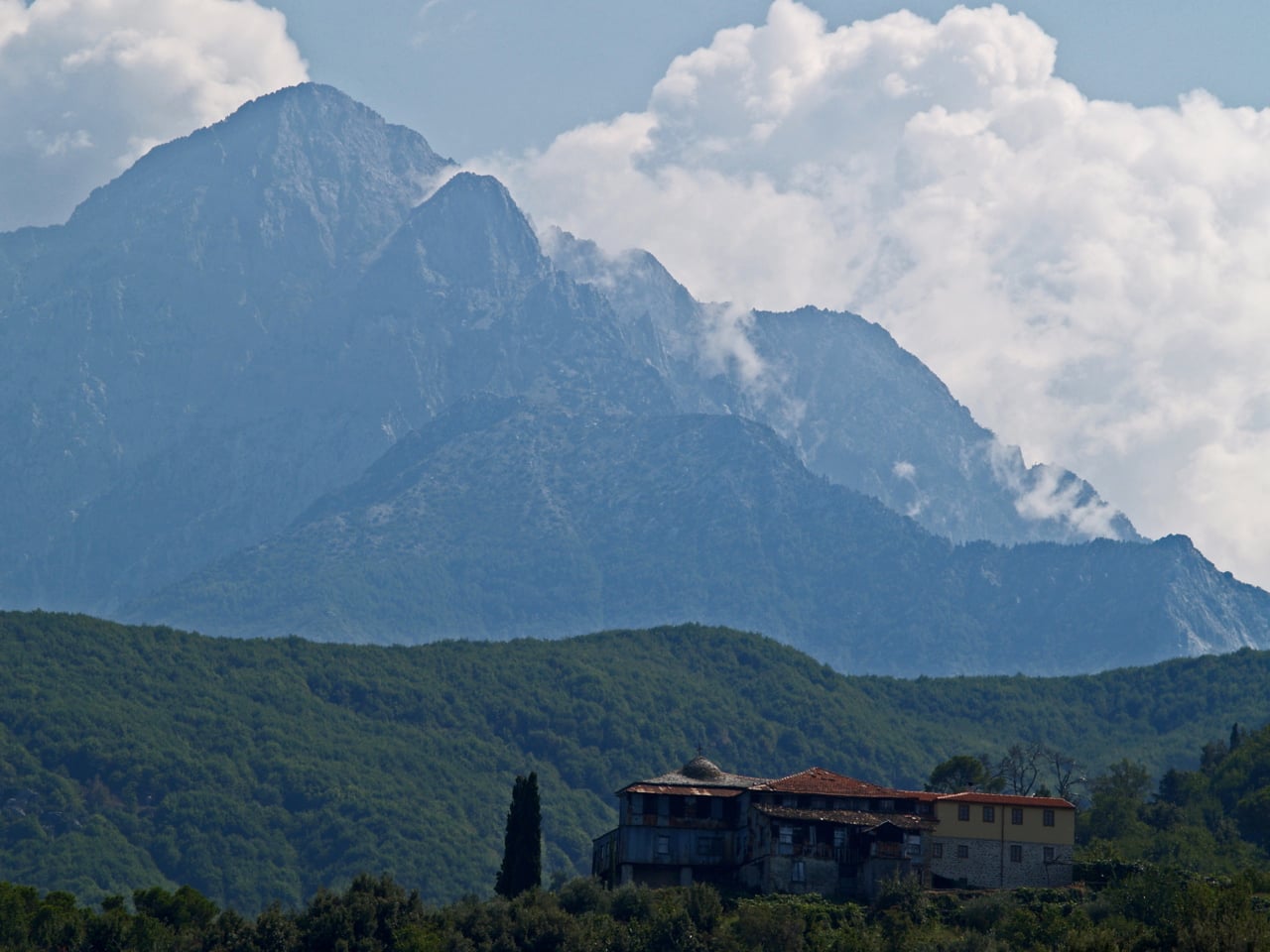
Athanasios Founds the Great Lavra on Mount Athos
A monastic republic grew on a Greek peninsula still closed to women.
Rising steeply from the Aegean Sea in northeastern Greece, the peninsula of Mount Athos served as a maritime landmark and a site of human habitation long before it emerged as a focal point of Eastern Orthodox monasticism. Ancient settlements existed along the coast, though they were later deserted, leaving the rugged mountain landscape isolated. According to Athonite tradition, the territory was consecrated as the garden of the Mother of God, initiating an enduring custom that barred all other women from the peninsula.
Early Christian ascetics arrived on Athos in small numbers, sheltering in inaccessible ravines and constructing rudimentary shelters of timber and straw. Monks sought the peninsula as a peaceful retreat following upheavals in the Mediterranean, including the seventh-century conquests in Egypt that prompted hermits to abandon desert dwellings. By the ninth century, solitary anchorites and small groups of religious devotees had established a persistent presence across the densely forested slopes.

Keep reading in Yester
Coming soon to the App Store
Keep following the story

Sources
Image: Dave Proffer