The Battle of Stalingrad Begins
A brutal battle for a city on the Volga turned the war in the east.
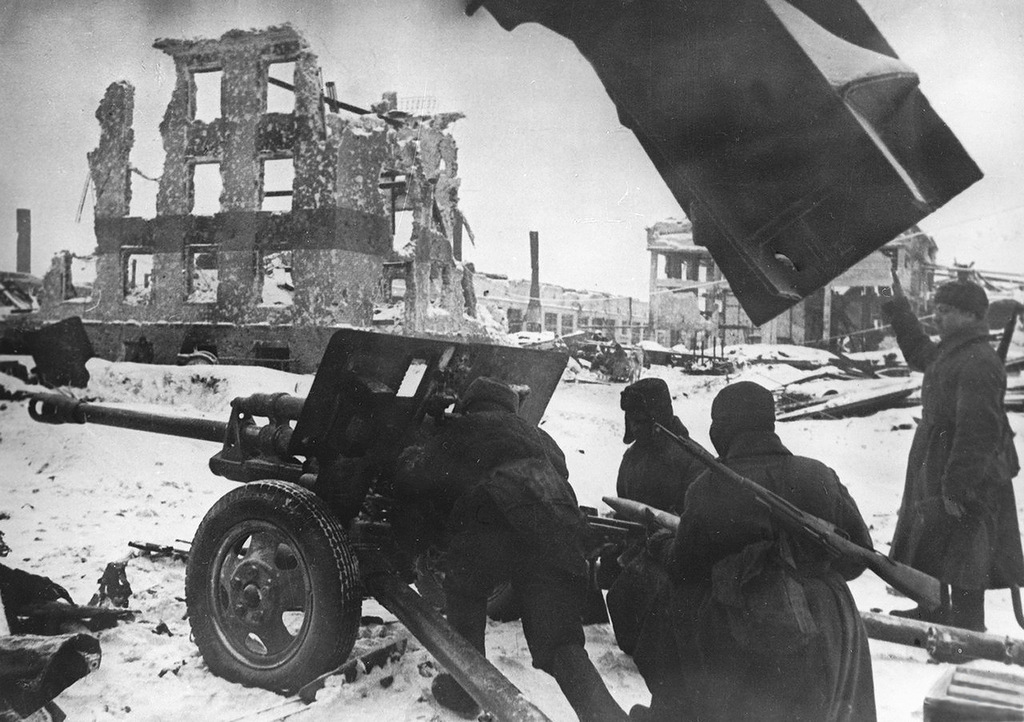
In the summer of 1942, Nazi Germany launched Case Blue, a major offensive across southern Russia designed to capture the vital oil resources of the Caucasus and secure the western bank of the Volga River. Adolf Hitler altered the original operational focus by splitting Army Group South into two separate formations. Army Group A pressed south toward the Caucasian oil fields, while Army Group B, spearheaded by General Friedrich Paulus's 6th Army and elements of the 4th Panzer Army, drove eastward toward Stalingrad. As an industrial center and key shipping conduit, the city held substantial logistical value, in addition to carrying the name of Soviet premier Joseph Stalin.
Initial combat on the distant approaches to the Volga began on 17 July 1942, as German units engaged the Red Army along the bend of the Don River. Soviet defensive counterattacks in the Kotluban sector north of the city incurred heavy personnel losses but succeeded in slowing the German timetable. By 23 August, German spearheads reached the northern outskirts of Stalingrad. On that same day, Wolfram von Richthofen's Luftflotte 4 unleashed an aerial bombardment that dropped roughly 1,000 tons of bombs, destroying most of the municipal housing stock and disabling river traffic along the Volga.

Keep reading in Yester
Coming soon to the App Store
Keep following the story

Sources
- The Battle of Stalingrad: Doomed from the start? (Imperial War Museums)
- What You Need To Know About The Battle Of Stalingrad (Imperial War Museums)
- Stalingrad: Experimentation, Adaptation, Implementation (The National WWII Museum)
- Soviets launch counterattack at Stalingrad (HISTORY)
- Battle of Stalingrad
Image: Unknown author Unknown author