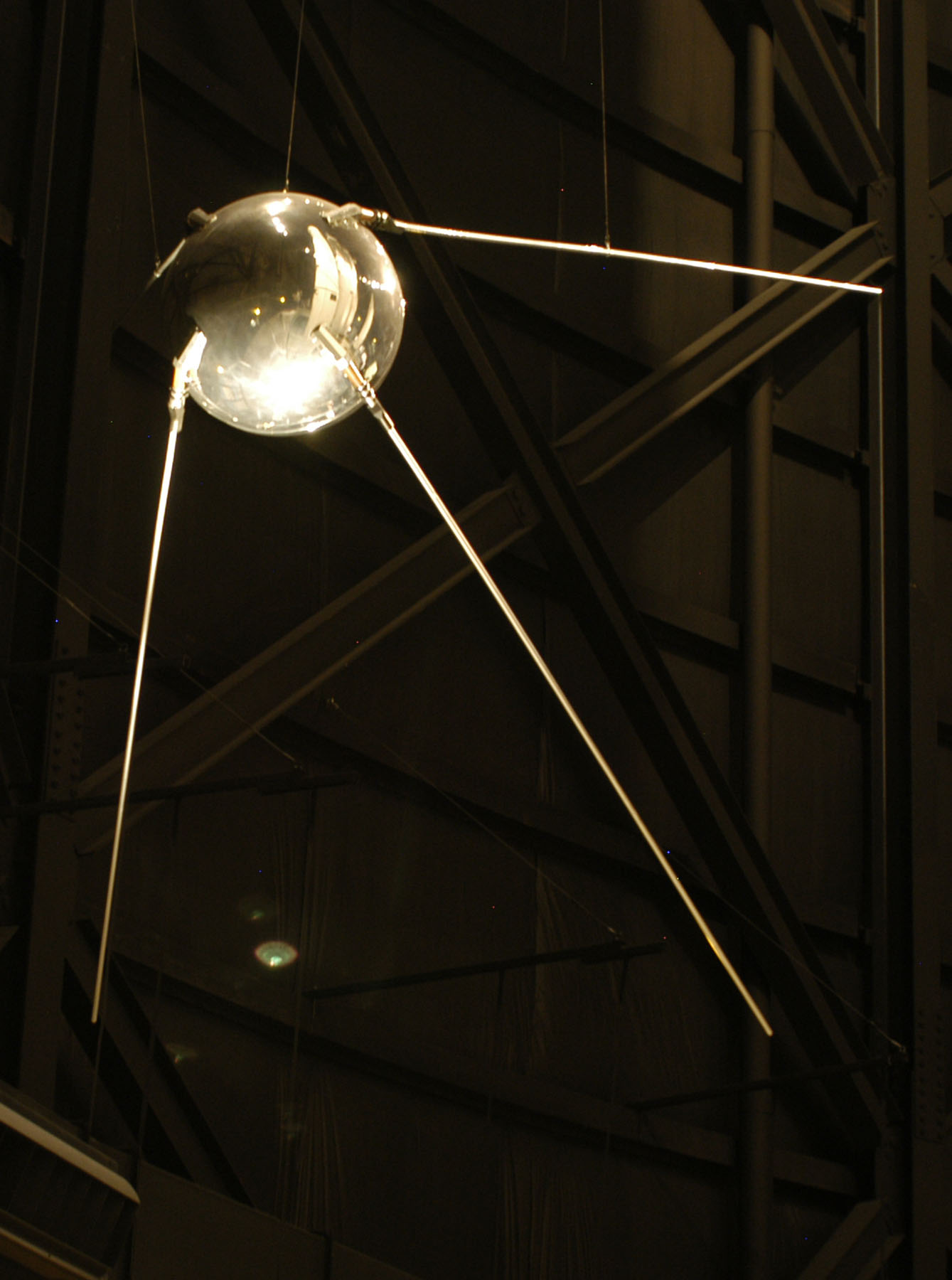
The Beeps That Opened the Space Age
Sputnik was a small satellite with a radio signal. Its launch demonstrated a capability that changed science, military expectations and the direction of the Cold War.
On October 4, 1957, the Soviet Union placed Sputnik 1 into Earth orbit. Its radio transmissions gave the achievement an unusual kind of evidence: the new object above the atmosphere could be heard. The satellite was modest beside the machines that would follow, but it crossed a threshold. For the first time, a human-made object was traveling around the planet rather than briefly rising above it.
A rocket reaching a great height does not automatically create an orbit. It must also give its payload enough sideways speed to continue falling around Earth instead of returning directly to the ground. Sputnik demonstrated that the Soviet launch system could accomplish this. The gleaming sphere and its antennas became a symbol, but the capability of the rocket beneath it was just as important.

Keep reading in Yester
Coming soon to the App Store
Keep following the story

Sources
Image: U.S. Air Force photo