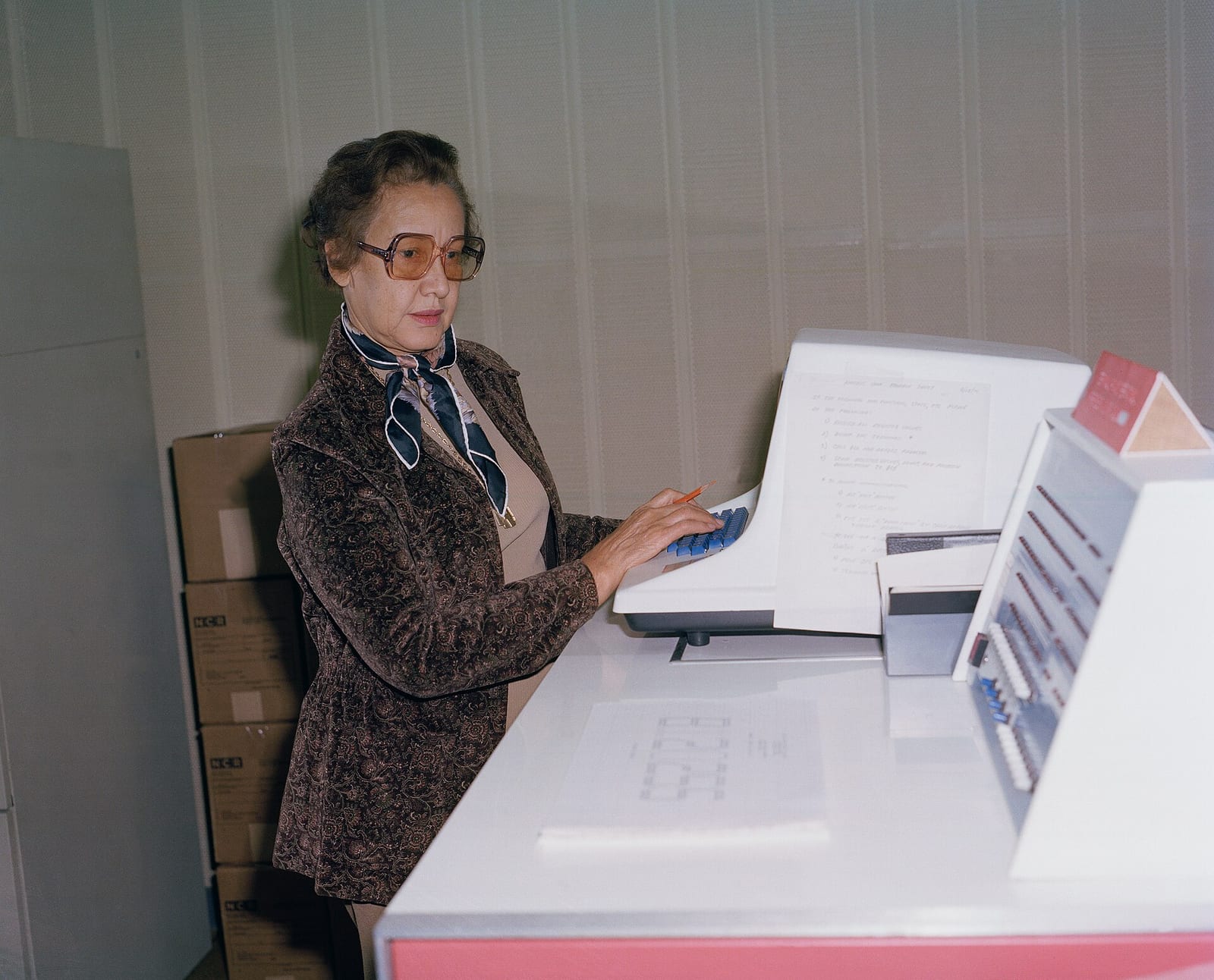
The Mathematics Behind an Orbit
Before John Glenn orbited Earth, Katherine Johnson checked the calculations. Her work reveals the people, judgment and mathematics behind a supposedly automatic flight.
A spacecraft’s path is not just a line drawn on a map. It is a set of predictions about where a moving object will be, when it will arrive and how it can return. Before John Glenn’s orbital flight in February 1962, Katherine Johnson checked calculations produced by electronic computers. According to Johnson's own recollection, Glenn wanted her verification before trusting the trajectory that would carry him around Earth.
Johnson had joined the National Advisory Committee for Aeronautics at Langley in 1953. Mathematics was already essential to flight research, much of it performed by people whose work was described as computing. These workers converted measurements into useful engineering results. Their calculations were not merely clerical additions to the real science. They were part of how observations became decisions about aircraft and, later, spacecraft.

Keep reading in Yester
Coming soon to the App Store
Keep following the story
Sources
Image: NASA