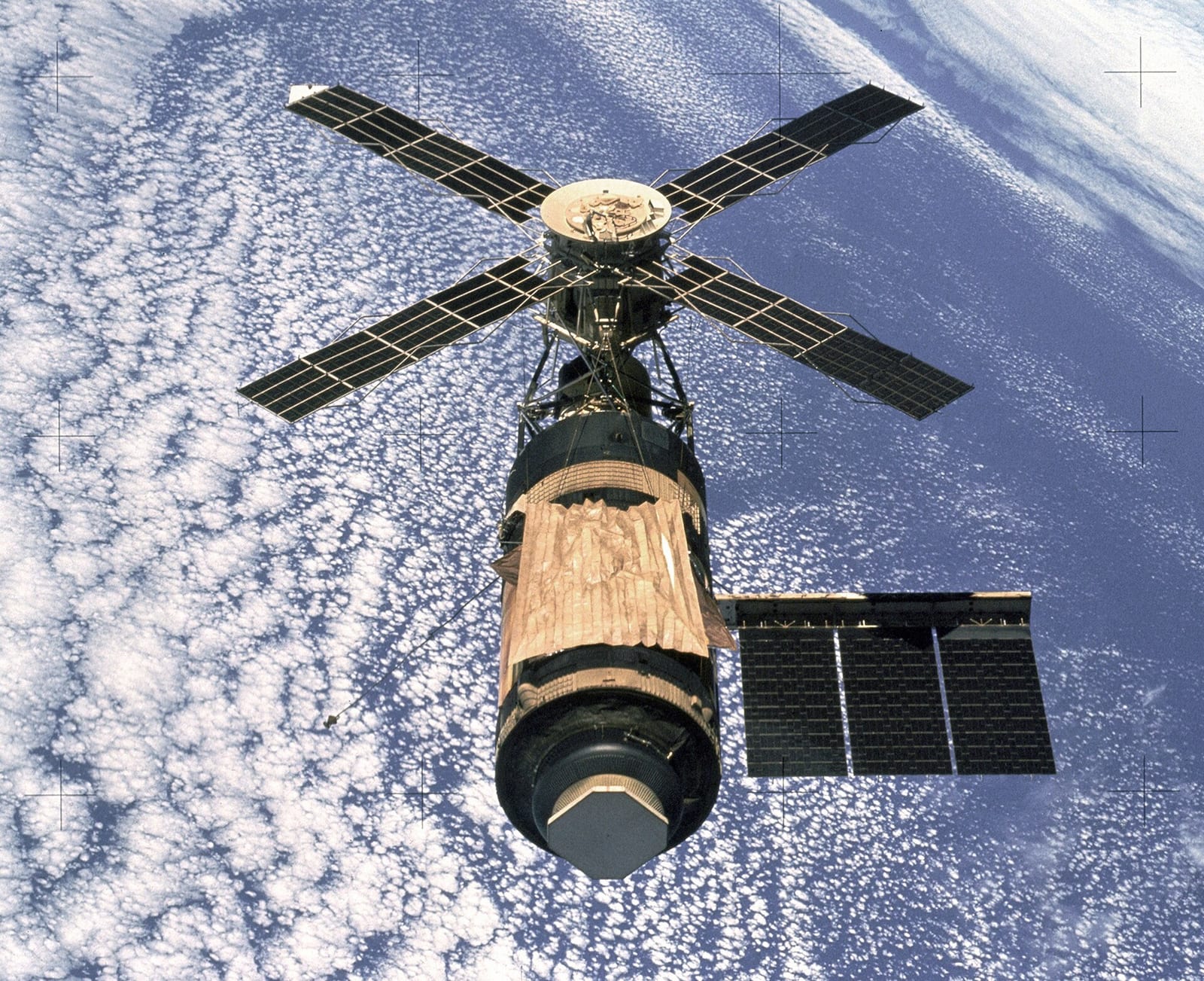
The Space Station That Needed Rescuing
Skylab reached orbit damaged, overheating and short of power. Before astronauts could live in America’s first space station, they had to help save it.
America’s first space station was in trouble before anyone had moved in. During Skylab’s launch on May 14, 1973, its protective shield tore away. One large solar array was lost and another failed to deploy properly. The workshop reached orbit, but sunlight heated its exposed structure while its damaged power system threatened the work planned inside. A laboratory designed for long stays had become a place astronauts might not be able to inhabit at all.
Skylab represented a different use of the machinery developed for the Moon. Instead of a brief visit to another world, crews would live in a relatively spacious orbital workshop, studying the Sun, observing Earth and measuring what extended weightlessness did to the human body. All of those goals depended on ordinary necessities. Instruments required electricity; people and stored supplies needed tolerable temperatures. Reaching orbit had solved only the first problem.

Keep reading in Yester
Coming soon to the App Store
Keep following the story
Sources
Image: NASA (Crew of Skylab 4 )