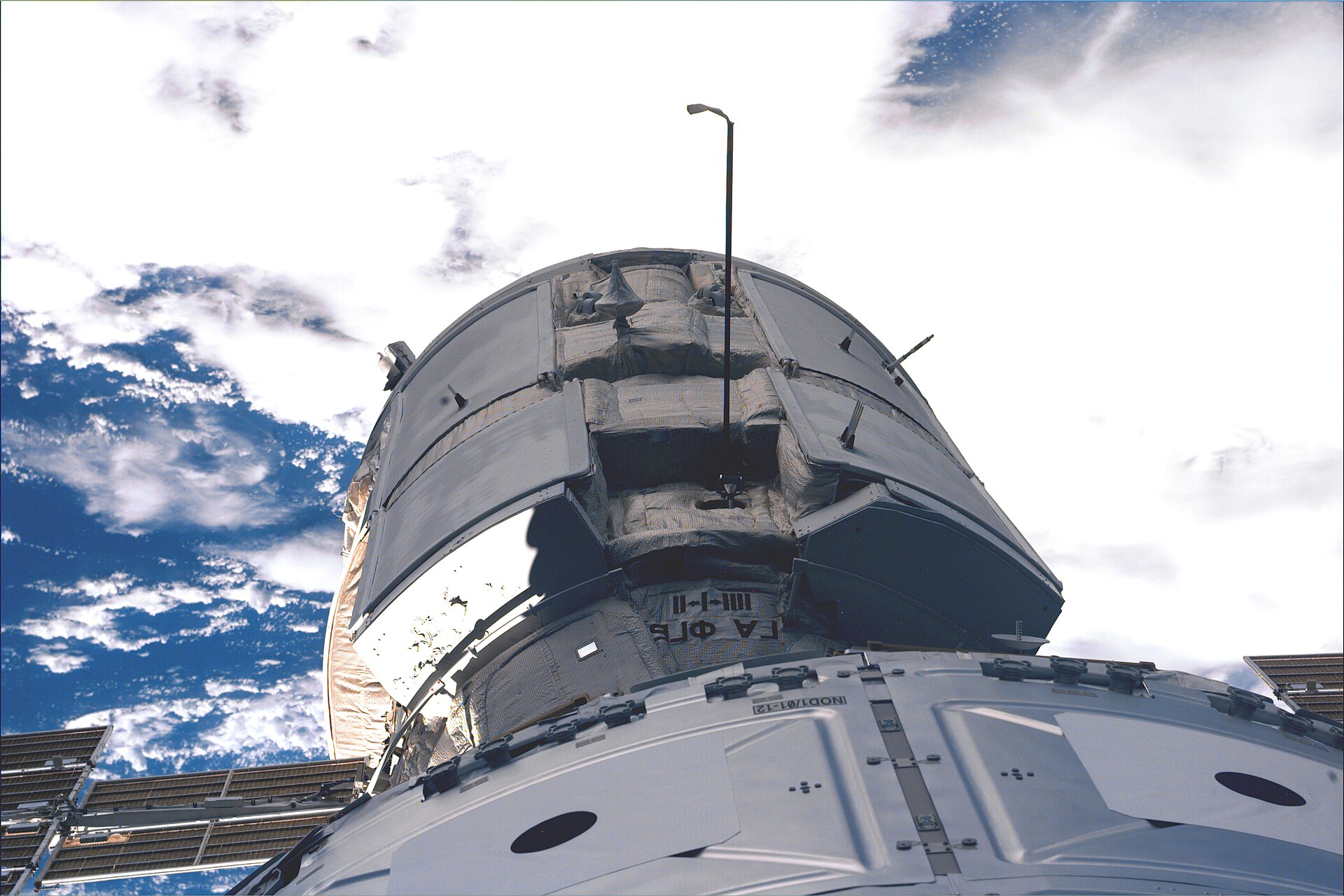
Two Modules Become a Space Station
In late 1998, international partners initiated orbital assembly of the International Space Station by connecting independently manufactured modules above Earth. This operation proved that hardware constructed in different nations could successfully unite in orbit to create an expandable outpost.
The International Space Station required participating countries to coordinate engineering, funding, and operations. Because its initial elements would not be assembled in a factory on Earth, the project faced the critical test of whether separately constructed spacecraft could be brought together directly in orbit.
On November 20, 1998, a Proton rocket launched the Zarya module from Baikonur. Built in Russia under a U.S.-funded contract, Zarya provided early power and control functions. While a single module could not function as an international laboratory, it established the physical starting point for the orbital complex.

Keep reading in Yester
Coming soon to the App Store
Keep following the story
Sources
Image: NASA