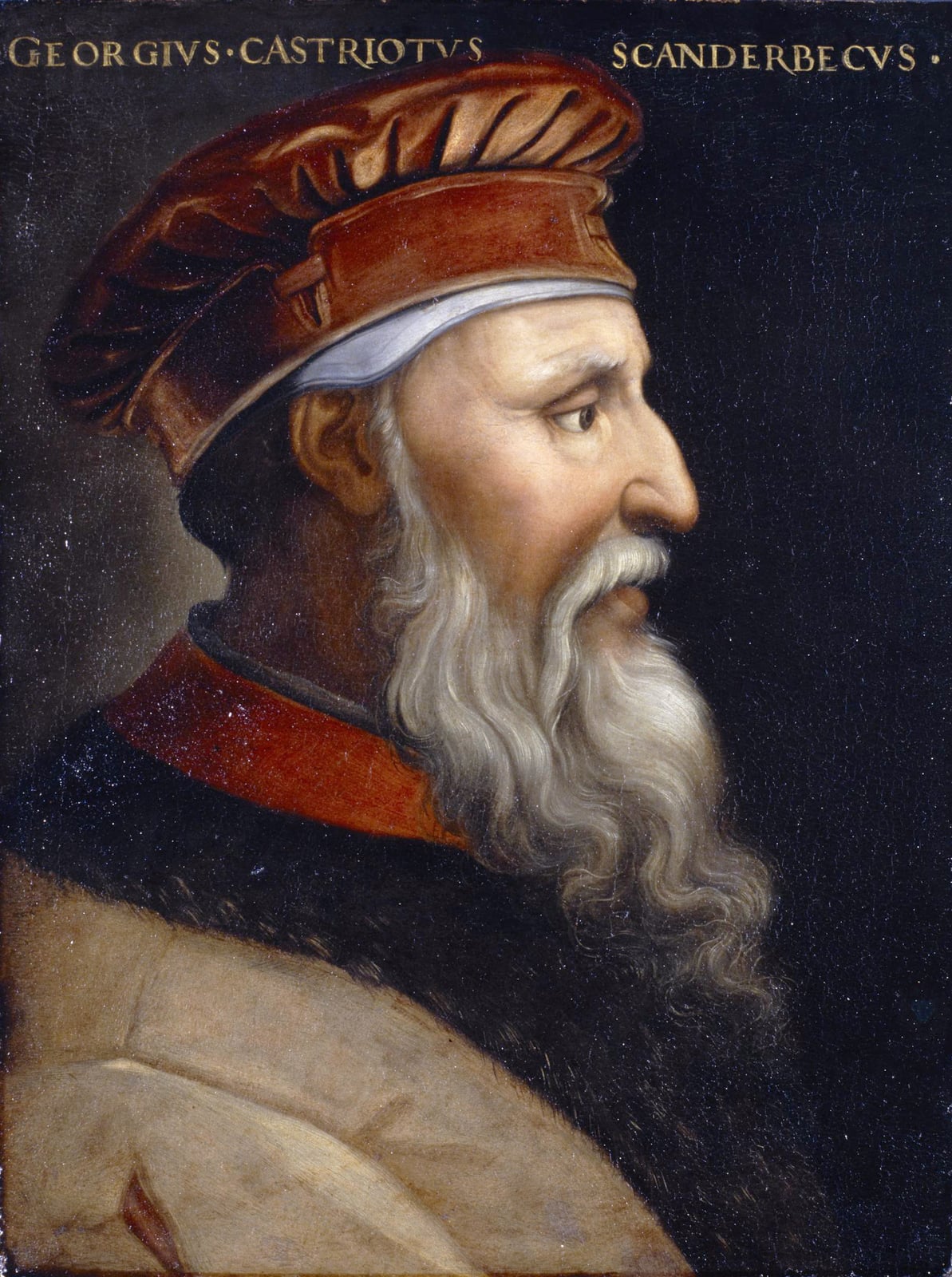
Skanderbeg Unites Albanian Nobles Against the Ottomans
The League of Lezhë began a quarter-century of resistance in the Albanian highlands.
On 2 March 1444, regional chieftains met in the Venetian-controlled coastal town of Lezhe to forge a military coalition against the Ottoman Empire. The gathering was summoned by Gjergj Kastrioti, better known as Skanderbeg, who had returned to his native lands the previous autumn after two decades in Ottoman service. The resulting League of Lezhe joined prominent Albanian dynasties, including the Arianiti, Dukagjini, Muzaka, and Thopia houses, alongside the ruler of Zeta, Stefan Crnojevic. This assembly marked the first time that many of the divided principalities of Albania united under a single military command, appointing Skanderbeg as their general.
Born around 1405 into the noble Kastrioti family of north-central Albania, Skanderbeg spent his formative years navigating imperial vassalage. His father, Gjon Kastrioti, alternately allied with the Republic of Venice and neighboring rulers, paying tribute to Sultan Murad II. Skanderbeg was sent as a hostage to the Ottoman court in Adrianople, where he was enrolled in the sultan's service and received extensive military training. Over the next twenty years, he commanded cavalry units, governed territories as an Ottoman official, and in 1440 was appointed sanjakbey of Dibra. When John Hunyadi's crusader army clashed with the Ottomans at the Battle of Nis in November 1443, Skanderbeg abandoned the Ottoman forces, seized the fortress of Kruje using a forged sultanic letter, and publicly returned to Christianity.

Keep reading in Yester
Coming soon to the App Store
Keep following the story
Sources
Image: Cristofano dell'Altissimo