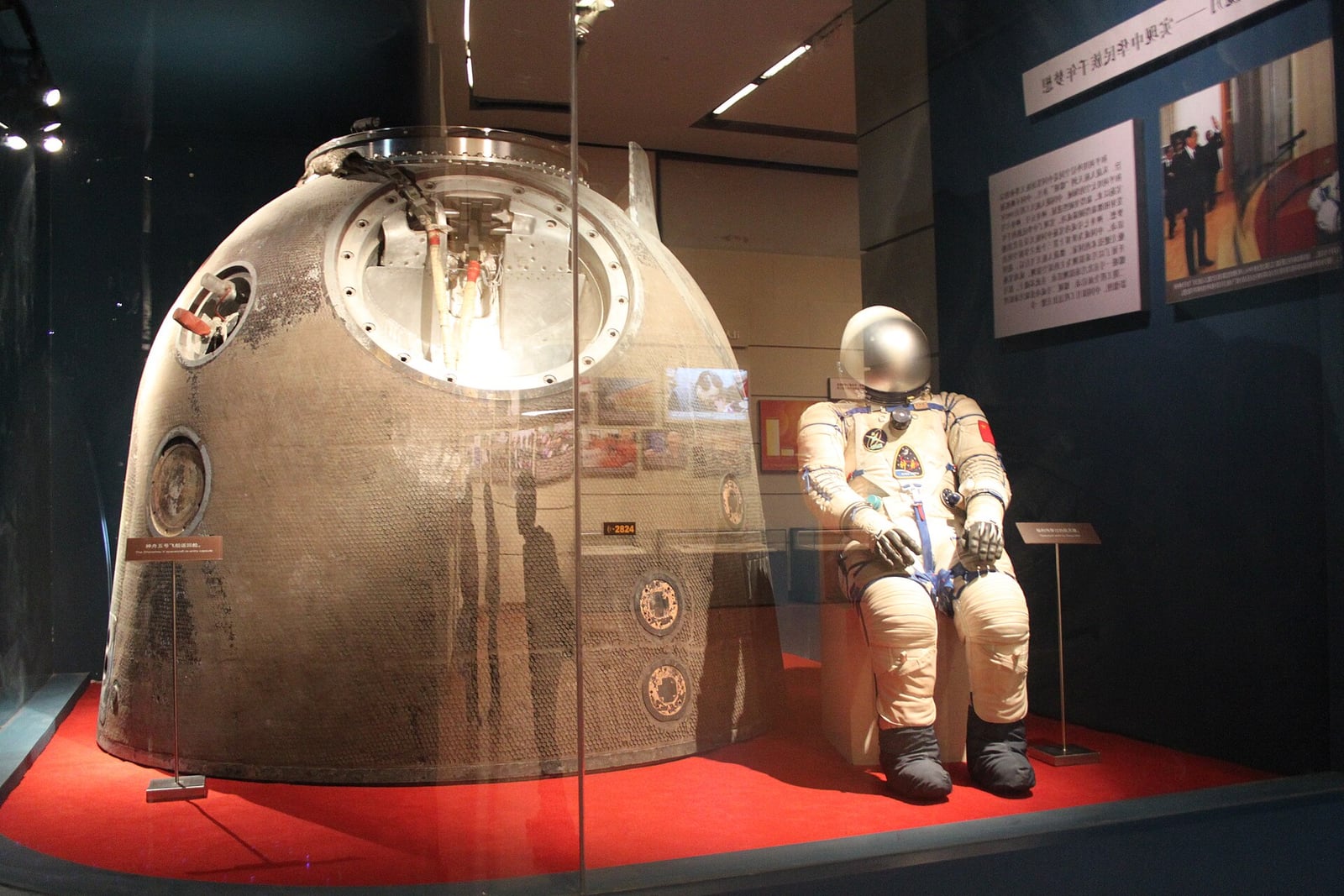
Yang Liwei Becomes China’s First Astronaut in Orbit
China became the third country to launch a person into orbit on its own.
On the morning of 15 October 2003, a Long March 2F rocket lifted off from the Jiuquan Satellite Launch Center in the Gobi Desert, carrying the Shenzhou 5 spacecraft into low Earth orbit. Inside the capsule sat Yang Liwei, a thirty-eight-year-old lieutenant colonel in the People's Liberation Army and former fighter pilot. Reaching an orbital altitude of 343 kilometres roughly ten minutes after launch, the flight made China only the third nation to independently place a human into space, following the pioneering programs of the Soviet Union and the United States.
The mission was the culmination of an initiative that had formally begun in 1992, building on four previous uncrewed test flights conducted under the Shenzhou name since 1999. Although the launch had been expected to be shown live, state television chose to broadcast the footage only later, interrupting its programmes to announce the successful liftoff. Official media treated the event as a monumental technological milestone, allocating exceptional coverage to the mission and presenting it as a validation of the nation's domestic scientific capabilities.

Keep reading in Yester
Coming soon to the App Store
Keep following the story
Sources
- China puts its first man in space (BBC News, 15 October 2003)
- China hails space hero (BBC News, 16 October 2003)
- Tributes for China's first spaceman (BBC News, 15 October 2003)
- Chinese space shot a big hit (BBC News press review, 15 October 2003)
- China's spaceman back after 21-hour mission (The Guardian, 16 October 2003)
- Shenzhou 5
Image: Gary Lee Todd, Ph.D.