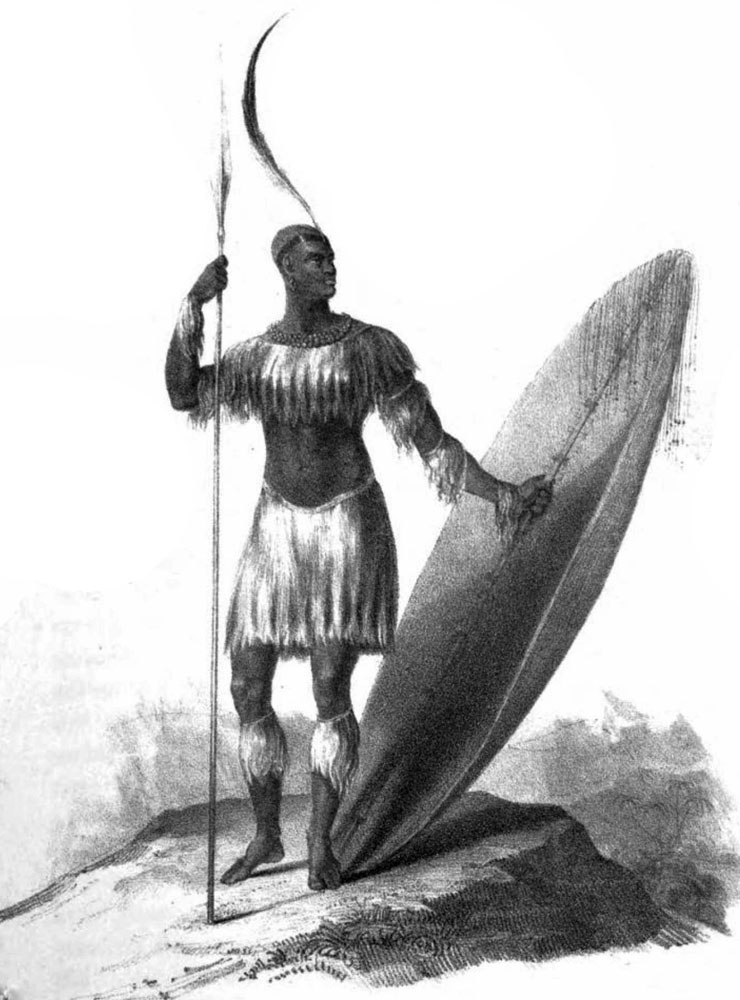
Shaka Builds a Zulu Kingdom amid Regional Upheaval
A powerful state emerged through military and political change, but later accounts require careful scrutiny.
In 1816, Shaka kaSenzangakhona assumed leadership of the Zulu chiefdom following the death of his father, Senzangakhona. At that time, the Zulu were a modest pastoral community among several competing polities in southern Africa. Shaka had spent his early years living among his mother's people and later served as a commander in an ibutho under Dingiswayo, leader of the Mthethwa Paramountcy. Drawing on these experiences, Shaka began transforming the Zulu polity into a centralized state through a mixture of military organization, diplomatic alliances, and coercion.
Central to Shaka's expansion was the adaptation of indigenous social and military structures. Rather than inventing warfare practices entirely anew, he refined the existing age-grade regimental system. Youths were organized into dedicated units, supplied with standardized cowhide shields belonging to the crown, and trained to fight in coordinated formations. The famous encirclement tactic, known as the bull horn formation, relied on veteran warriors holding the center while younger contingents swept around the enemy flanks to seal off retreat.

Keep reading in Yester
Coming soon to the App Store
Keep following the story

Sources
Image: James King