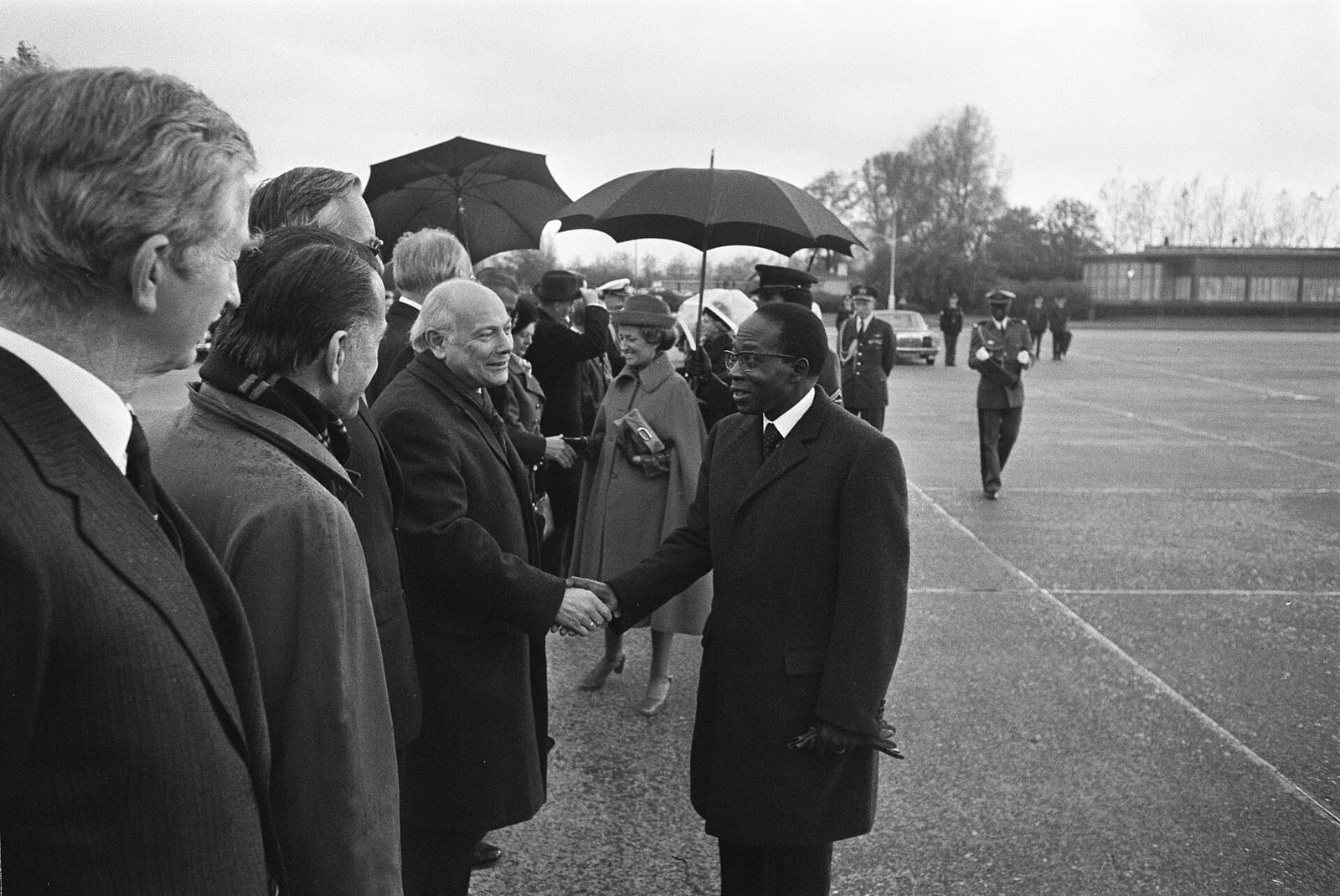
Senghor Carries Poetry into the Making of Senegal
Léopold Sédar Senghor was both a poet of cultural self-assertion and Senegal’s first president. Those two roles opened possibilities and generated contradictions.
Léopold Sédar Senghor arrived in France in 1928 on an academic scholarship, embarking on years of study that transformed him into one of the most prominent intellectuals of the African diaspora. While preparing for his teaching credentials in Paris alongside figures such as Georges Pompidou, he collaborated with Caribbean writers Aimé Césaire and Léon Damas to conceive the philosophy of Négritude. Developed as a direct challenge to French colonial racism and cultural hegemony, the movement reappropriated a derogatory term into a celebratory affirmation of African sensibilities, aesthetics, and cultural heritage, establishing an intellectual foundation that underpinned Senghor's poetry and later public life.
During the Second World War, Senghor served as an infantryman in the French army before being captured by German forces in 1940. He spent two years interned in military prison camps, including Front Stalag 230 in Poitiers, a facility reserved for colonial soldiers. During his captivity, Senghor composed verse and taught himself German to read Johann Wolfgang von Goethe in the original language before receiving a medical discharge in 1942. When the war ended, his stature as an academic and poet propelled him into metropolitan politics, culminating in his election to the French National Assembly as a representative of Senegal and Mauritania.

Keep reading in Yester
Coming soon to the App Store
Keep following the story
Sources
Image: Bert Verhoeff for Anefo