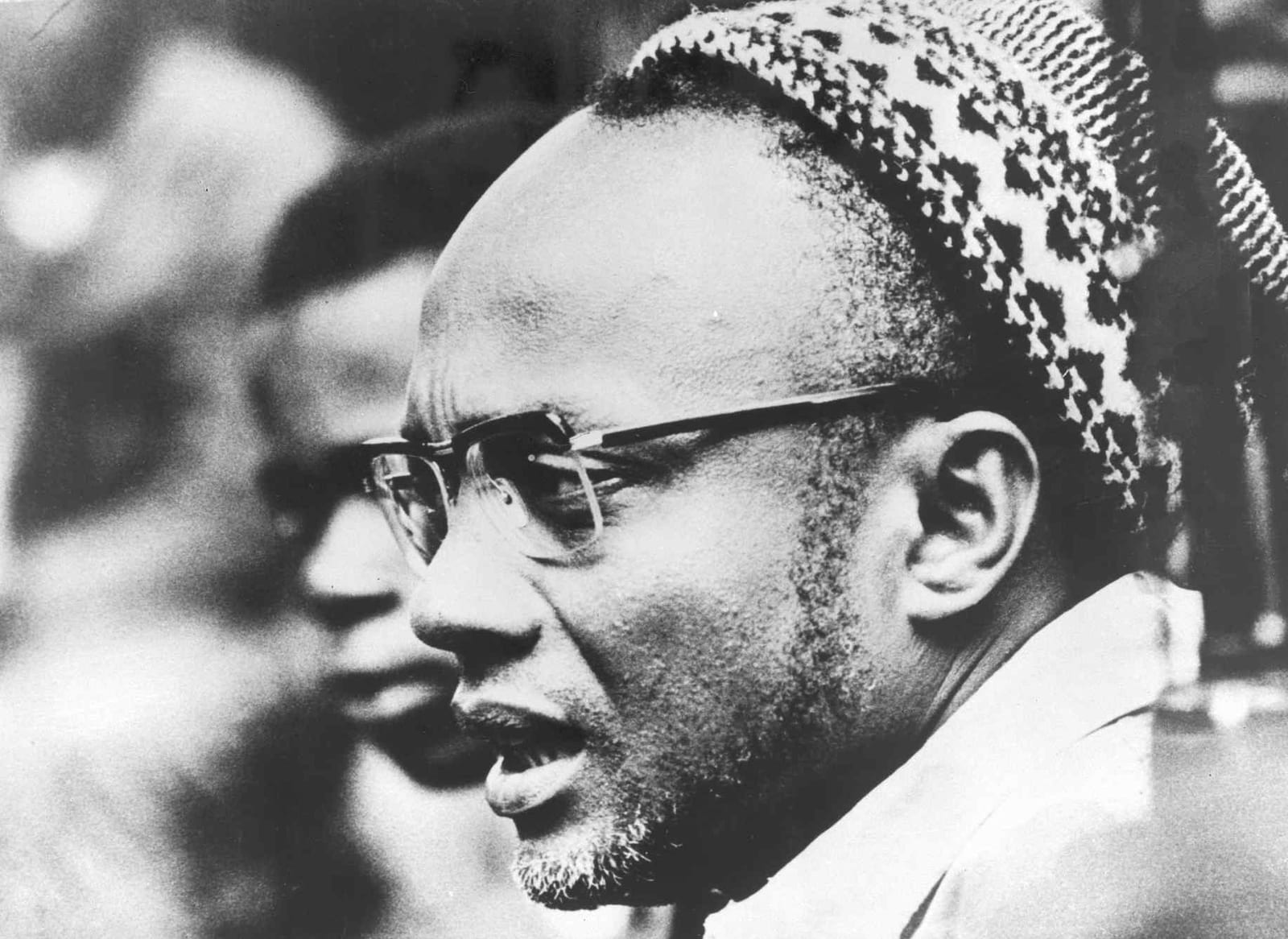
Amílcar Cabral Connects Liberation with the Work of Building a Country
An agronomist became a leader of the struggle against Portuguese colonial rule. His thinking joined political independence with culture, material conditions and the demands of governing.
Amilcar Cabral approached anti-colonial struggle through the concrete realities of land, agriculture, and rural life. Born in Bafata in 1924 to Cape Verdean parents, he traveled to Lisbon to study agronomy at the Instituto Superior de Agronomia. While in Portugal, he helped form the Centro de Estudos Africanos, utilizing cultural activities permitted under the Estado Novo dictatorship to veil nationalist political organising. Upon returning to Africa, Cabral was commissioned in 1953 to conduct an agricultural survey of Portuguese Guinea, traveling widely through the rural colony. That survey provided him with an intricate understanding of the country's rural population and terrain, grounding his political outlook in tangible material conditions.
In 1956, Cabral took part in founding the African Party for the Independence of Guinea and Cape Verde, known as the PAIGC, while maintaining connections with nationalists from other Portuguese colonies. Preparing for armed resistance, he established training facilities in Ghana with the consent of President Kwame Nkrumah. Cabral instructed his cadres in communication techniques to mobilize traditional leaders, while insisting that soldiers learn sustainable farming methods. Because PAIGC troops lived directly alongside local populations, fighters ploughed and planted fields during pauses in combat, ensuring that both local communities and the military wing maintained adequate food supplies.

Keep reading in Yester
Coming soon to the App Store
Keep following the story
Sources
- Amílcar Lopes Cabral (BlackPast.org)
- Unity and Struggle, Foreword (Cambridge University Press)
- Intelligence Note: Portuguese Guinea: The PAIGC After Amilcar Cabral, February 1, 1973 (U.S. Department of State, Office of the Historian, FRUS 1969-1976 Vol. E-6)
- Timeline: Guinea-Bissau (Al Jazeera)
- Cabo Verde (South African History Online)
- Amílcar Cabral
Image: Anonymous Unknown author