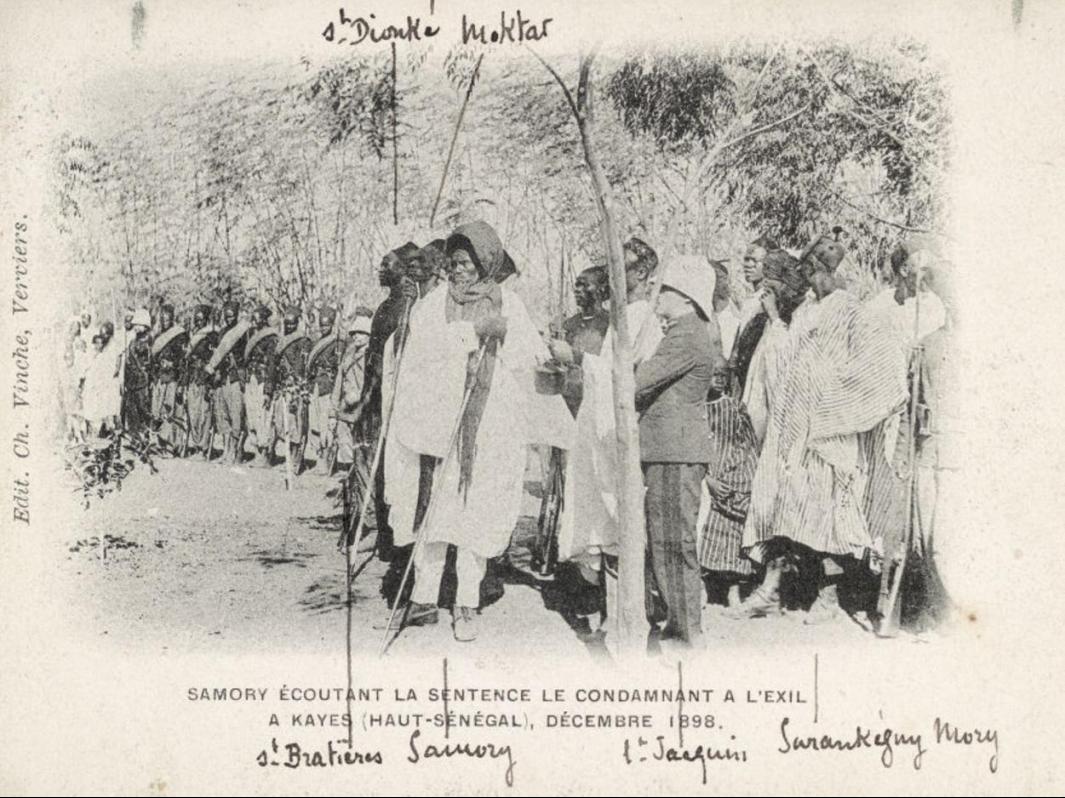
Samori Ture Resists French Expansion in West Africa
Diplomacy, military adaptation and retreat shaped a struggle that also imposed heavy costs on local communities.
In February 1882, French colonial forces advanced toward Kiniéran in present-day Mali, attempting to bring the town under a French protectorate. Samori Ture, who had spent the preceding two decades building the Wassoulou Empire across the upper Niger basin, responded by capturing and sacking the settlement before French relief forces arrived. When the colonial detachment caught up with his army at Samaya days later, frontal infantry charges suffered catastrophic casualties against modern European firearms. Ture swiftly altered his tactical approach, pivoting to mobile guerrilla maneuvers and cavalry strikes that harassed the French back to the Niger River. This engagement marked the start of a protracted sixteen-year conflict against colonial encroachment in West Africa.
Ture’s military organization relied on a tiered and increasingly modernized force. By the late 1880s, his field army combined large numbers of sofa infantry with cavalry, backed by local village reserves. He procured breech-loading and repeating rifles through coastal trade routes running through British Sierra Leone and later the Gold Coast. Elite units drilled with modern weapons, while domestic blacksmiths maintained and reproduced firearms. Between periods of active combat, Ture engaged in diplomacy to buy time, negotiating treaties with the French in 1886 at Kenieba Koura and in 1887 at Bissandougou, where he made nominal territorial concessions while attempting to secure his borders against neighboring rivals.

Keep reading in Yester
Coming soon to the App Store
Keep following the story
Sources
Image: Unknown author Unknown author