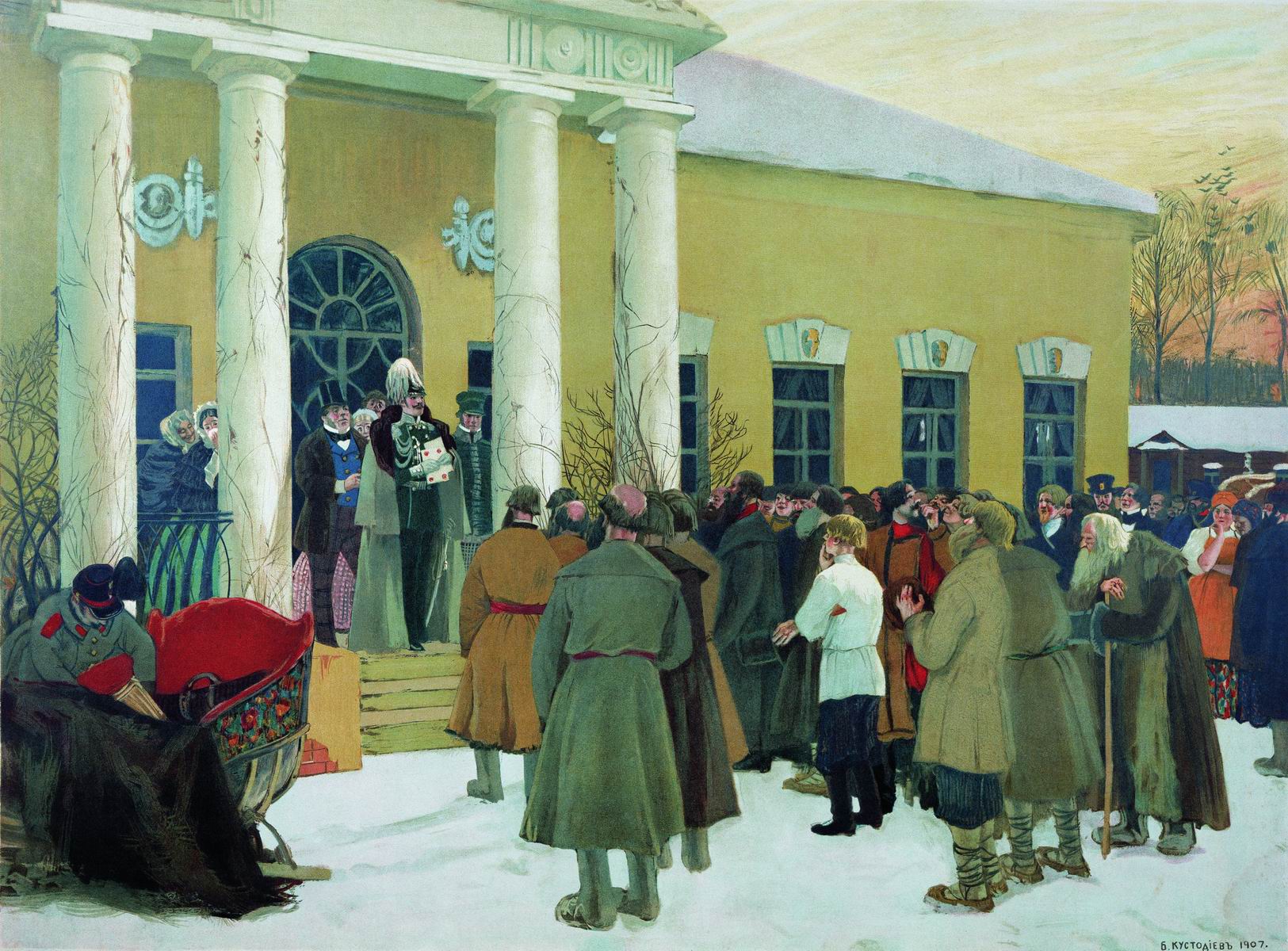
Russia Abolishes Serfdom
A decree freed millions of people while leaving land and debt unresolved.
In March 1861, Emperor Alexander II issued the Emancipation Manifesto, ending the legal bondage of more than twenty million serfs on private estates across the Russian Empire. The dramatic military shortcomings revealed during the Crimean War had driven imperial officials to pursue modernizing reforms, recognizing that economic and military development lagged behind Western Europe. Serfs on private lands became free rural inhabitants and gained civil rights to marry without landlord consent, run commercial enterprises, and own property, bringing an end to the formal institution of human ownership on private estates.
The legislation represented a complex political compromise between the imperial autocracy and the landed nobility. Landlords feared losing their cheap labor supply, while imperial advisers wished to avoid creating a destitute, landless proletariat prone to political instability. Under the resulting terms, domestic serfs received personal freedom but no land allotments. Estate peasants were granted rights to purchase land, yet substantial parcels of common land, known as cut-off lands, were transferred to former owners, who subsequently charged access fees for the use of vital forests, waterways, and roadways.

Keep reading in Yester
Coming soon to the App Store
Keep following the story
Sources
- Emancipation of the Russian Serfs (EBSCO Research Starters)
- Alexander II (Encyclopaedia Britannica)
- Redemption Payments (Encyclopedia of Russian History, via Encyclopedia.com)
- Emancipation Act (Encyclopedia of Russian History, via Encyclopedia.com)
- Bezdna Uprising of 1861 (Great Soviet Encyclopedia, via The Free Dictionary)
- Emancipation reform of 1861
Image: Boris Kustodiev