Brazil Ends Slavery, but Not Its Inheritance
A law with just two articles abolished slavery in Brazil. Behind the signature stood decades of resistance, and beyond it lay a struggle over what freedom would mean.
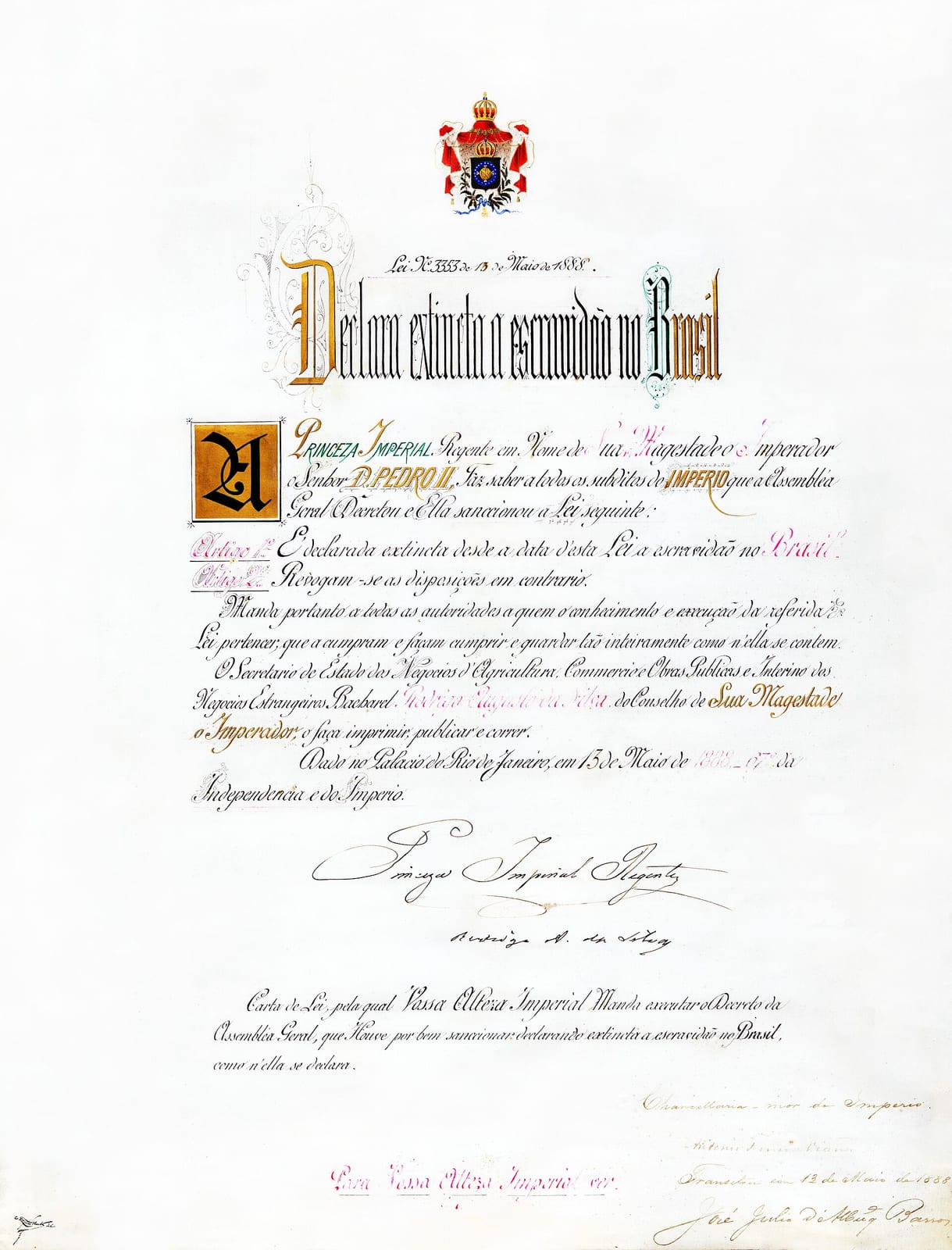
The law signed in Brazil on May 13, 1888, was extraordinarily short. Its two articles abolished slavery and revoked contrary provisions. Princess Isabel, acting as regent, supplied the signature that made the measure law. But the brevity of the document can make its history look deceptively simple. A system that had endured for centuries did not end because one person suddenly decided to be generous. The signature was a turning point produced by a much larger struggle.
Brazilian slavery had been sustained through the forced movement of Africans across the Atlantic and the labor of people born into bondage. Earlier measures restricted the slave trade and offered limited routes toward emancipation, but they also left slaveholders considerable power. Gradual reforms could promise eventual freedom while allowing exploitation to continue in the present. For a person whose life was governed by an owner’s claims, the difference between a future legal possibility and immediate liberty was fundamental.

Keep reading in Yester
Coming soon to the App Store
Keep following the story

Sources
Image: Senado Imperial