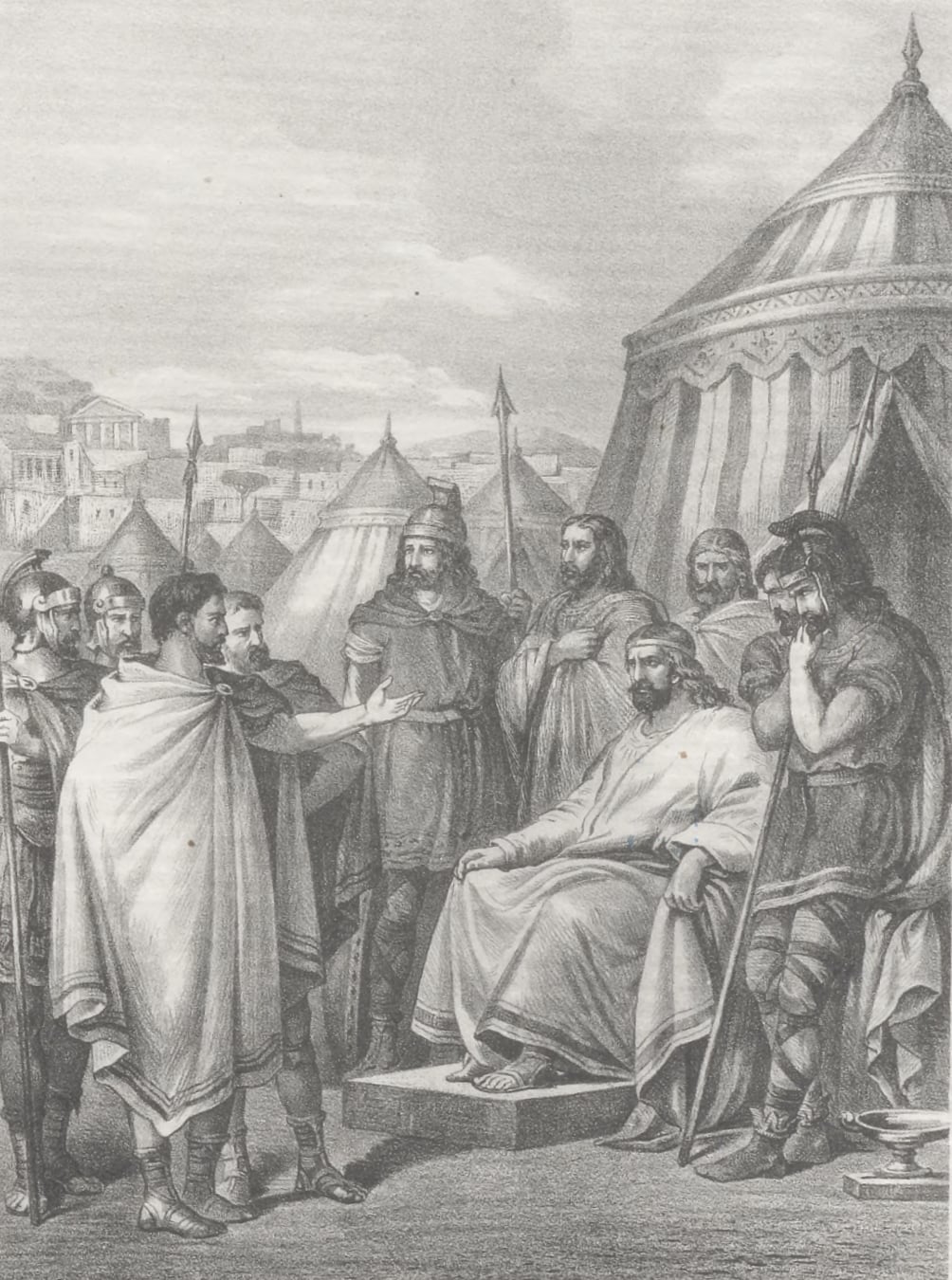
The Visigoths Sack Rome
The capture of the old capital shocked the Roman world.
On 24 August 410, the Visigoths under their leader Alaric entered Rome through the Salarian Gate, beginning three days of systematic plunder. Although the administrative seat of the Western Roman Empire had shifted to Mediolanum in 286 and subsequently to Ravenna in 402, the ancient metropolis on the Tiber remained the symbolic core of the Mediterranean world. Rome had not yielded to a foreign adversary in almost eight centuries. The breach of its walls shattered the widespread assumption that the city was invincible and produced shock waves across provinces far removed from the Italian peninsula.
The disaster was the product of decades of military dependency, migration pressure, and political instability. Gothic groups had moved into Roman territory in 376 under intense pressure from the advancing Huns. A major Roman defeat at Adrianople two years later forced the imperial administration into compromise. In 382, Emperor Theodosius I settled the Visigoths within imperial borders as autonomous military allies, known as foederati. When Theodosius died in 395, his young sons divided imperial rule, leaving the Western court dominated by the general Flavius Stilicho. Alaric, leading federated Goths who considered their earlier treaty void, sought formal military commissions, regular provisions, and secure lands for his followers, repeatedly exploiting the bitter rivalries between the eastern and western administrations.

Keep reading in Yester
Coming soon to the App Store
Keep following the story

Sources
- Sack of Rome 410 CE (World History Encyclopedia)
- Alaricus, Dictionary of Greek and Roman Biography and Mythology (Perseus/Perseids)
- Coin Finds from the Basilica Aemilia (University of Warwick, Classics and Ancient History)
- Alaric, Encyclopaedia Romana (University of Chicago)
- Orosius (World History Encyclopedia)
- Sack of Rome (410)
Image: Josep Serra i Porsón