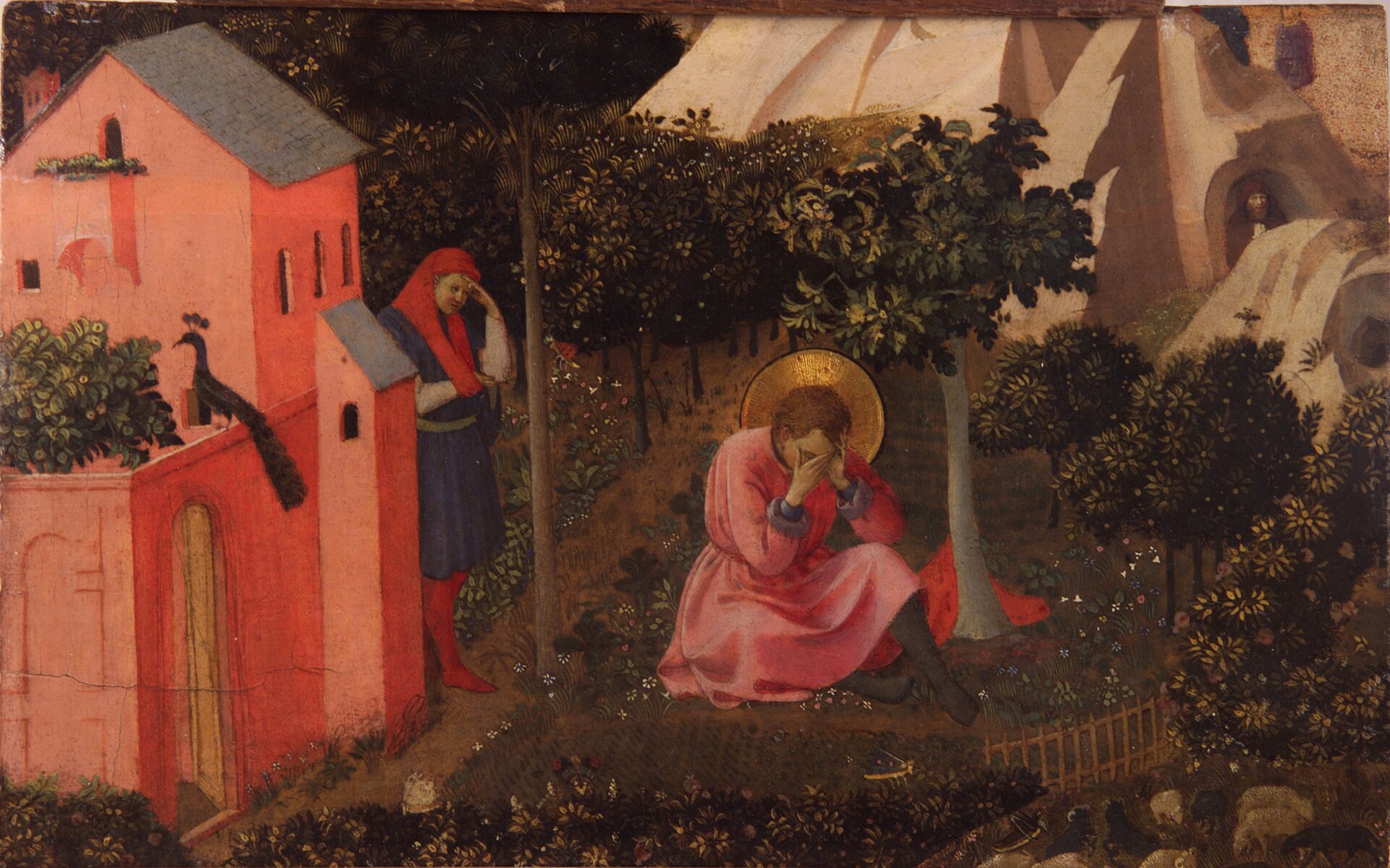
Augustine Writes His Confessions
A North African bishop turned his own life into a long prayer.
Between 397 and 400 AD, Augustine of Hippo composed a Latin work titled Confessions in Thirteen Books while serving as a North African bishop in his early forties. He had been ordained a priest at Hippo in 391 and consecrated as a bishop there around 395 or 396. Augustine structured the work not as a conventional defense, but as an extended, direct prayer to God, drawing inspiration from the Psalms of David. Across thirteen books, the work balances two kinds of confession, the admission of personal sins and the praise of God.
The initial nine books trace the first thirty-three years of Augustine's life, presenting his youth not through an idealized lens, but as a succession of moral failures. Drawing on his childhood, he argued that unrestrained infants display innate selfishness due to Original Sin. As a sixteen-year-old, he joined companions in stealing pears from a neighbor's orchard despite having superior fruit of his own, using the theft to analyze the seductive pull of shared wrongdoing. Later, while studying rhetoric in Carthage, he discovered Cicero's dialogue Hortensius, which sparked a yearning for wisdom that initially led him toward Manichaeism and astrology rather than traditional Christian scripture.

Keep reading in Yester
Coming soon to the App Store
Keep following the story
Sources
Image: Fra Angelico and workshop