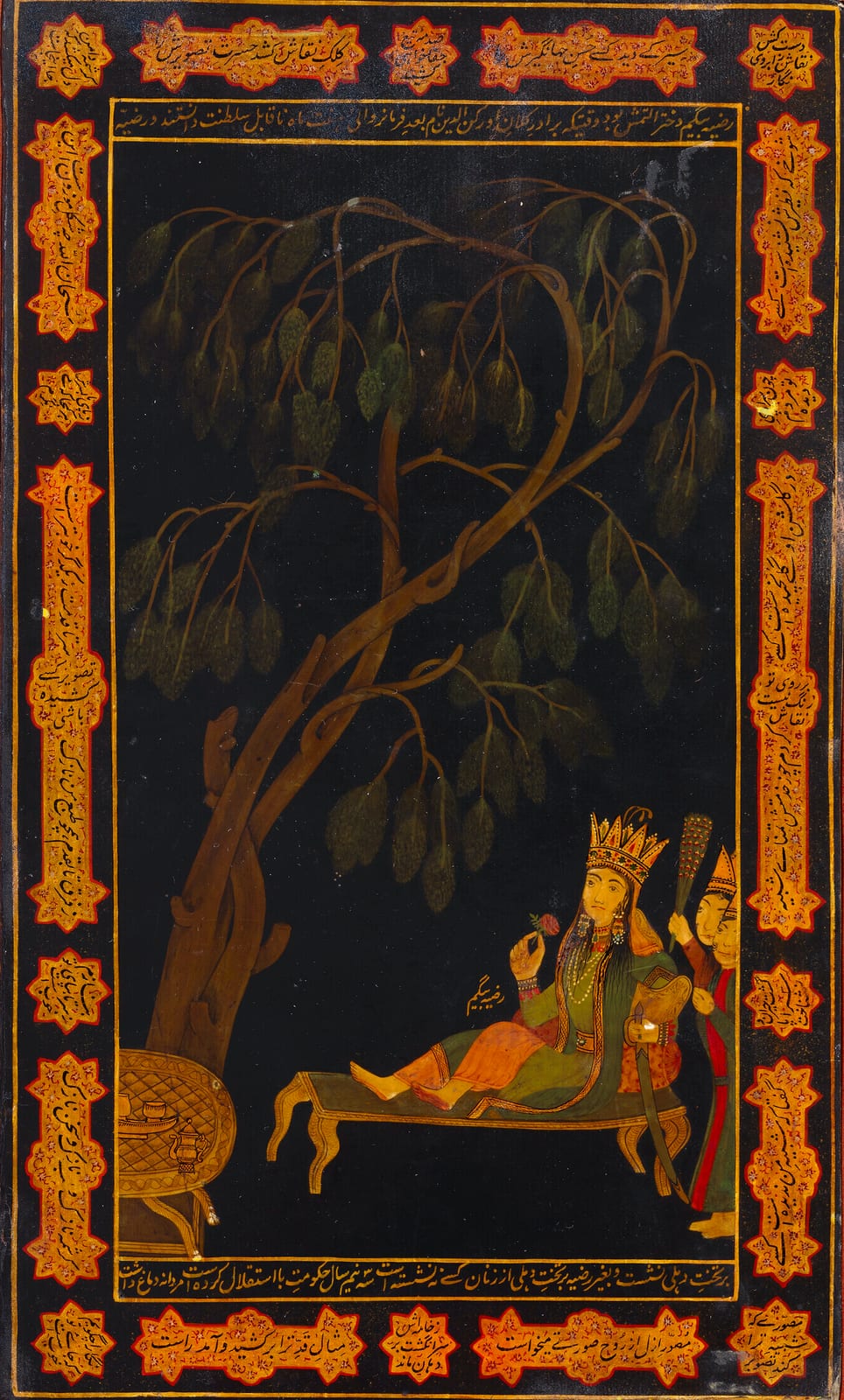
Razia Takes the Throne of Delhi
A brief reign challenged expectations of female rule while revealing the limits imposed by powerful court elites.
In late 1236, the Delhi Sultanate witnessed an unprecedented transfer of authority when Razia ascended the throne following the deposition of her half-brother Ruknuddin Firuz. Ruknuddin's brief reign of less than seven months had collapsed amid widespread rebellion provoked by misrule, factional assassinations of non-Turkic officers, and the high-handed actions of his mother, Shah Turkan. During a Friday congregational prayer in Delhi, Razia appealed directly to the assembled populace against Shah Turkan, who was plotting her execution. The crowd attacked the royal palace and detained the queen mother. Backed by the urban citizenry, the army, and several prominent amirs, Razia assumed the sovereign title of Sultan, becoming the only woman to rule the Delhi Sultanate in her own right.
A prominent historical tradition recorded by the near-contemporary chronicler Minhaj-i-Siraj Juzjani claimed that her father, Sultan Shamsuddin Iltutmish, had personally designated Razia as his heir apparent. According to this account, Iltutmish observed her capable handling of Delhi's administration while he campaigned in Gwalior between 1231 and 1232, defending the appointment against doubtful courtiers by declaring her more competent than his surviving sons. Modern historians, however, treat this narrative with caution. Minhaj was away in Gwalior at the time and returned to Delhi only years later, leaving open the possibility that the story was crafted by Razia's partisans to legitimise her rule. Furthermore, Iltutmish had recalled Ruknuddin from Lahore shortly before his death, indicating he may have ultimately endorsed a male successor.

Keep reading in Yester
Coming soon to the App Store
Keep following the story
Sources
Image: Unknown author Unknown author