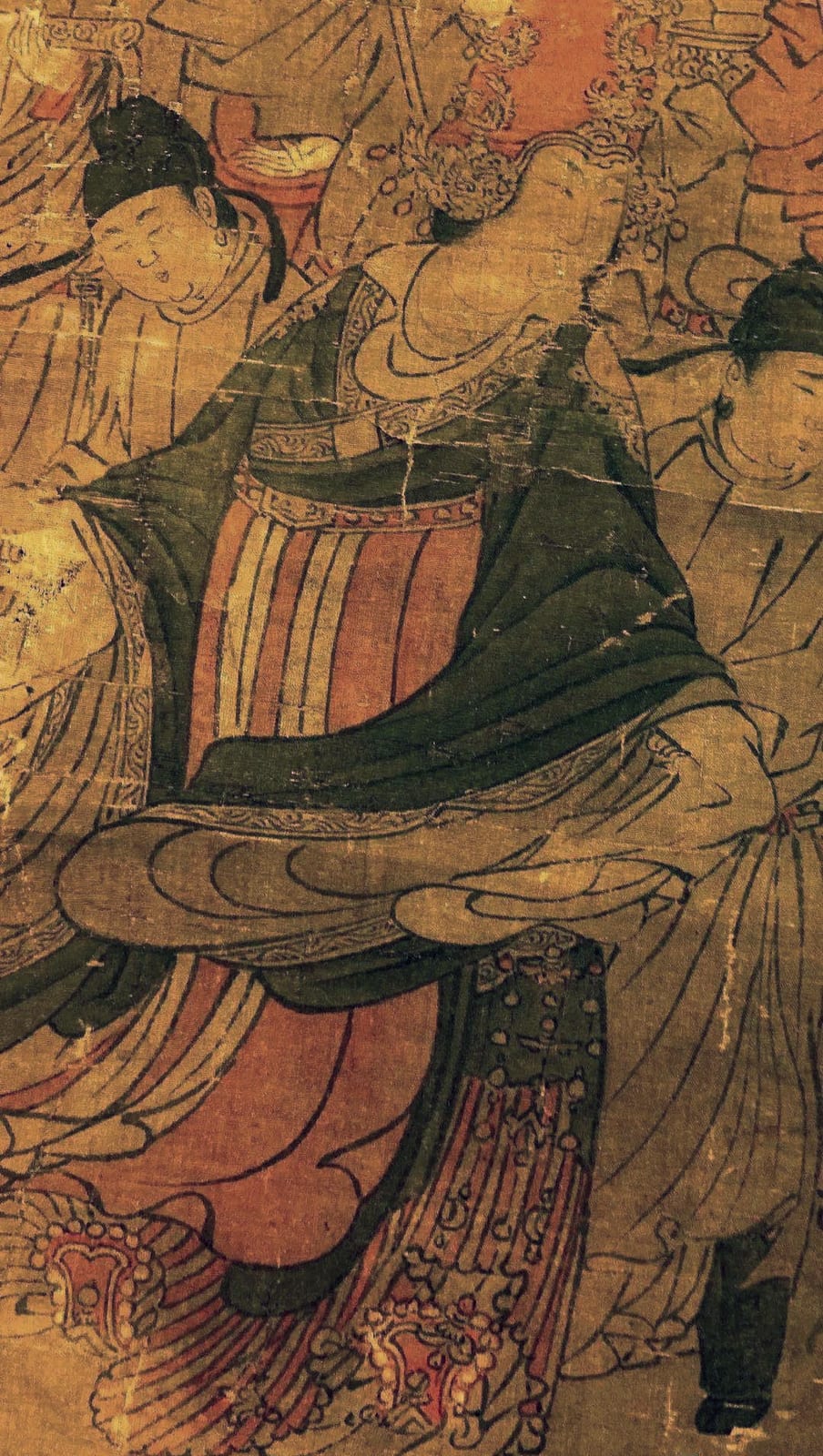
Wu Zetian Claims the Imperial Title
An exceptional reign exposed the relationship between court politics, religion and gendered accounts of authority.
In October 690, Wu Zhao formally established the Zhou dynasty and assumed the supreme imperial title huangdi, becoming the only woman widely recognized as having ruled China in her own name as emperor. While women had previously governed as empresses dowager or regents during dynastic successions, her assumption of the imperial title represented an exceptional break with dynastic convention. Her proclamation of a new dynasty interrupted the Tang order, concluding a calculated, thirty-year progression from an imperial consort handling daily state petitions to an absolute monarch ruling without male intermediaries.
Wu entered the imperial court at age fourteen as a low-ranking concubine to Emperor Taizong. Following his death in 649, she was sent to Ganye Temple as a Buddhist nun, the customary fate for imperial consorts without offspring. She subsequently returned to court under Taizong's successor, Emperor Gaozong, who elevated her to the primary consort rank of empress in 655 after deposing Empress Wang. In 660, Gaozong suffered an incapacitating illness characterized by painful headaches and loss of vision, prompting him to entrust the imperial bureaucracy and petitions to Wu. Together they were recognized across the empire as the Two Saints, giving her vast executive oversight long before her official accession.

Keep reading in Yester
Coming soon to the App Store
Keep following the story
Sources
Image: Likely to be Zhang Xuan (张萱)