Rashomon Makes an Uncertain Story Travel Around the World
Akira Kurosawa’s film presents incompatible accounts of a violent encounter. Its international breakthrough in 1951 transformed how audiences encountered Japanese cinema.
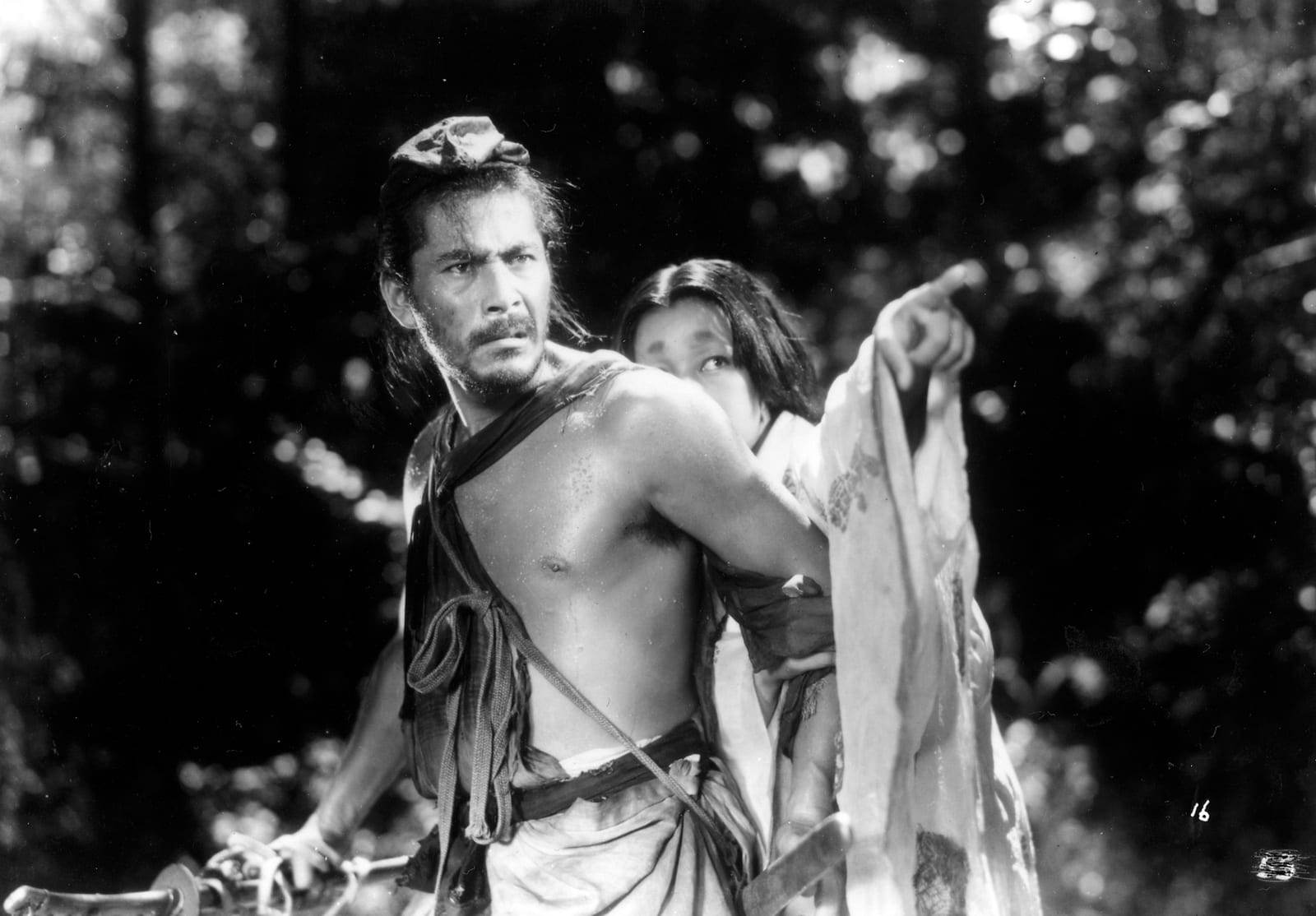
Production began under considerable reluctance before Akira Kurosawa completed Rashomon in the summer of 1950. The project was initially shelved by his customary studio, Toho, and financed only after Daiei Film reconsidered an earlier rejection. Scripted by Kurosawa and Shinobu Hashimoto, the film adapted the narrative architecture of two stories by Ryunosuke Akutagawa. Filming took place over a few weeks around Kyoto on a modest budget, using only three primary sets: the ruined city gate, a police courtyard, and a forest clearing.
The story examined a violent encounter involving a bandit, a traveling samurai, and the samurai's wife. Sheltering beneath the Rashomon gate during a torrential downpour, a woodcutter, a monk, and a commoner discuss the trial that followed the samurai's death. As witness accounts unfold, each participant presents an irreconcilable version of what occurred. The bandit claims an honorable duel, the wife describes despair and suicide attempts after being shunned, and the dead samurai speaks through a medium to describe taking his own life. Finally, the woodcutter admits he witnessed the event, presenting an unheroic, clumsy confrontation driven by cowardice.

Keep reading in Yester
Coming soon to the App Store
Keep following the story
Sources
Image: Daiei Studios