When Moving Pictures Became a Night Out
Short films in a Paris basement helped establish a new habit: buying a ticket to watch photographed movement together. The attraction was not yet a feature-length story.
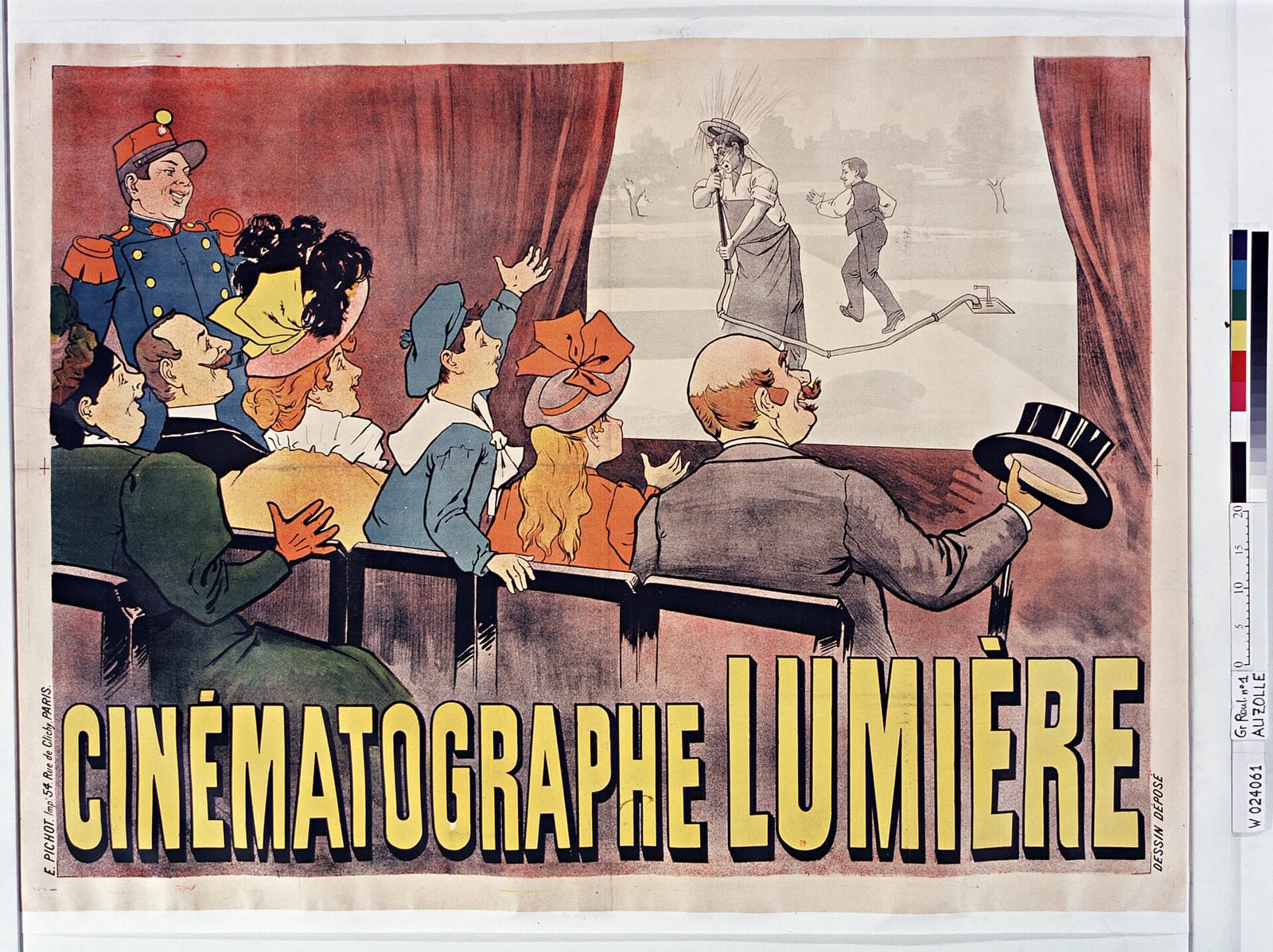
On December 28, 1895, a paying audience entered a basement room at the Grand Café in Paris to watch moving photographs. The program associated with the Lumière brothers consisted of short films, not a feature with a long plot. Everyday actions could be enough to hold attention. Workers leaving a factory, a family feeding a baby or a staged joke became events that a roomful of strangers could watch together after the original action had ended.
Auguste and Louis Lumière came from a photographic business, so the problem was connected to equipment and materials they already understood. Their Cinématographe combined the functions of camera, printer and projector. It advanced film in steps, pausing individual frames for exposure or projection. The machine made a sequence of still photographs appear as movement when shown in rapid succession. Its portability also mattered: an operator could take the apparatus to a subject rather than require everything to happen inside a specialized studio.

Keep reading in Yester
Coming soon to the App Store
Keep following the story
Sources
Image: Auzolle, Marcellin (1842-1942). Illustrateur