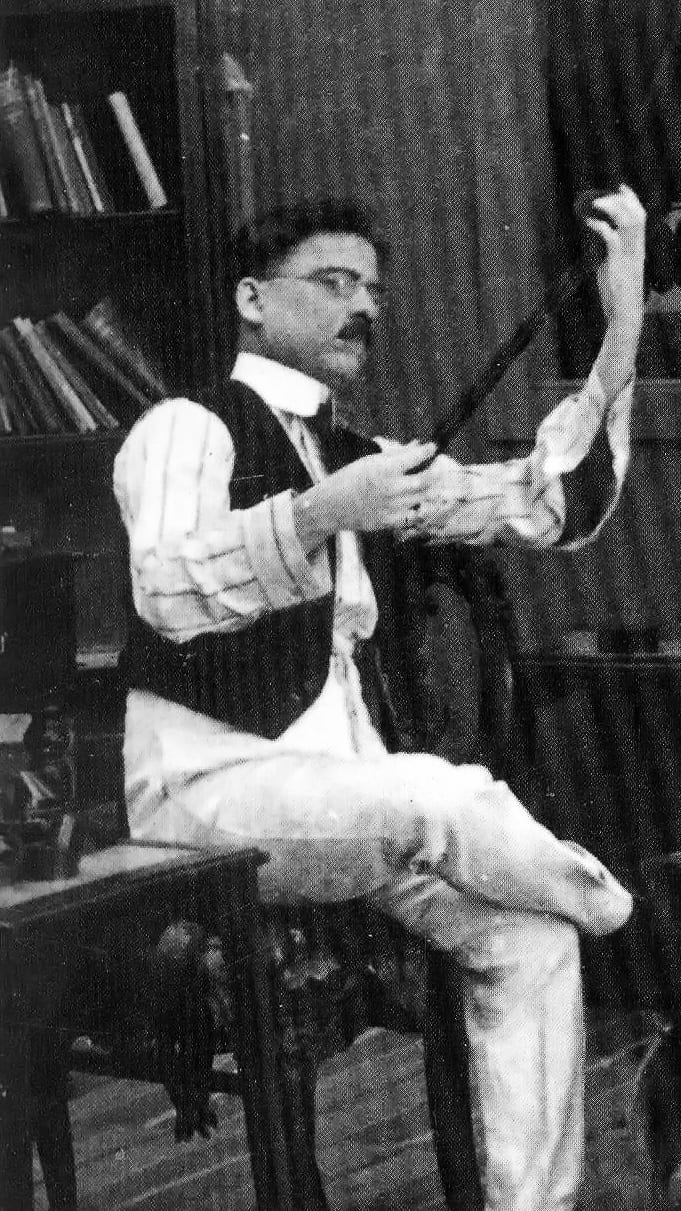
Phalke Makes an Indian Story Move on Screen
Raja Harishchandra required more than a camera. Phalke assembled the skills, labor and resources needed to turn a familiar story into a locally produced feature film.
When Raja Harishchandra opened to the public in Bombay on May 3, 1913, its importance was not that Indians were seeing moving pictures for the first time. Film exhibitions had already arrived, and local filmmakers had made other kinds of work. Dadasaheb Phalke’s achievement was to organize a sustained, locally produced narrative feature around an Indian story. The distinction matters: an industry develops through accumulated experiments, even when one production later becomes its preferred founding landmark.
The story of the truthful king Harishchandra was familiar through religious and theatrical traditions. Familiarity could help audiences understand a silent film without requiring the screen to imitate a written text. It also gave Phalke material that did not depend on importing the subjects seen in foreign productions. Choosing a local narrative did not make the technology itself local in origin. Cameras, film stock, processing knowledge and visual techniques belonged to an international medium being adapted to a particular cultural setting.

Keep reading in Yester
Coming soon to the App Store
Keep following the story
Sources
Image: Palaviprabhu at English Wikipedia