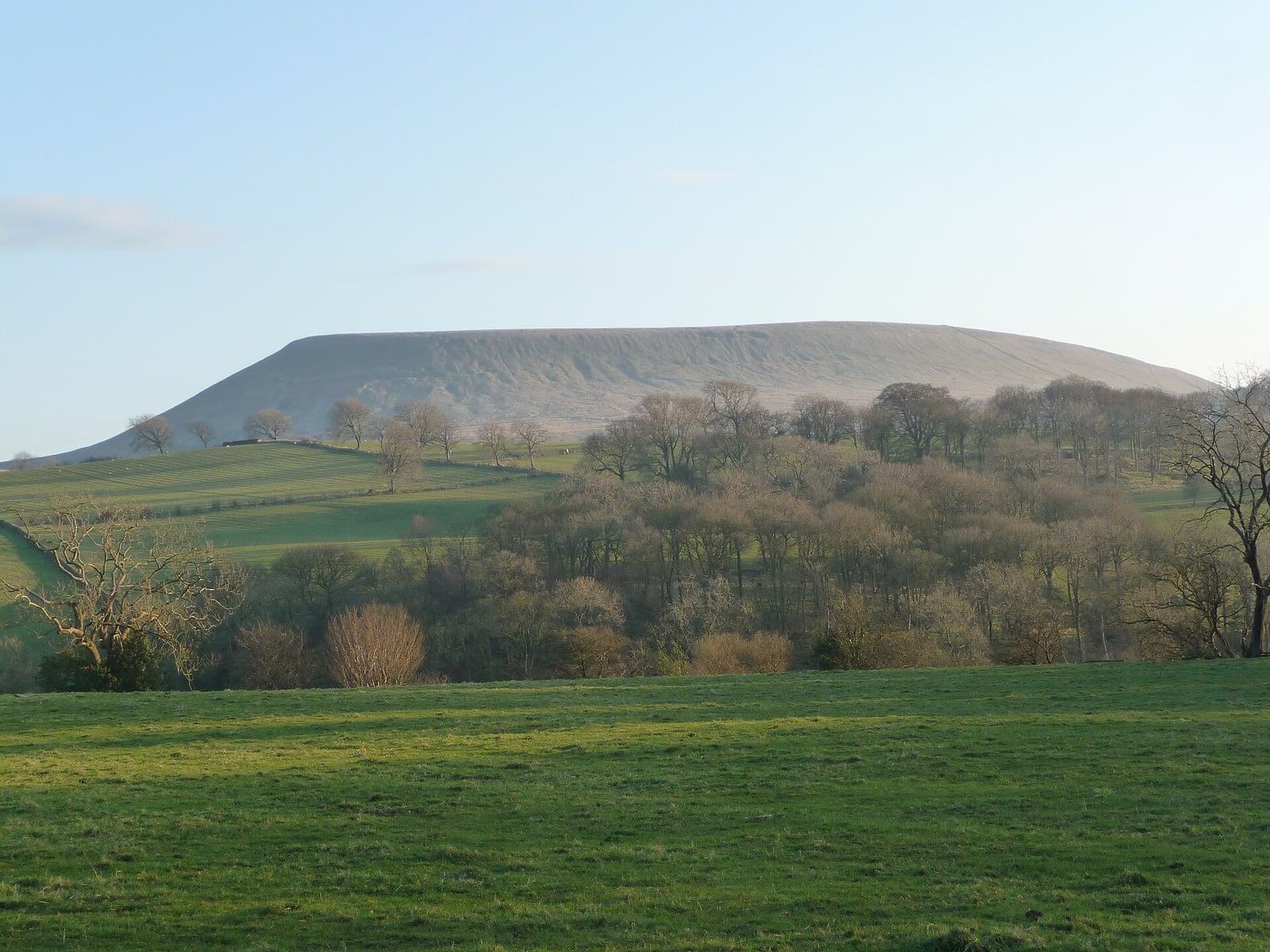
George Fox Begins the Quaker Movement
A preacher taught that every person could encounter the divine directly.
In 1652, an English dissenter named George Fox climbed Pendle Hill in Lancashire, where he experienced an intense spiritual vision. He recorded his conviction that God showed him places where a great congregation waited to be gathered. Dissatisfied with both the Church of England and other nonconformist factions, Fox had already spent years developing the conviction that an individual could experience Christ directly without ordained ministers or established rituals. His message emphasized that Christ had arrived to teach his people himself, locating divine guidance directly within each person through what became known as the inward light.
Fox set out across Britain, Barbados, and the Netherlands, gathering followers into a movement known as the Friends of Truth or the Children of the Light. The popular label of Quakers arose around 1650, when magistrate Gervase Bennet applied the term derisively after Fox urged the court to tremble before God. Critics also mockingly noted that believers appeared to shake during impassioned preaching. Rather than relying on rigid creeds, the early community instituted waiting worship, a practice where believers sat together in shared silence until someone felt prompted to offer vocal ministry.

Keep reading in Yester
Coming soon to the App Store
Keep following the story
Sources
- Fox, George (Encyclopedia of Religion / Oxford Companion entries, Encyclopedia.com)
- The World Turned Upside Down: Quakers exhibition (University of Tasmania Library)
- Charter for the Province of Pennsylvania, 1681 (Avalon Project, Yale Law School)
- Friends Service Council: Speed read (Nobel Prize Outreach)
- Mary Dyer: The Quaker Martyr, by Horatio Rogers (Famous Trials, UMKC School of Law)
- Quakers
Image: Immanuel Giel