Eugene Onegin Turns a Social World into Verse
Pushkin’s verse novel explores missed possibilities amid the conventions of Russian society.
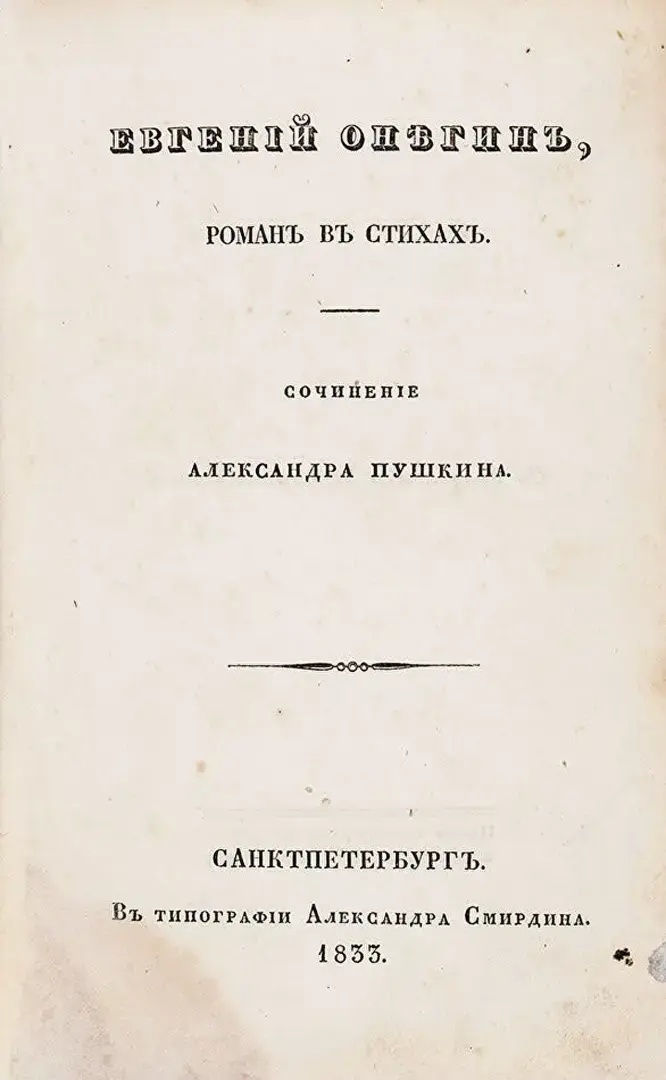
Alexander Pushkin began drafting Eugene Onegin in May 1823, embarking on a long writing process that unfolded over nearly a decade of political scrutiny and shifting personal circumstances. The novel in verse was issued serially between 1825 and 1832, allowing the Russian reading public to follow the protagonist's development across individual chapters before the first complete volume appeared in 1833. To shape this narrative, Pushkin devised an intricate verse structure composed almost entirely of 389 fourteen-line stanzas of iambic tetrameter, totaling 5,446 lines. The rhyme scheme alternated feminine and masculine endings according to a regular pattern that later became widely known as the Onegin stanza.
The poem introduces Eugene Onegin as a world-weary Saint Petersburg dandy whose existence consists of the repetitive social rounds of elite balls and gatherings. After inheriting an estate from his wealthy uncle, Onegin withdraws to the countryside, where he befriends Vladimir Lensky, an idealistic young poet. Lensky brings him to meet the Larina family, introducing his fiancee Olga and her quiet, introspective sister Tatyana. Impressed by Onegin, Tatyana composes an ardent letter declaring her love. Onegin responds in person with what became known as his sermon, politely declining her affection, citing his unfitness for domestic life, and urging her to maintain greater emotional restraint around future admirers.

Keep reading in Yester
Coming soon to the App Store
Keep following the story
Sources
Image: JohnnysNewCar