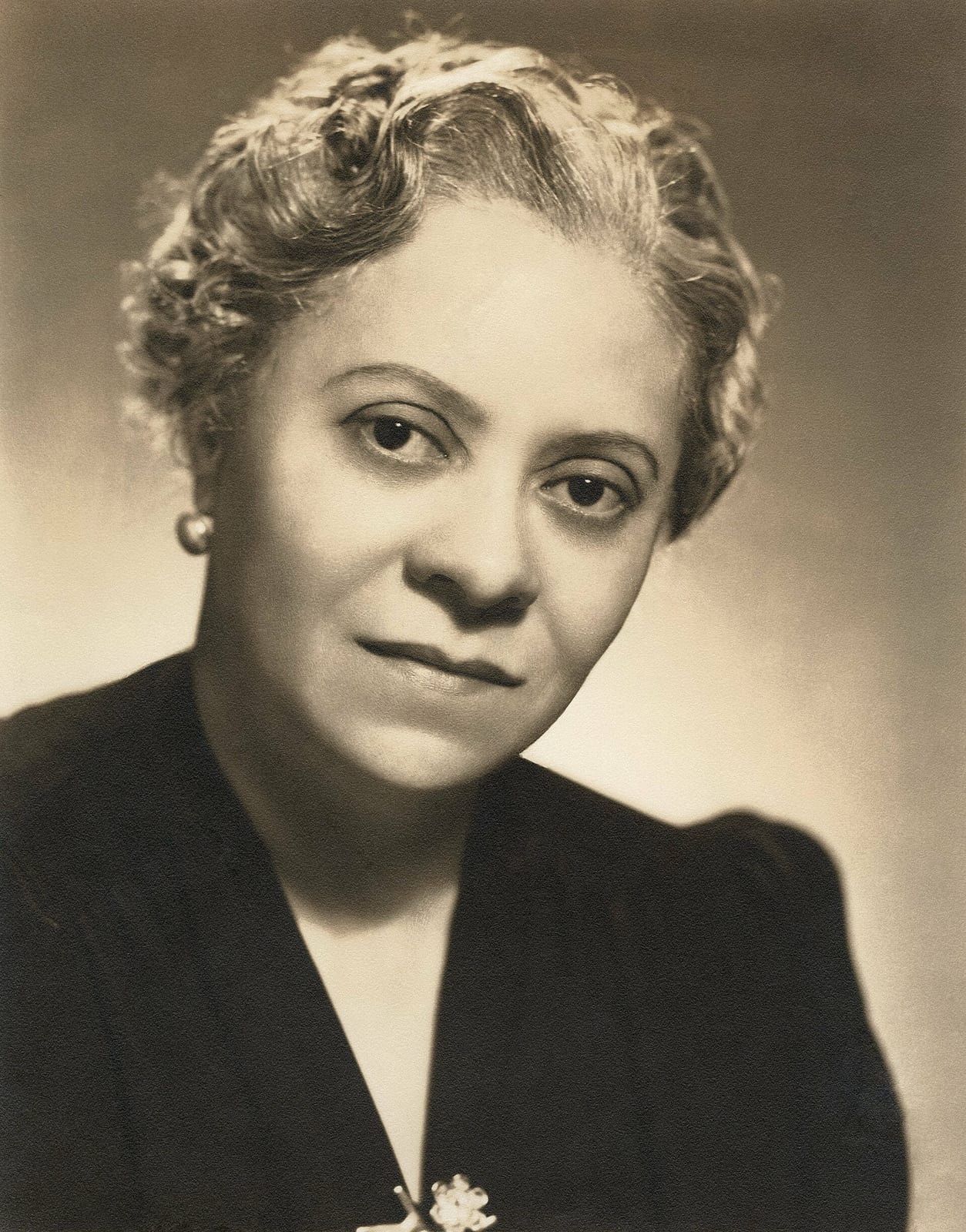
Florence Price Brings a Symphony to a Major Orchestra
A landmark performance grew out of a composer’s sustained work within institutions shaped by racism and sexism.
Florence Beatrice Smith grew up in Little Rock, Arkansas, where her musical education began early under the guidance of her mother, a music teacher. Her father worked as the city's only African-American dentist, and the family held a respected place in the local community. After graduating from a Catholic convent school as valedictorian at age fourteen, Smith moved to Boston to enroll at the New England Conservatory of Music. Navigating racial discrimination by initially listing her hometown as Pueblo, Mexico, she studied organ performance, piano pedagogy, and counterpoint under George Chadwick and Frederick Converse. By the time she completed her studies with honors in 1906, she had already composed an initial string trio and a symphony.
Returning south, she directed the music department at Clark University in Atlanta before marrying Thomas J. Price, an attorney, in 1912. The couple settled in Little Rock to raise a family, but legal segregation and racial hostility sharply restricted her professional prospects. Following intense racial violence in the city, including a lynching in 1927, the Price family joined the ongoing Great Migration to Chicago. In this industrial center, Price found an energetic cultural landscape through the Chicago Black Renaissance. She advanced her craft through classes in orchestration, composition, and organ across multiple institutions, including the American Conservatory of Music and the Chicago Musical College, while publishing piano pieces and connecting with local artists.

Keep reading in Yester
Coming soon to the App Store
Keep following the story
Sources
Image: George Nelidoff