The Philippines Declares Independence at Kawit
A declaration against Spain was soon followed by war with the United States.
On June 12, 1898, between four and five in the afternoon, Filipino revolutionary forces gathered at the ancestral home of General Emilio Aguinaldo in Cavite el Viejo, now known as Kawit. Standing approximately thirty kilometers south of Manila, the assembly formally asserted sovereignty and separation from more than three centuries of Spanish colonial rule. The public ceremony featured the unfurling of a new Philippine flag crafted in Hong Kong by Marcela Agoncillo, Lorenza Agoncillo, and Delfina Herbosa de Natividad, accompanied by the performance of the Marcha Filipina Magdalo, composed by Julian Felipe and played by the San Francisco de Malabon marching band.
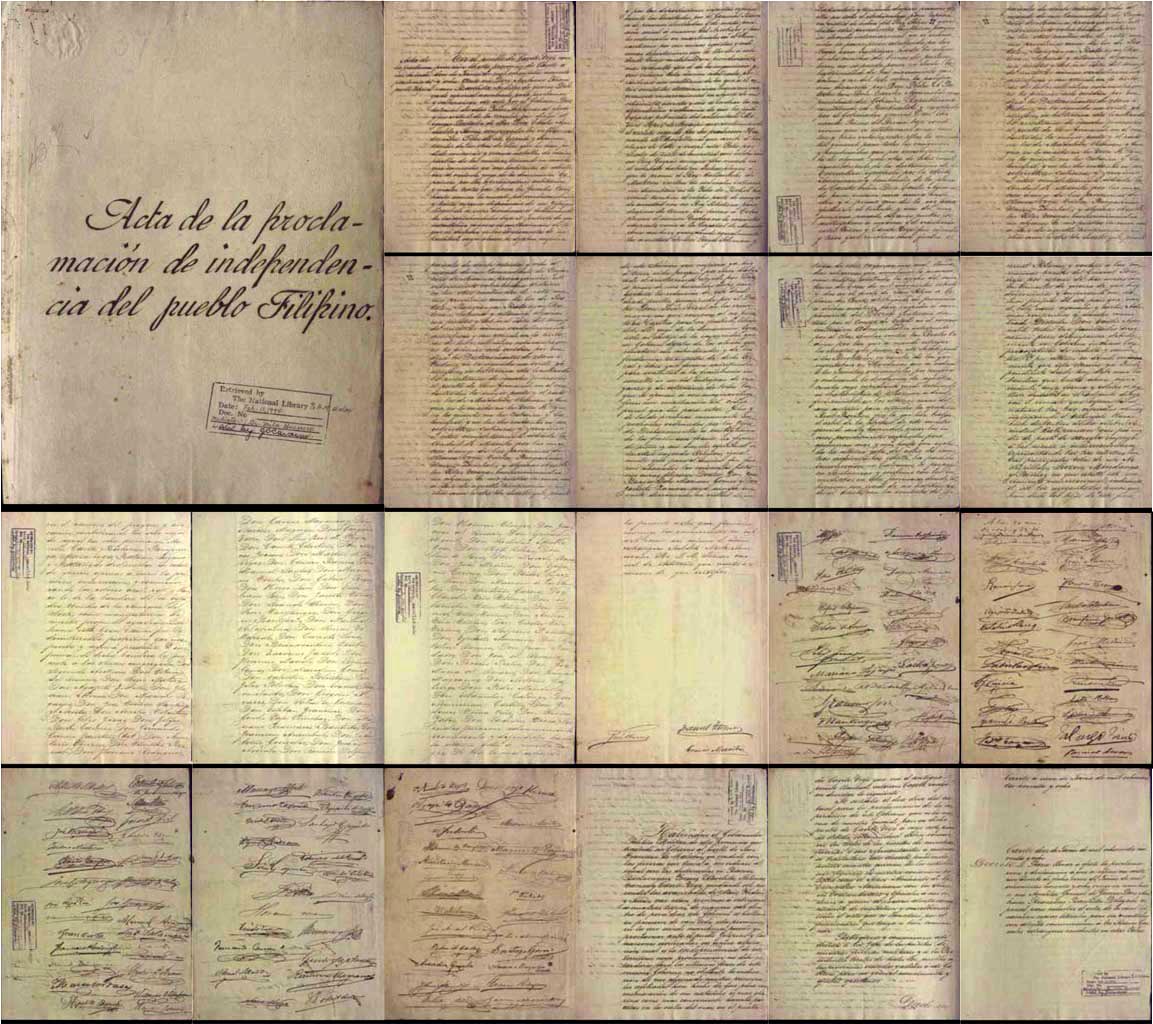
The official document, titled the Act of the Declaration of Independence, was prepared, composed, and read aloud in Spanish by Ambrosio Rianzares Bautista. The written text recounted grievances against Spanish governance dating back to the arrival of Ferdinand Magellan in 1521, and it assigned executive authority, including the power to grant pardons and amnesties, to Aguinaldo as head of a dictatorial administration. The original copy held by the National Library of the Philippines carries 145 signatures, all of them men, and historian Jim Richardson counts 176 men who signed or are named across the known copies. Aguinaldo's own signature is notably absent.

Keep reading in Yester
Coming soon to the App Store
Keep following the story
Sources
- Traces of June 12, 1898, by Ambeth R. Ocampo (Philippine Daily Inquirer)
- Where's Aguinaldo's signature?, by Ambeth R. Ocampo (Philippine Daily Inquirer)
- An unflagging symbol of nationhood (VERA Files)
- The Philippine-American War, 1899-1902 (Office of the Historian, U.S. Department of State)
- Republic Act No. 4166 (Lawphil Project, Arellano Law Foundation)
- Philippine Declaration of Independence
Image: Ambrosio Rianzares Bautista