Pérotin Writes Music for Four Voices at Notre-Dame
A composer at Notre-Dame stretched chant into towering polyphony.
During the final years of the twelfth century, the choir of Notre-Dame Cathedral in Paris witnessed a fundamental transformation in European sacred sound. While earlier liturgical practice had centered on traditional monophonic chant or modest two-part elaborations, musicians active at the cathedral began constructing compositions that carried three and four independent vocal lines. At the center of this movement was the composer remembered as Pérotin, or Magister Perotinus, whose four-voice organa pushed existing church polyphony into unprecedented territory of texture, scale, and rhythmic coordination.
Almost everything known about Pérotin survives through a later treatise written by an anonymous English student known to modern scholarship as Anonymous IV, along with brief references by the music theorist Johannes de Garlandia. Anonymous IV described Pérotin as an exceptional composer of descant who revised the Magnus liber organi, a foundational liturgical collection credited to his predecessor Léonin. While Léonin had specialized in two-part organum purum, where an upper voice unfolded in sweeping, florid phrases over an extended chant melody, Pérotin championed more tightly measured, rhythmic discant sections known as clausulae, which could be substituted or inserted into the older repertoire.

Keep reading in Yester
Coming soon to the App Store
Keep following the story
Sources
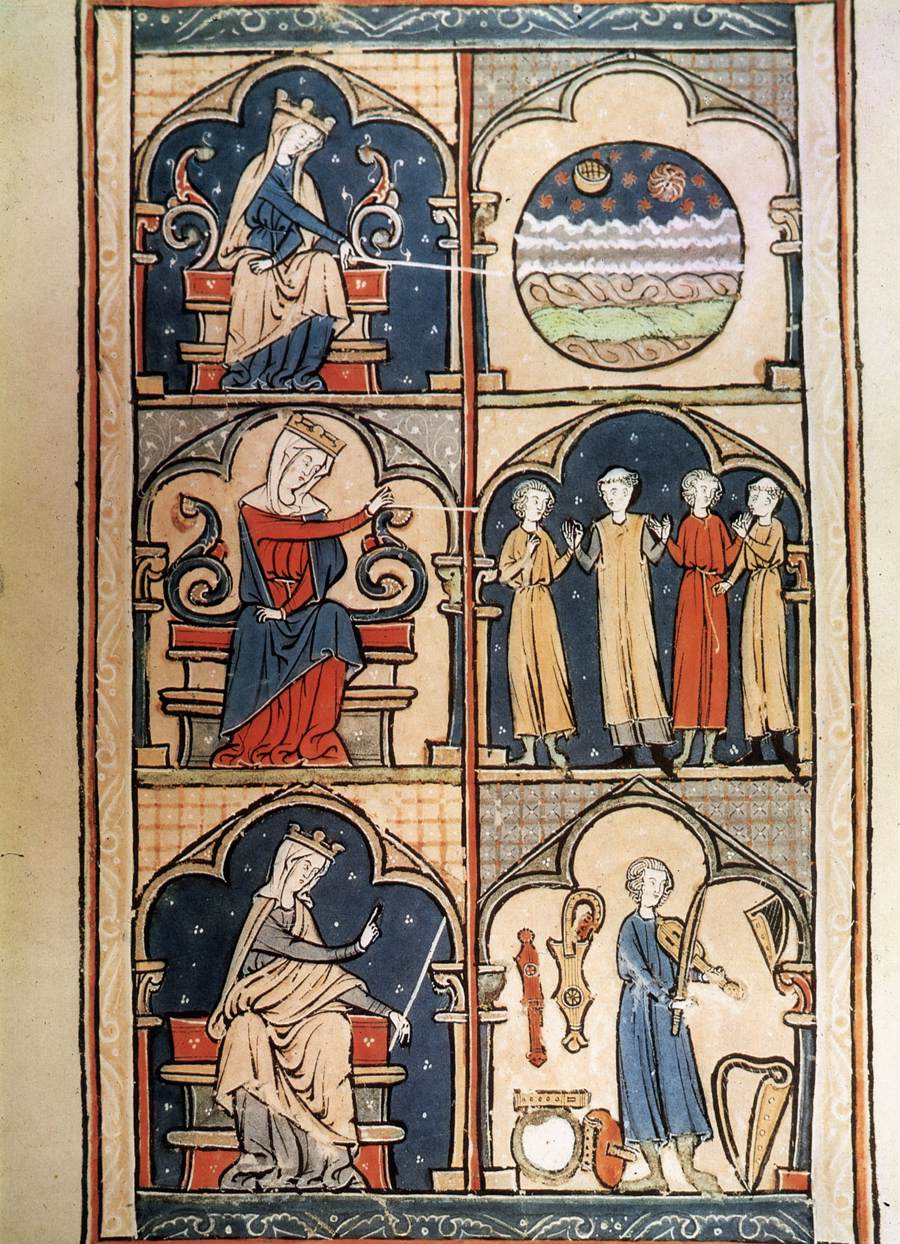
Image: unknown artist, circa 1245-1255 A.D., Paris, possibly in the workshop of Johannes Grusch in Paris,